Proudly serving Tucson, Oro Valley, Marana, Catalina Foothills, Casas Adobes, Sahuarita & surrounding areasCall or Text 24/7: 520-569-2093

Tucson Tree Service Co. - Tree Removal, Tree Trimming, Tree Pruning in Tucson, AZ

Tucson Tree Service Co. provides tree removal, tree trimming, tree pruning, stump grinding and removal, emergency tree service, storm damage cleanup, palm tree trimming, cactus removal, arborist consultation, and tree planting for homes and businesses across Tucson and Pima County. Tucson sits in the Sonoran Desert at roughly 2,400 feet, where summer heat above 100 degrees, flash-flood monsoons, and caliche soil place unusual stress on trees. Our crews care for mesquite, palo verde, ironwood, Aleppo pine, palms, citrus, and desert plants with methods suited to this climate.

We are a licensed and insured local tree company serving residential and commercial properties. Our process begins with the tree, access, nearby structures, and the work needed to protect the property. Before work begins, we explain the recommended scope and provide a written estimate.

Call Tucson Tree Service Co. to schedule an on-site estimate for routine tree care, risk assessment, or urgent storm cleanup.

★ ★ ★ ★ ★4.9/5 Average Rating · 20+ Years of Experience · Thousands of Customers Helped · Licensed & Insured · Residential & Commercial

Locally Trusted

Written Estimate
Licensed & Insured
Tree Health Consultations
Tucson & Pima County
Core Services

Tree Care Services for Tucson Properties

From preventive pruning to complex removals, our services address the trees, palms, stumps, and protected desert plants found across residential and commercial properties in the Tucson area. Each recommendation begins with the tree's condition, the surrounding structures, and the way you plan to use the space.

Tree Removal

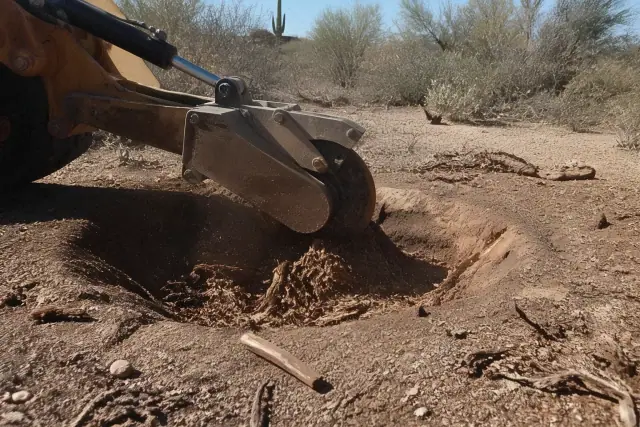
Industrial stump grinder pulverizing a wooden stump into mulch in dusty soil in Tucson, AZ.

We remove dead, unstable, and unwanted trees ranging from small backyard citrus to a 60-foot Aleppo pine near a roofline. Access, trunk diameter, nearby structures, and the need for a crane or aerial lift are evaluated before we recommend a removal plan.

Explore Service

Tree Trimming

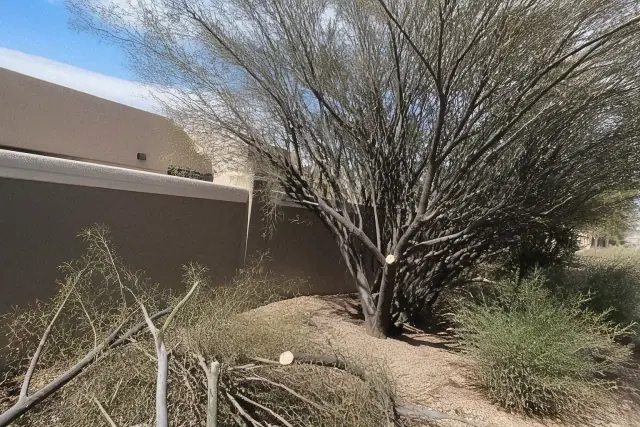
Precision cuts on a dense tree crown with a chainsaw at a job site in Tucson, AZ, surrounded by desert scrub.

Canopy thinning reduces wind resistance before Tucson's monsoon season, which typically runs from mid-June through September. Professional trimming averages around $460 per visit, with source-supported examples ranging from $75 for a small ornamental to $1,800 for a large, difficult-to-access canopy.

Explore Service

Tree Pruning

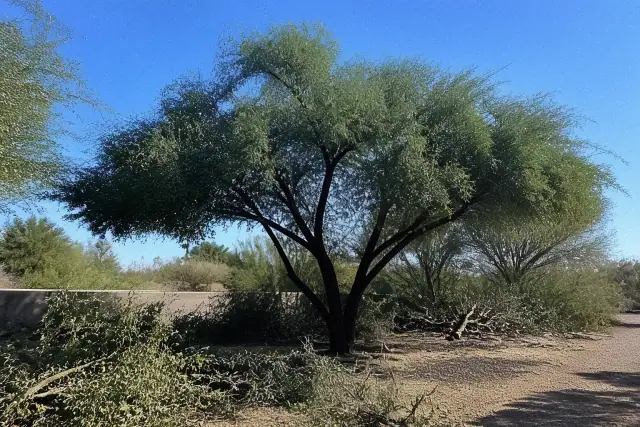
Canopy shape pruning on a tree with Sonoran desert vegetation in Tucson, AZ under harsh midday sunlight.

Structural pruning removes crossing branches, deadwood, and codominant stems before they split. Cuts follow ANSI A300 pruning standards, with most deciduous trees pruned in late winter and heavier work on flowering natives scheduled after bloom.

Explore Service

Stump Grinding & Removal

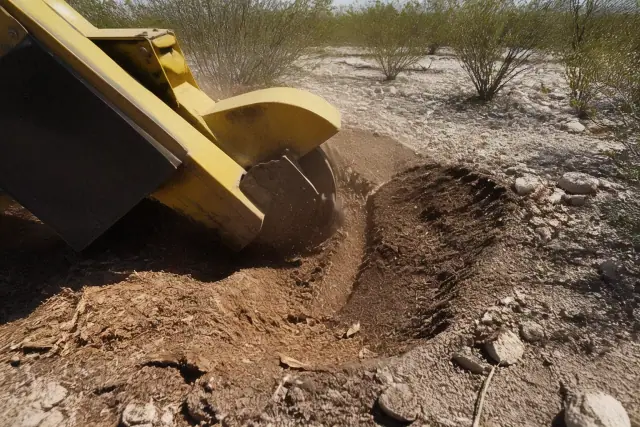
A heavy machine grinding a tree stump into wood chips in the desert soil of Tucson, AZ.

Stump grinding clears wood below grade so the space can be replanted, covered with decomposed granite, or prepared for concrete. It also addresses termite attraction, persistent root suckers, and conflicts with irrigation lines in xeriscaped yards.

Emergency Tree Service

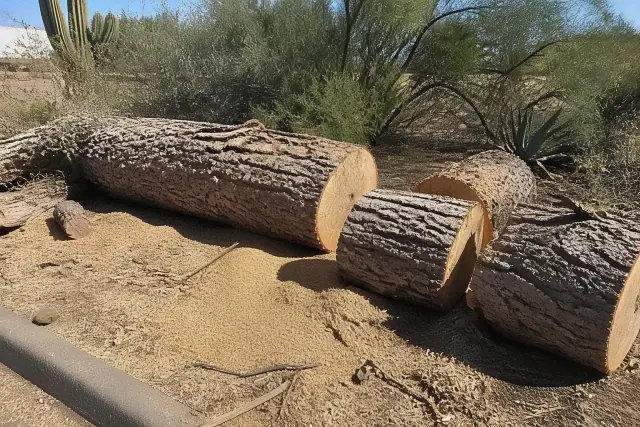
A large tree trunk being cut into logs on a jobsite with Sonoran desert vegetation in Tucson, AZ.

Our storm-response service covers downed limbs, split trunks, and full tree failures blocking driveways or resting on fences, roofs, and yards. Crews assess load and tension before cutting, then use rigging, chipping, and hauling equipment suited to the site.

Storm Damage Cleanup

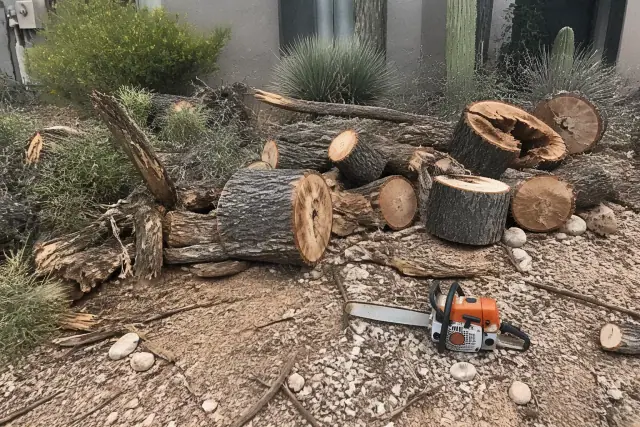
Workers sectioning a fallen tree trunk during storm damage cleanup in Tucson, AZ.

Microbursts, straight-line winds, and flash flooding can saturate root zones and topple drought-stressed trees with little warning. We clear damaged wood, protect surrounding structures during removal, and coordinate with an insurance adjuster when storm damage is involved.

Palm Tree Trimming

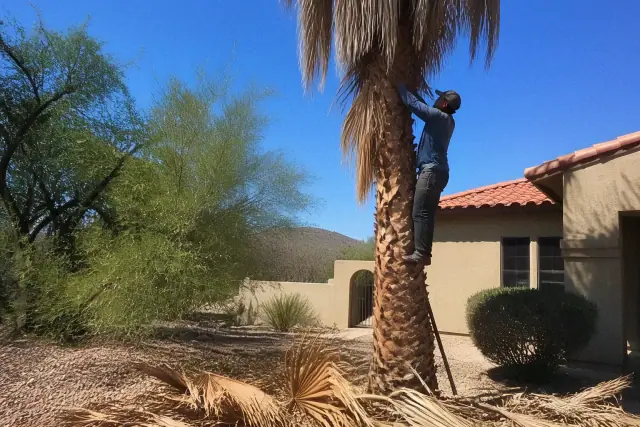
Worker trimming dead fronds from a tall palm tree in a Tucson, AZ residential yard.

Date palms, fan palms, and queen palms need dead-frond removal at least once a year, and sometimes more often near pools and walkways. We trim and skirt palms without damaging the trunk's protective boot structure.

Cactus Removal

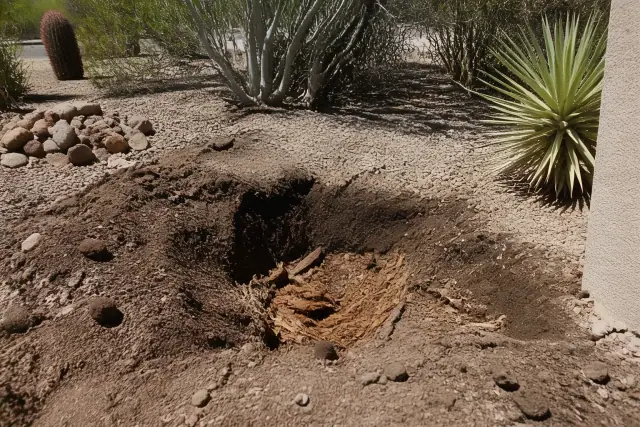
A hole in the gravel ground with soil disturbance from a cactus removal project in a Tucson, AZ residential yard.

Saguaros, chollas, and prickly pear require specialized handling, and protected specimens may require permits before removal or relocation. Our crews use protective gear, padded rigging, and mechanical lifting equipment sized to the plant.

Tree Health & Arborist Consultation

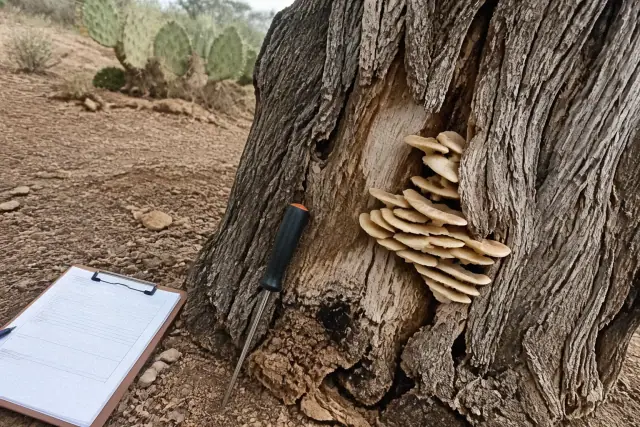
Arborist examining tree trunk decay and fungal growth with a soil probe and clipboard in Tucson, AZ.

Tree-health consultation costs depend on the number of trees, site access, and whether documented findings are requested. A careful evaluation considers canopy density, trunk structure, root flare, and soil condition before treatment, corrective pruning, or removal is recommended.

Tree Planting

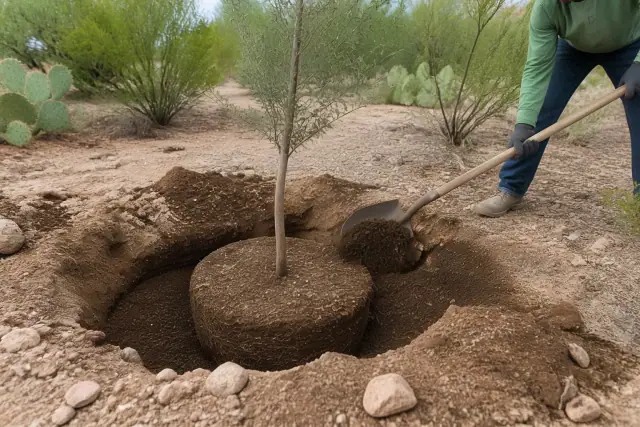
Technician backfilling soil around a newly planted sapling in Tucson, AZ with desert landscape and a garden spade nearby.

We select and plant desert-adapted trees with proper root-flare exposure, native-soil backfill, and drainage suited to caliche-heavy yards. New trees receive a deep, infrequent watering plan for their first two growing seasons so roots establish for Tucson's heat and low humidity.

Specialized Tree Care

Advanced Services for Desert Properties

Specialized tree work goes beyond cutting branches. Our arborists evaluate soil, pests, structural weaknesses, protected desert plants, site access, and utility exposure so the recommended work fits both the tree and the property.

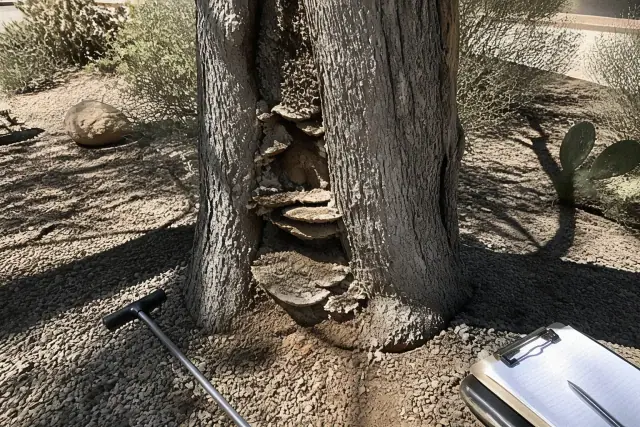
Fungal growth on a tree trunk with a soil probe in a Sonoran desert landscape in Tucson, AZ.

Plant Health Care & Pest Diagnosis

A tree-health evaluation looks for soil, insect, disease, and structural issues before treatment is recommended. Plant health care may include fertilization or soil amendments when Tucson's alkaline conditions are limiting growth.

  • Canopy, trunk, root-flare, and soil evaluation
  • Caliche compaction and alkaline-soil review
  • Palo verde borer, aphid, and bacterial wetwood identification
  • Tree fertilization and soil-amendment planning
  • Written findings for treatment or removal decisions
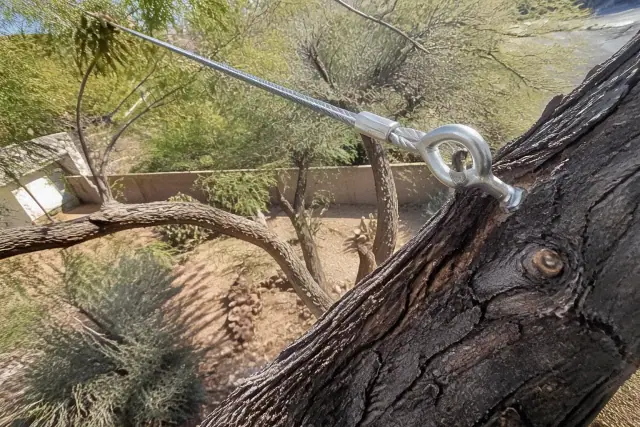
Steel eyebolt and bracing cable installed in a tree canopy in Tucson, AZ, during structural correction work.

Tree Cabling & Structural Correction

Mature trees with valuable shade or sentimental importance may have structural weaknesses that do not automatically require removal. An arborist assesses the defect and determines whether targeted pruning or an appropriate support approach can reduce the risk.

  • Codominant stem and split-prone crotch evaluation
  • Included bark and cavity-damage assessment
  • Targeted structural pruning where tree health allows
  • Overextended limb review above patios and structures
  • Seasonal trimming plans for continued risk reduction
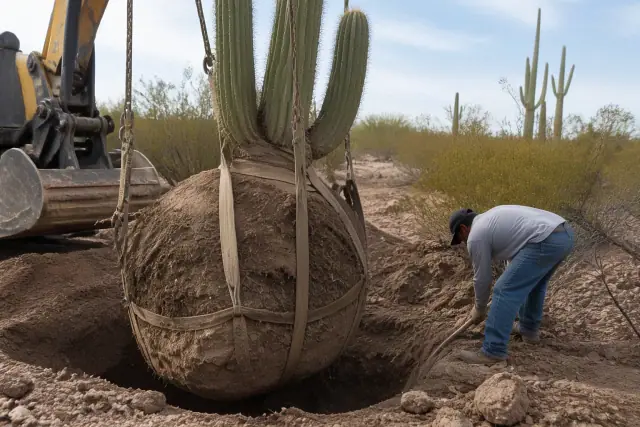
A technician backfilling soil around a saguaro cactus root ball during a relocation project in Tucson, AZ.

Permitted Cactus Extraction & Relocation

Arizona Native Plant Law protects saguaros, chollas, and prickly pear, and removing or relocating certain saguaros requires a permit through the Arizona Department of Agriculture. A mature saguaro can weigh several tons, so extraction requires planning and equipment designed for desert plants.

  • Permit guidance through the Arizona Department of Agriculture
  • Padded rigging sized to the specimen
  • Mechanical lifts for heavy cactus extraction
  • Protective gear for cholla and prickly pear handling
  • On-property relocation where legally permitted, preserving plants that can take decades to replace
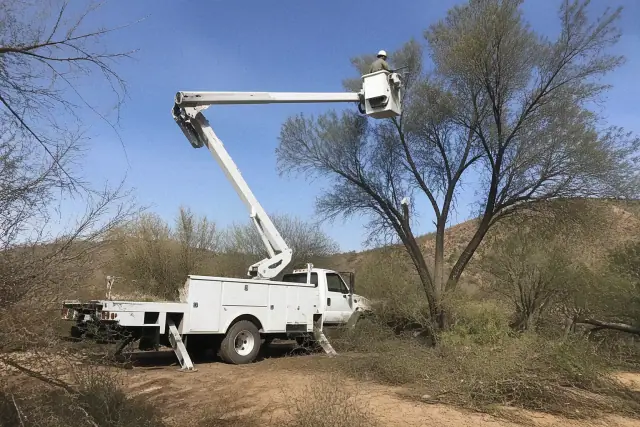
A worker in a bucket truck uses a hydraulic chainsaw to trim a large mesquite tree in Tucson, AZ.

Complex & Commercial Tree Work

Large removals and constrained commercial sites require careful equipment, access, and load planning. Our crews handle work near roofs, fences, vehicles, and utility infrastructure with the rigging and cleanup approach matched to the site.

  • Commercial lots and multi-tree work areas
  • Crane or aerial-lift access planning
  • Rigging around roofs, fences, and vehicles
  • Coordination with Tucson Electric Power for utility contact
  • Chipping, hauling, and cleanup planning
Professional Desert Tree Care

Why Tucson Property Owners Choose Us

Tree work places people, buildings, vehicles, and mature desert trees in the same work zone. Licensed and insured service, written estimates, careful recommendations, and local species knowledge give property owners a clear basis for deciding what work is necessary.

Tree Health Guidance

A thorough assessment helps distinguish a tree that may respond to treatment or corrective care from one that presents a removal-level risk. Recommendations account for mesquite, palo verde, ironwood, Aleppo pine, and other species growing in Tucson's desert conditions.

Licensed & Insured

Tucson Tree Service Co. is licensed and insured. That protection matters when tree work involves cutting equipment, rigging, heavy limbs, and access near structures or landscaping.

Written Estimates & Clear Scope

Every job starts with a written estimate. The scope explains the recommended work and clarifies how debris and stump removal will be handled before the crew begins.

Recognize the Warning Signs

Common Tree Problems on Tucson Properties

Desert heat, low humidity, caliche, insects, and monsoon wind can turn a manageable tree issue into a property hazard. An inspection can separate conditions that respond to pruning or plant health care from failures that require removal.

Request an Estimate

Monsoon Leaning & Root Heave

Saturated root zones and microburst winds can leave a tree leaning, expose roots near a foundation, or split a loaded trunk. A tree-condition assessment considers stability before corrective pruning or removal is recommended.

Deadwood & Brittle Limbs

Dead trees can dry rapidly in Tucson's low humidity and become brittle within a season. Limbs may then fail without warning above roofs, fences, vehicles, or walkways.

Caliche, Drought & Heat Stress

Caliche can restrict root penetration while extended drought and summer temperatures regularly above 105 degrees stress the canopy. Chronic water stress also makes trees more vulnerable to borers and bark beetles.

Borers, Aphids & Bacterial Wetwood

Palo verde borers, aphids, and bacterial wetwood appear regularly in local tree-health calls. Identifying the actual pest or pathogen matters because desert species may need a different treatment protocol than trees in wetter climates.

Overgrown Palms Near Busy Areas

Dry palm fronds above pools, sidewalks, and other high-traffic areas create both falling and fire hazards. Proper trimming removes dead material without cutting into the trunk's protective boot structure.

Stumps, Suckers & Irrigation Conflicts

A leftover stump can attract termites, interfere with irrigation lines, and keep sending up root suckers. Grinding depth should match whether the area will be replanted, landscaped, or prepared for construction.

How It Works

Our Tucson Tree Service Process

A clear process helps match the crew, equipment, and cleanup plan to the actual tree and property conditions. It also lets you review the written scope and price before authorizing work.

01.

on-site estimate

Schedule a on-site visit so we can see the tree, surrounding structures, and site access. the estimate reflects the site visit and does not rely on a guess made from a phone description.

02.

Tree & Site Assessment

We inspect canopy density, trunk structure, root flare, soil condition, lean, cavities, and nearby obstacles. The assessment identifies whether treatment, pruning, support, grinding, or removal fits the condition.

03.

Written Scope & Price

You receive a written estimate explaining the work, access considerations, and price before the job begins. Debris handling and stump work are clarified so the scope is easy to compare and approve.

04.

Equipment & Safety Planning

The crew plans rigging, chipping, hauling, and any crane or aerial-lift access around roofs, fences, vehicles, and walkways. When a tree is in contact with utility infrastructure, we coordinate with Tucson Electric Power.

05.

Professional Tree Work

Trained crews complete the approved work using methods suited to the tree, from ANSI A300 pruning cuts to controlled removal of loaded or fallen limbs. The work follows the condition and scope documented during assessment.

06.

Cleanup & Site Restoration

Ground material is chipped and hauled away, or stump mulch can be left for reuse when requested. Stump areas are raked and leveled so they are ready for the planned landscaping, replanting, or construction step.

Tree Service Areas Across Greater Tucson

We serve residential and commercial properties throughout Tucson, Pima County, and the greater Tucson metro area, home to over 542,000 city residents and roughly 1.08 million people across the metro region. Our coverage spans urban neighborhoods, foothill properties, commercial corridors, and sites bordering the east and west districts of Saguaro National Park.

  • Tucson
  • Greater Tucson Metro Area
  • Pima County
  • Catalina Foothills
  • Oro Valley
  • Green Valley
  • Sam Hughes
  • Midtown Tucson
  • Central Tucson
  • Speedway Boulevard Corridor
  • University of Arizona Area
  • I-10 Industrial Areas
  • Saguaro National Park East District Border Properties
  • Saguaro National Park West District Border Properties
  • Southern Tucson Toward Green Valley
  • Tucson Basin
  • Residential Properties Across Tucson
  • Commercial Properties Across Tucson
  • Foothill and Caliche-Heavy Properties
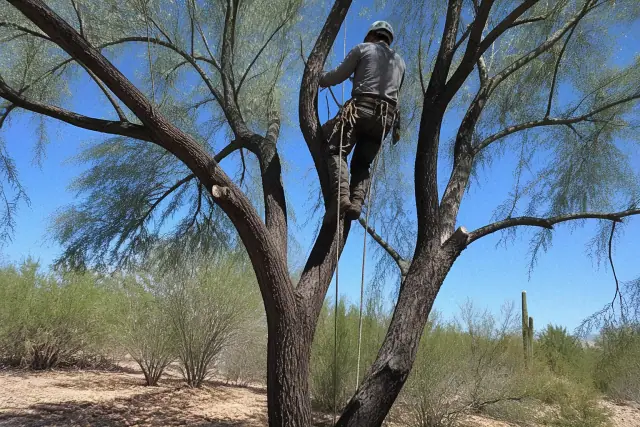
Arborist using ropes and climbing spikes to prune a mature tree in Tucson, AZ.

Honest Feedback from Local Customers

Customer Experiences
★ ★ ★ ★ ★

Our mesquite had two heavy limbs over the roof. The crew removed the deadwood, thinned the canopy, and explained why they kept the healthy structure instead of over-pruning it.

ML
Maria L.Tree Trimming - Sam Hughes
★ ★ ★ ★ ★

A July monsoon split a tree onto our fence in the Catalina Foothills. They explained the tension in the trunk, rigged the sections carefully, and cleared the driveway and debris.

DR
Daniel R.Storm Cleanup - Catalina Foothills
★ ★ ★ ★ ★

The old stump kept sending up suckers beside our irrigation line. They ground it to the depth we needed for new gravel and left the area raked and level.

PS
Priya S.Stump Grinding - Tucson
★ ★ ★ ★ ★

The arborist checked the canopy, root flare, and caliche soil before recommending a treatment plan. The written assessment made it clear what could be saved and what could wait.

JT
Jason T.Arborist Consultation - Oro Valley
Start with a Clear Scope

Schedule Your Tree Service Estimate

Tell us what you are seeing and schedule a on-site estimate. We will inspect the tree and property conditions, explain the recommended work, and provide a written scope before the job begins.

Tucson Tree Care Help

Frequently Asked Questions, Answered

Use these answers to understand common tree-service costs, timing, safety questions, desert plant requirements, and hiring considerations before scheduling an estimate.

Call Our Experts

Small trees under 30 feet typically run $150 to $500, while trees between 30 and 60 feet typically run $500 to $1,000. Trees taller than 60 feet or with a heavy trunk diameter can run $2,000 or more. Access, proximity to structures or power lines, and the need for a crane can change the final price, so we provide a on-site estimate.

Some seniors may qualify for free or reduced-cost removal when a tree is dead, dying, or a clear hazard to public or utility infrastructure, but program availability is not guaranteed. We evaluate the property conditions and discuss any applicable discount or assistance options during the estimate. Call to ask what may apply to your situation.

A 40-foot tree generally falls in the $500 to $1,000 removal range. Trunk diameter, canopy density, species, tight access, nearby structures, and required rigging can move the price within or above that range. An in-person estimate is needed to confirm the actual scope.

A tree around 40 to 60 feet tall with moderate trunk diameter may land near $1,000 when access is reasonable and major obstacles are absent. Tight side yards, power lines, large trunks, or crane access can increase the cost. Trees taller than 60 feet or with very large trunks often exceed $2,000.

Arizona property owners may generally trim branches and roots back to their property line, but they should not enter a neighbor's property or make cuts that damage the tree's health. A hazardous, diseased, or street-adjacent tree may require a different approach. A certified arborist assessment can help define a safer pruning plan before cutting.

Confirm that the company is licensed and insured, and request current documentation appropriate to the work. Ask whether a certified arborist is available for large removals, structural pruning, and health diagnoses. Get a written estimate that states the work scope and explains debris and stump handling.

Tucson's alkaline, caliche-heavy soils can limit nutrient availability, but not every tree needs fertilizer. A soil and tree-health assessment should come first because over-fertilizing desert-adapted native species can be harmful. When a deficiency is identified, deep-root fertilization or a soil amendment may improve drought tolerance and canopy color within a growing season for most species.

Most deciduous species are best trimmed in late winter before spring growth, while heavier pruning on flowering native trees is usually reserved until after bloom. Canopy thinning before monsoon season can reduce wind resistance. The correct timing still depends on the species, condition, and reason for pruning.

Palm trees generally need dead-frond removal at least once a year and may need more frequent attention near pools, sidewalks, and busy walkways. Date palms, fan palms, and queen palms should be trimmed without damaging the protective boot structure on the trunk. The goal is to remove hazards, not strip healthy material.

Residential stump grinding typically reaches 8 to 12 inches below grade for replanting and may go deeper for construction preparation. Most residential stumps take under an hour to grind, although diameter, roots, access, and the intended use of the space affect the work. Mulch can be hauled away or left for reuse.

Yes. The emergency service covers downed limbs, split trunks, and full tree failures affecting driveways, roofs, fences, vehicles, and yards. Calls involving blocked access, damaged structures, or utility contact receive priority, and utility contact is coordinated with Tucson Electric Power when needed.

A certified arborist evaluates lean, root heave, cavities, codominant stems, included bark, deadwood, canopy condition, and surrounding targets. Some defects can be addressed with corrective pruning or structural support, while others make removal the safer recommendation. The decision is documented in the written assessment and estimate.

Saguaros, chollas, and prickly pear are protected under Arizona Native Plant Law. Removing or relocating a saguaro over a certain size requires a permit through the Arizona Department of Agriculture. We handle the permitting process and use specialized protective gear, padded rigging, and lifting equipment for extraction.

Velvet mesquite, palo verde, desert willow, and Texas ebony are among the desert-adapted choices recommended for low water needs and wind tolerance once established. Proper root-flare exposure and native-soil backfill help prevent planting problems in caliche-heavy yards. New trees need deep, infrequent watering through their first two growing seasons.