Proudly serving Tucson, Oro Valley, Marana, Catalina Foothills, Casas Adobes, Sahuarita & surrounding areasCall or Text 24/7: 520-569-2093

Tree Removal & Hazardous Tree Extraction Services in Tucson, AZ

Tucson Tree Service Co. provides professional tree removal for homeowners and businesses across Tucson and Pima County. Our complete tree care includes residential and commercial removal, emergency storm cleanup, stump grinding, tree trimming, and arborist consultation. We also handle palm tree trimming, cactus removal, tree planting, and removal of mesquite, palo verde, acacia, citrus, oak, and other problem trees. Every recommendation starts with the tree, the site, and the reason removal may be necessary.

Tucson trees endure 100-plus-degree summers, drought-stressed soil, and monsoon microbursts from July through September. Those conditions can lead to cracked limbs, leaning trunks, dead canopy, and sudden root-plate failure. Our licensed and insured crews plan rigging and equipment around the tree, access, nearby buildings, and utility conflicts before cutting begins.

Call for a on-site estimate and a written price based on the tree's size, species, access, and surrounding hazards. We will walk the property with you before work begins and explain whether removal, corrective pruning, or another care option fits the condition.

Tucson Tree Service Co. provides tree removal in Tucson and the surrounding metro area, including Oro Valley, Marana, Sahuarita, Vail, and Green Valley.

★ ★ ★ ★ ★4.9/5 Average Rating · 20+ Years of Experience · Thousands of Customers Helped · Licensed & Insured · Residential & Commercial

Tree Removal Options & Benefits

What Is Professional Tree Removal?

Professional tree removal is a planned dismantling process that accounts for the tree's lean, height, diameter, wood density, drop zone, and proximity to structures or power lines. The goal is to lower sections in a controlled way instead of relying on an open fall.

A tree that appears stable from the ground may have internal decay, girdling roots, mistletoe pressure, or a compromised root plate. Many established Tucson trees are now 40 to 80 years old, and repeated drought stress and monsoon wind loading can expose weaknesses that are not obvious until a limb or trunk fails.

Our arborist evaluates whether a tree truly needs removal or may be saved with corrective pruning. When removal is appropriate, the crew selects rigging, harnesses, bucket-truck access, or crane support according to the tree and site rather than using a one-method-fits-all approach.

Benefits of Professional Tree Removal

Removing a dead, unstable, or badly placed tree can protect the spaces people use while opening the site for a cleaner, more practical next step. A professional assessment also helps avoid removing a storm-damaged tree that could still recover with appropriate care.

  • Reduce the risk from dead limbs, split trunks, and unstable root plates
  • Protect rooflines, vehicles, fences, pools, driveways, and block walls
  • Address trees with drought, freeze, root-rot, or beetle damage
  • Clear space for new construction, pool installation, hardscape, or replanting
  • Plan safe work around overhead lines and tight access points
  • Choose stump grinding, wood chipping, mulch, or debris haul-off
  • Limit tripping hazards, pest habitat, and unwanted stump regrowth
  • Receive an arborist-backed recommendation before cutting starts
Complete Tree Care

Tucson Tree Removal Services

Our work ranges from one dead backyard tree to storm cleanup and full commercial lot clearing. We match the crew, equipment, removal method, stump option, and cleanup plan to the tree species, condition, access, and surrounding property.

Residential & Commercial Tree Removal

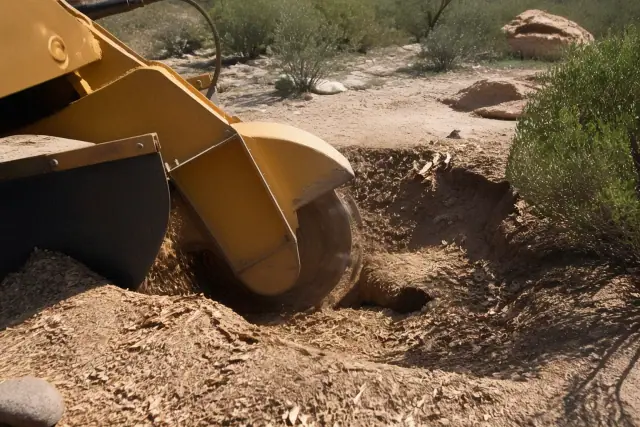
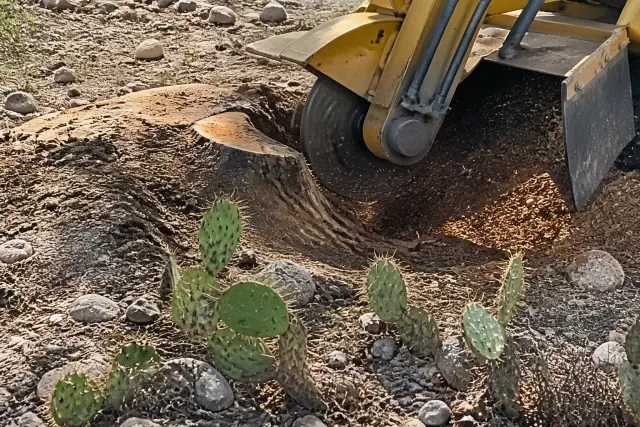
Stump grinder pulverizing a large wooden tree stump into mulch at a worksite in Tucson, AZ, surrounded by desert soil.

We remove trees from homes, rental properties, and commercial sites across the Tucson metro. Planning considers pedestrian areas, driveways, neighboring property, roofs, fences, equipment access, and the amount of debris the job will produce.

Request Estimate

Dead & Diseased Tree Removal

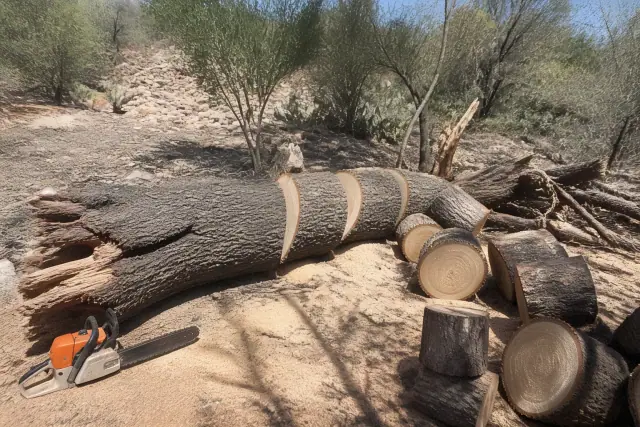
Contractor cutting a downed tree trunk into logs at a jobsite in Tucson, AZ with scattered wood debris and desert brush.

Drought stress, root rot, beetle infestation, freeze damage, and canopy mistletoe can leave a Tucson tree too weakened to retain safely. Prompt removal keeps brittle limbs and dead trunks from becoming larger hazards during the next wind event.

Request Estimate

Emergency & Storm-Damage Removal

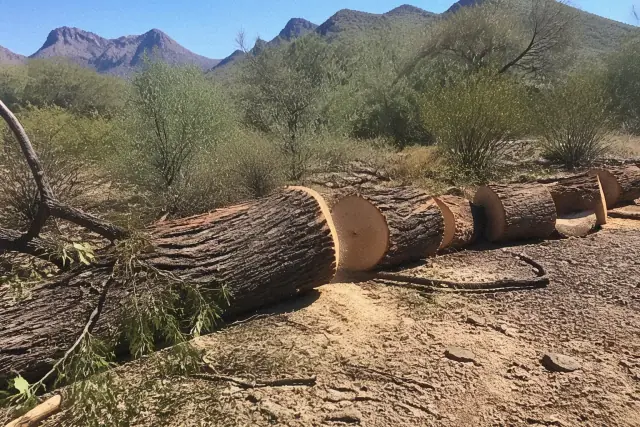
Worker cutting a large, storm-damaged tree trunk into logs in the Sonoran desert landscape of Tucson, AZ.

Monsoon microbursts and haboob-driven winds can split trunks or drop trees onto roofs, vehicles, and power lines. Our emergency service removes downed material, secures the site, and assesses whether the remaining tree can be corrected or requires full removal.

Request Estimate

Stump Grinding & Removal

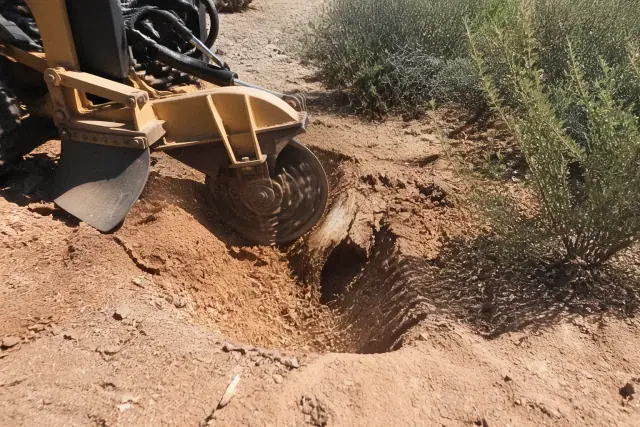
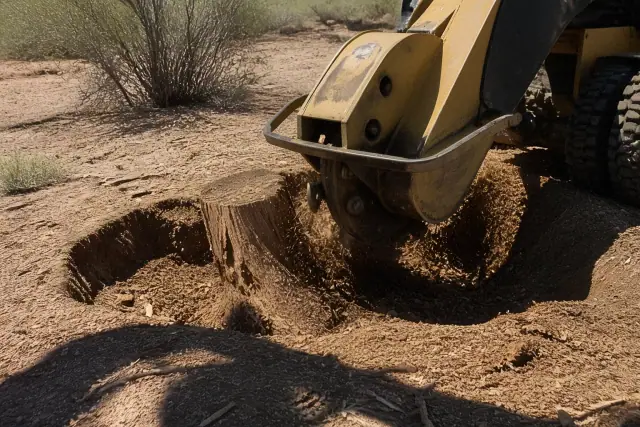
Stump grinder machine removing a tree stump into mulch in rocky desert soil in Tucson, AZ.

Mechanical stump grinding reduces the stump and surface roots 4 to 12 inches below grade and leaves chips that may be used as mulch. Full stump removal extracts the root ball, disturbs more soil, and is generally reserved for areas being replanted or regraded immediately.

Request Estimate

Palm Tree & Cactus Removal

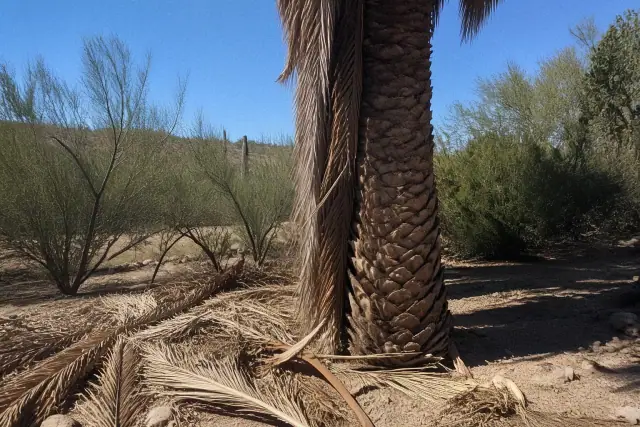
A tall palm tree trunk being cleared of dead fronds with debris at the base in Tucson, AZ.

Palm trunks require controlled sectioning so heavy pieces do not fall onto buildings or block walls. For saguaro, prickly pear, and other protected native cacti, we follow Arizona's Native Plant Law and consider compliant relocation when a saguaro may legally be transplanted.

Request Estimate

Lot Clearing & Complete Tree Care

Stump grinder pulverizing a tree stump into mulch in rocky desert soil in Tucson, AZ.

Commercial development, new construction, pool installation, and landscape changes may require clearing several trees and stumps from one site. We can combine removal with trimming, pruning, health consultation, chipper service, debris haul-off, and desert-adapted tree planting in one coordinated scope.

Request Estimate
Removal Options

Tree Removal Methods for Different Sites

Tree species, stability, clearance, access, and the plans for the property all affect how removal should proceed. These service approaches cover the open yards, tight residential spaces, storm hazards, commercial sites, and stump decisions common across Tucson.

Arborist using rigging ropes and pulleys to lower a large tree section during a residential removal in Tucson, AZ.

Controlled Residential Removal

Backyard and side-yard removals often require the tree to be dismantled in smaller sections. Rigging helps control each piece when an open drop zone is limited by the home or landscape.

  • Roofline and patio clearance
  • Pool and driveway protection
  • Fence and block-wall planning
  • Managed rigging and drop zones
  • Debris chipping and haul-off options
Request Estimate
Machinery grinding a tree stump into mulch at a lot clearing site in Tucson, AZ.

Commercial Removal & Lot Clearing

Commercial removal can range from one hazardous tree near a building to clearing a development site. The plan coordinates equipment access, multiple trees, stump work, wood processing, and final debris removal.

  • Single-tree commercial hazards
  • Full lot clearing for development
  • New construction and pool sites
  • Chipper service and wood processing
  • Coordinated stump and debris removal
Request Estimate
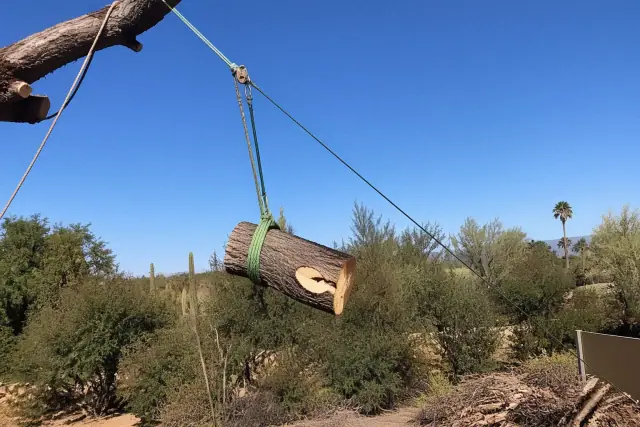
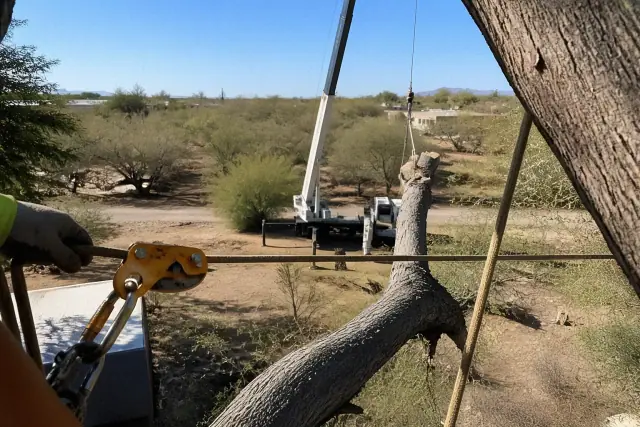
Crane lowering a large tree limb using rigging ropes and a friction device in Tucson, AZ.

Crane-Assisted Hazardous Removal

Large, leaning, or confined trees may require bucket-truck and crane support to move heavy sections away from structures and utilities. This method is selected from the actual risk, access, and rigging complexity rather than tree height alone.

  • Large mesquite and eucalyptus removals
  • Trees leaning toward rooflines
  • Conflicts with overhead utility lines
  • Restricted ground-level drop zones
  • Controlled lifting of heavy sections
Request Estimate
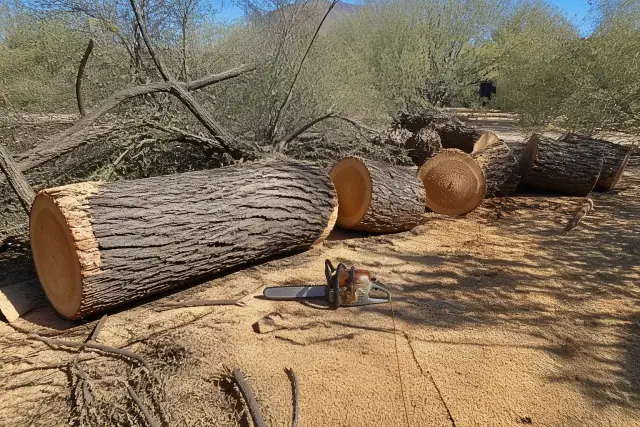
Large downed tree trunk being cut into logs on a desert worksite in Tucson, AZ, surrounded by sawdust and creosote bushes.

Emergency Storm Removal

After a monsoon event, the immediate need may be clearing fallen limbs, stabilizing a split trunk, or removing a tree resting on a structure. An arborist checks root movement, trunk cracking, and canopy loss before deciding whether the remaining tree is salvageable.

  • Downed limb and trunk removal
  • Split-tree hazard assessment
  • Trees leaning on structures
  • Corrective-pruning evaluation
  • Storm debris haul-off
Request Estimate
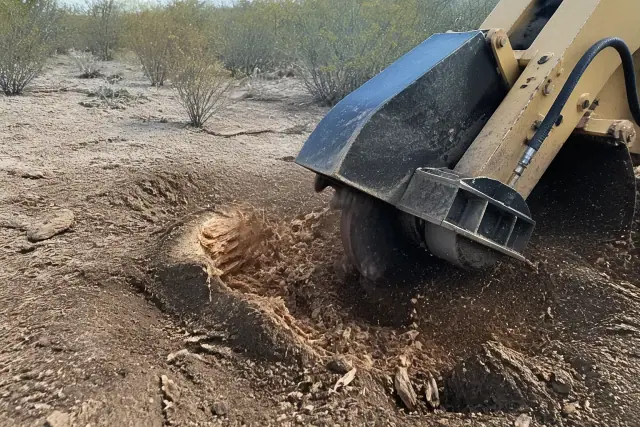
A stump grinder pulverizing a tree stump into mulch in desert soil under bright sunlight in Tucson, AZ.

Removal With Stump Grinding

Adding stump grinding clears the visible remnant after the trunk and canopy are gone. It can reduce termite and wood-boring beetle habitat, remove a trip point, and limit the persistent regrowth associated with mesquite and palo verde roots.

  • Surface-root grinding
  • Wood chips for possible mulch use
  • Cleaner hardscape and lawn lines
  • Space for replanting or regrading
  • Full root-ball removal when appropriate
Request Estimate
Finding the Right Fit

Choosing a Safe Tree Removal Approach

A sound recommendation weighs tree health against the risks posed by lean, decay, roots, storm damage, and surrounding structures. Our arborist explains the findings, and the crew builds the removal around documented safety practices, suitable equipment, and the cleanup options you select.

Tree Condition Evaluation

Our arborist assesses root structure, disease pressure, tree species, canopy loss, and structural risk before removal. That evaluation distinguishes a genuine hazard from a tree that may respond to corrective pruning or a focused care plan.

Licensed & Insured Service

Tucson Tree Service Co. provides licensed and insured tree service. Work planning accounts for the tree, access, rigging, nearby property, and whether pruning is an appropriate alternative to removal.

Equipment for Controlled Removals

Proper rigging, harnesses, bucket trucks, and crane support allow the crew to manage heavy wood around homes, block walls, and utility conflicts. The same accountable team can assess, remove, grind, chip, and clean up the site.

Tree Removal Warning Signs

When Tucson Trees Become Hazardous

Visible cracks, dead canopy, shifting roots, severe lean, and contact with structures all deserve a closer look. Request an on-site assessment when a tree changes after drought, freeze, or monsoon weather, or when roots and branches begin affecting how you use the property.

Get a Free Assessment

Dead or Diseased Canopy

Dead branches, root rot, beetle activity, or heavy mistletoe in mesquite and palo verde can signal a declining tree. An arborist evaluates whether the problem is isolated enough for pruning or has compromised the entire tree.

Monsoon-Split Trunks

Microbursts and wind loading can open trunk cracks or tear major limbs during Tucson's July-through-September monsoon season. Split wood may leave the remaining canopy unbalanced even when the tree is still standing.

Leaning or Unstable Trees

A new lean, raised soil, or visible root-plate movement can indicate loss of support below ground. The evaluation considers lean angle, soil stress, canopy weight, and the direction a failure could travel.

Roots Damaging Hardscape

Expanding roots may lift foundations, driveways, or block walls and interfere with planned pool work. Removal planning accounts for both the trunk and the root work needed for the property's next use.

Trees Near Structures or Utilities

Branches and trunks encroaching on roofs, pools, driveways, fences, or overhead lines leave little margin for an uncontrolled cut. Professional planning establishes the drop zone, equipment position, and rigging path before work starts.

Stumps and Regrowth

A leftover stump can become a trip hazard, harbor termites or wood-boring beetles, and interrupt new hardscape or planting. Mesquite and palo verde can also resprout from root fragments, making grinding a practical addition to removal.

How It Works

Our Tucson Tree Removal Process

From the first walk-through to final cleanup, the process keeps the recommendation, price, equipment plan, and disposal options clear. Each step is adjusted to the tree's condition and the space around it.

01.

On-Site Tree Evaluation

We inspect species, root structure, trunk condition, canopy loss, disease pressure, lean, and nearby structures or utilities. The arborist determines whether full removal is warranted or corrective care may preserve the tree.

02.

Written Estimate

We measure tree height and diameter, review equipment access and utility conflicts, and define whether stump grinding or debris removal is included. You receive a written price before work begins, with no obligation.

03.

Removal & Rigging Plan

The crew establishes drop zones and chooses the rigging, harnesses, bucket truck, or crane support suited to the job. The plan accounts for dense wood, tight access, rooflines, walls, pools, and utility proximity.

04.

Controlled Tree Removal

Crews follow ANSI Z133 safety practices while sectioning and lowering the tree according to the site plan. Large mesquite, palo verde, and eucalyptus removals receive the equipment and rigging their weight and location require.

05.

Stump & Debris Options

Choose stump grinding, full stump removal when appropriate, wood chipping, mulch, or debris haul-off according to the future use of the site. The selected options are defined in the quote so hauling you do not need is not added automatically.

06.

Cleanup & Next-Step Care

The crew cleans the work area and completes the agreed chipper service or haul-off. If the property needs replanting, pruning, irrigation adjustments, or monitoring, the arborist can outline a care plan using desert-adapted species and Tucson Water conservation guidance.

Plan Your Tree Removal

Schedule a Tree Removal
Consultation

Tell us what changed, where the tree stands, and what concerns you about the site. Tucson Tree Service Co. will inspect the property, explain the safest appropriate option, and provide a written estimate before work begins.

Tree Removal Help

Tucson Tree Removal FAQs

These answers cover Tucson tree-removal prices, property-line questions, stump options, storm response, protected cacti, and the details to confirm before hiring a crew. Site conditions determine the final recommendation and written price.

Call Our Arborist

Across the Tucson market, small trees under 30 feet typically run $200 to $800, while medium trees from 30 to 60 feet run roughly $800 to $2,500. Large or hazardous removals requiring crane support can range from $2,500 to over $4,500; a mesquite around 40 feet has been quoted locally between $1,800 and $4,200 depending on access and rigging complexity. We provide a free on-site inspection and written price for the actual tree and site.

A 20-foot tree generally falls into the small-tree category and typically costs between $200 and $650 depending on species, trunk diameter, access, and whether the stump also needs grinding. Palo verde and citrus at this size are usually toward the lower end, while dense hardwoods tend to cost more.

A tree near the $1,000 price point is often 30 to 40 feet tall with a trunk diameter of 12 to 18 inches and reasonable equipment access. It may require a bucket truck or partial rigging but typically does not have the major structural or utility conflicts that drive the price higher.

A 30-foot tree often costs $600 to $1,800 depending on species, trunk diameter, and site access. A dead or leaning tree near a building may cost more because controlled rigging adds complexity.

Price depends on height, trunk diameter, species, wood density, equipment access, nearby structures or power lines, and the rigging needed for a controlled removal. Stump grinding, wood chipping, mulch, and debris haul-off also affect the scope, so our written quote identifies what is included.

Arizona generally follows common-law property principles sometimes called the Massachusetts Rule: the owner of the trunk owns the tree, while a neighbor may trim encroaching branches or roots back to the property line without entering the neighboring property or damaging the tree's health. A healthy tree is not typically removed solely because branches overhang a line, although actual damage or a documented hazard can change the situation. Protected native species such as saguaro cacti are separately regulated under Arizona's Native Plant Law.

The property owner affected by overhanging branches generally may trim them to the property line at their own expense as long as the work does not damage the tree's health. The tree owner is not typically obligated to trim unless the branches create a genuine safety hazard or measurable property damage. A documented arborist assessment can help clarify the tree's condition before a neighbor dispute moves forward.

Yes. We provide emergency tree service and prompt tree removal to clear hazards and secure properties after monsoon damage. The response can cover downed limbs, split trunks, trees leaning on structures, stump grinding when the tree is a total loss, and debris haul-off.

Stump grinding mechanically reduces the stump and surface roots below grade, while full removal pulls out the entire root ball. Grinding disturbs less soil and leaves wood chips; full removal is typically used when the area will be replanted or regraded immediately.

Sometimes. Our arborist checks root-plate movement, trunk cracking, canopy loss, and structural balance to determine whether corrective pruning could preserve the tree. Full removal is recommended when the remaining structure presents a genuine hazard.

Saguaro, prickly pear, and other protected native cacti are subject to Arizona's Native Plant Law, administered by the Arizona Department of Agriculture. Removal, harvesting, or destruction may require proper permitting, and relocation can be an option when a saguaro may legally be transplanted. We handle cactus work in compliance with those requirements.

Ask whether the company is licensed and insured, what certification its arborist holds, how it plans for utility-line proximity, and whether stump grinding and debris haul-off are included. Also confirm how unexpected internal decay could affect the plan and whether the written price can change once work begins.

Tucson Tree Service Co. serves residential and commercial properties throughout Tucson, Pima County, and the surrounding metro area. Named service areas include Oro Valley, Marana, Sahuarita, Vail, and Green Valley, along with Tucson neighborhoods such as Sam Hughes, Barrio Viejo, and the Catalina Foothills.