Proudly serving Tucson, Oro Valley, Marana, Catalina Foothills, Casas Adobes, Sahuarita & surrounding areasCall or Text 24/7: 520-569-2093

Tree Removal & Hazardous Landscape Management in Sahuarita, AZ

Tucson Tree Service Co. provides tree removal, tree trimming, tree pruning, stump grinding and removal, emergency tree service, storm cleanup, palm trimming, cactus removal, arborist consultation, and tree planting in Sahuarita. We work with homeowners and businesses across master-planned subdivisions, ranch properties, older desert lots, and commercial sites. Our crews address hazard trees, overgrown canopies, damaged cacti, declining desert trees, and stumps that interfere with the next use of a property. Each service is planned around Sonoran Desert growing conditions rather than a generic landscaping approach.

Rocky, alkaline caliche can trap water around roots after monsoon downpours while limiting deeper root growth. Mesquite, palo verde, eucalyptus, palms, and ornamental trees can then develop stress, shallow roots, heavy limbs, or hidden structural weakness. We inspect the trunk, canopy, root plate, nearby structures, pools, walls, and utility lines before recommending pruning or removal. A free written quote helps you understand the work before a stressed, split, or leaning tree becomes a larger hazard.

Sahuarita sits about 15 miles south of Tucson and has a population near 35,638 across new subdivisions, agricultural land, retirement communities, and established desert properties. We serve Rancho Sahuarita, Quail Creek, Madera Highlands, the Farmers District, and nearby rural corridors.

★ ★ ★ ★ ★4.9/5 Average Rating - 20+ Years of Experience - Sahuarita Tree Service Company Specialists - Residential & Commercial
Complete Tree Care

Tree Service Categories in Sahuarita, AZ

Our services cover removal, maintenance, storm response, stump work, palms, cacti, health diagnosis, and planting. Crews work in Rancho Sahuarita, Quail Creek, Madera Highlands, Sahuarita Estates, the Farmers District, and properties along Sahuarita Road, Duval Mine Road, and Pima Mine Road. For nearby coverage, we also provide tree care in Green Valley, AZ . The same residential and commercial services extend through Canoa Ranch, Corona de Tucson, Tucson's south side, and the Mission Road corridor.

Tree Removal

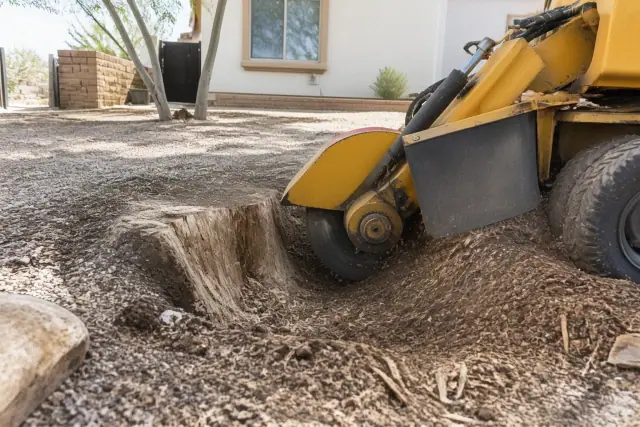
A stump grinder turning a large wooden tree stump into mulch in Sahuarita, AZ.

We remove dead, storm-damaged, hazardous, and unwanted trees after evaluating trunk integrity, root heave, access, structures, and utility lines. A residential removal may take from a few hours to a full day, with sectional dismantling, rigging, a crane, or a bucket truck used when a straight felling cut is not appropriate.

Explore Service

Tree Trimming

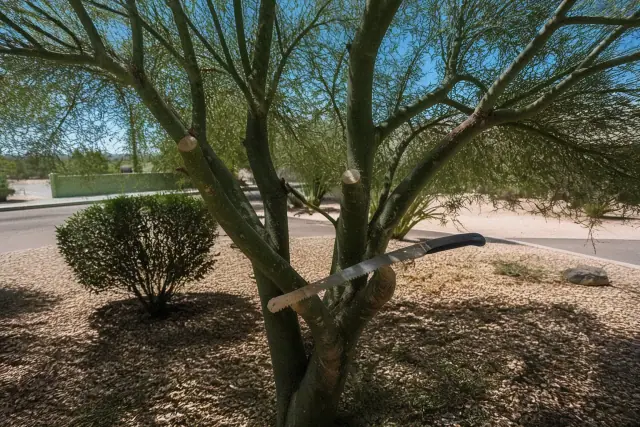
Precision pruning of a desert tree with a saw resting on a branch at a jobsite in Sahuarita, AZ.

We thin interior growth, remove crossing branches, and raise canopies away from roofs and driveways using clean cuts at the branch collar. The work is especially useful for mesquite and eucalyptus canopies planted in Rancho Sahuarita and Quail Creek during the 1990s and 2000s, and we also trim oleander hedges used as HOA privacy screens.

Explore Service

Tree Pruning

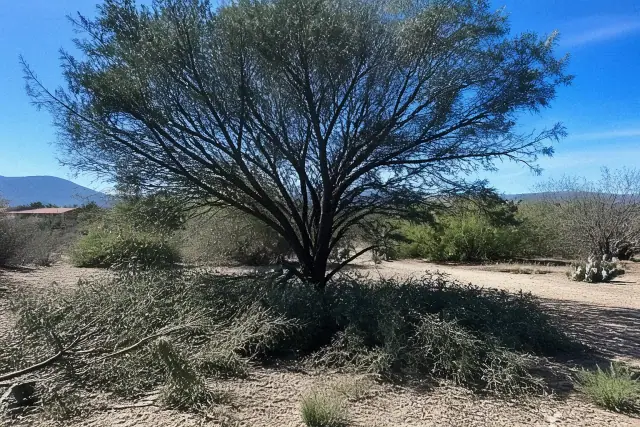
Precision canopy pruning on a tree in the Sonoran desert landscape of Sahuarita, AZ.

Structural pruning establishes strong scaffold branching on young trees and can prevent corrective removal ten years later. Preventive care also includes deadwood removal, canopy thinning, and root inspection while avoiding topping and poorly timed cuts that can trigger weak regrowth or summer stress.

Explore Service

Stump Grinding & Removal

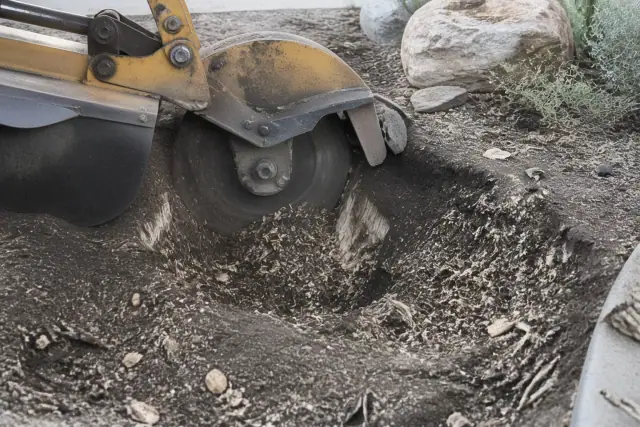
A stump grinder pulverizing a large wooden tree stump into mulch in a Sahuarita, AZ residential landscape.

Our equipment grinds a stump 4 to 6 inches below grade so the area can be prepared for sod, decomposed granite, or a new planting. We can also remove a full root ball when foundations, septic lines, or irrigation make that necessary, then backfill and level the work area.

Emergency Tree Service

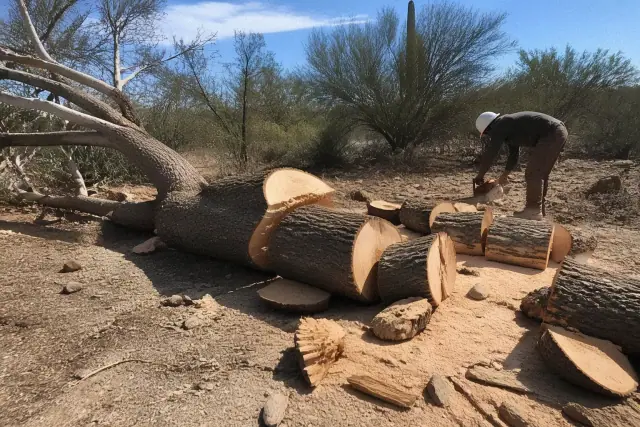
An arborist sectioning a downed tree trunk into logs in the Sonoran desert landscape of Sahuarita, AZ.

Our emergency tree service responds to downed trees, split trunks, blocked driveways, and limbs threatening roofs, vehicles, carports, or fences. prompt response is standard when a fallen tree has struck a structure, vehicle, or fence, with dangerous conditions triaged ahead of routine work during the July-to-September monsoon period.

Storm Damage Cleanup

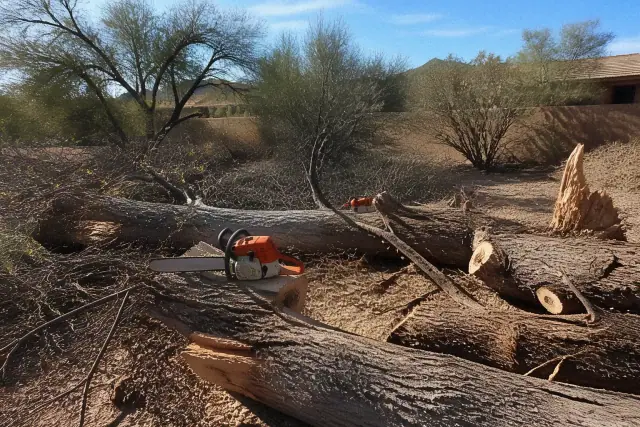
Chainsaws resting on a downed tree trunk during storm damage cleanup in Sahuarita, AZ.

Storm calls rise every July and August as cells moving off the Santa Rita Mountains bring straight-line winds. We clear split branches and downed trees from roofs and fences, grind uprooted stumps, inspect remaining trunks and root plates for hidden damage, and document storm damage with photos for an adjuster.

Palm Tree Trimming

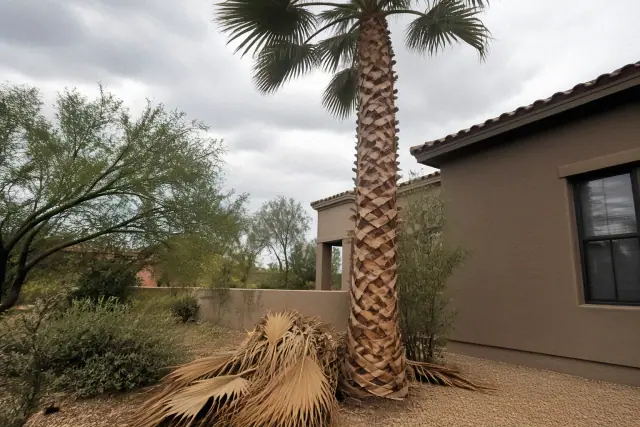
A professional palm tree trimming project at a residential home in Sahuarita, AZ.

We remove dead and dying fronds from Mexican fan, Washingtonian, and California fan palms without over-pruning the crown. Most palms need trimming once or twice a year depending on species and growth rate, using spikeless climbing or a bucket truck to avoid trunk punctures.

Cactus Removal

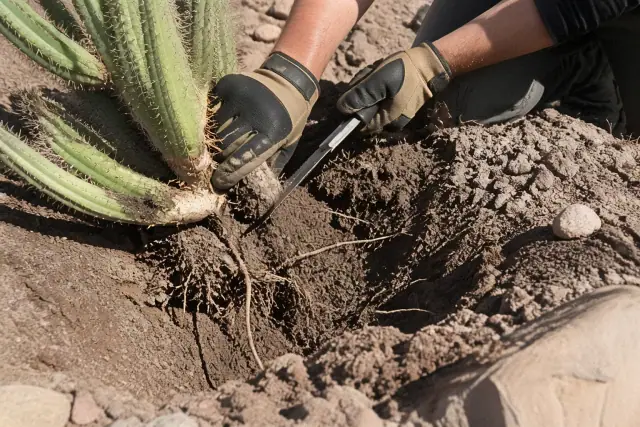
Worker using a saw and gloves to remove a large cactus from rocky soil in Sahuarita, AZ.

We handle damaged, diseased, fallen, or misplaced saguaros, prickly pear, cholla, and other native cacti. Because Arizona Native Plant Law may require a permit for removal or relocation, we advise on requirements and use padded slings with root-ball preservation when a healthy cactus can be moved on the property.

Tree Health & Arborist Consultation

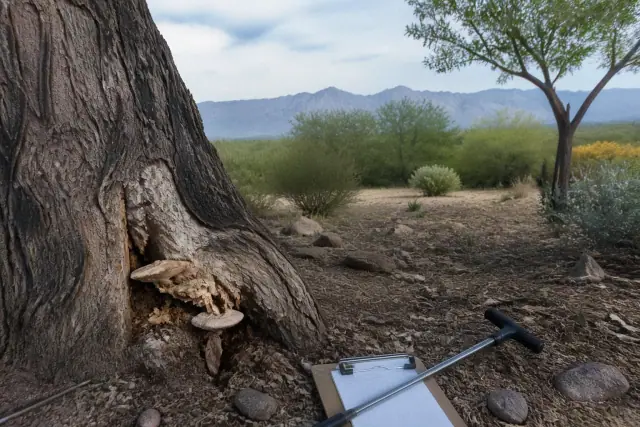
Arborist inspecting trunk decay and fungal growth on a tree in Sahuarita, AZ.

Our arborists evaluate yellowing foliage, dieback, fungal conks, unusual leaf drop, root rot from overwatering, borer activity in stressed mesquite, and nutrient deficiencies in alkaline soil. Recommendations may include fertilization, deep-watering schedules, targeted disease treatment, structural pruning, or removal according to the tree's condition.

Tree Planting

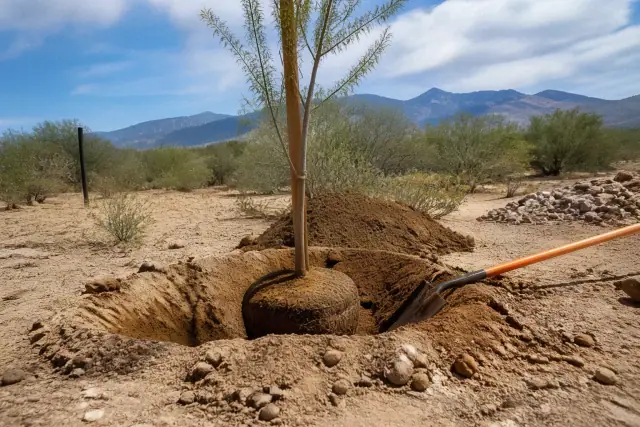
A technician backfilling soil around a newly planted sapling in Sahuarita, AZ, with the Santa Rita Mountains in the back.

We select drought-adapted species for the property's microclimate and set the correct planting depth and staking. Proper placement helps avoid root girdling, conflicts with sidewalks or block walls, and the loss of mature shade that a newly planted tree cannot replace for years.

Service Selection

How to Choose the Right Tree Service in Sahuarita

The right plan depends on whether a tree can be preserved, how close it stands to structures or utilities, and what access is available for crews and equipment. A careful provider should inspect roots, trunk, canopy, surrounding property, protected plants, and cleanup needs before choosing pruning, sectional dismantling, directional felling, or removal. Use the factors below to compare the scope, method, and written estimate rather than selecting on a single price alone.

On-Site Hazard Assessment

Start with an inspection of trunk integrity, root heave, canopy health, clearance, fungal growth, and any split or hanging limbs. This helps distinguish a tree that needs structural pruning or treatment from one that presents a removal hazard.

Access and Rigging Plan

Confirm how the crew will protect block walls, pools, fencing, irrigation, roofs, and nearby utility lines. Tight backyards may require sectional dismantling with rigging, a crane, or a bucket truck instead of straight felling.

Stump and Debris Scope

Ask whether the quote includes chipping, trunk haul-away, stump grinding, backfill, and final leveling. Tucson Tree Service Co. removes debris unless firewood or mulch is requested on-site, and the stump scope is itemized separately when appropriate.

Desert-Specific Pruning

A local pruning plan should account for monsoon wind, alkaline soil, extreme heat, and the growth habits of mesquite, palo verde, citrus, eucalyptus, and other species on the property. Proper branch-collar cuts and seasonal timing reduce the risk of weak regrowth, stress dieback, and sun-scald.

Protected Cactus Planning

Saguaros and other native cacti may be subject to Arizona Native Plant Law before removal or relocation. The plan should address permit requirements, safe handling, padded support, and root-ball preservation when a healthy specimen can be replanted.

Written Itemized Estimate

A written estimate should explain the removal or pruning method, stump handling, debris disposal, and any access-related equipment. Our free quote sets that scope before work begins so the included services and site conditions are clear.

Sahuarita Tree Issues

Common Tree Problems on Sahuarita Properties

Sahuarita receives roughly 11 to 12 inches of annual rain, much of it concentrated in the monsoon window, while long dry periods and hard caliche constrain tree roots. Those conditions can combine with extreme surface heat, heavy canopies, irrigation problems, decay, and wind loading. An inspection can connect visible symptoms to the underlying issue before choosing treatment, pruning, or removal.

Request Tree Assessment

Caliche-Constrained Roots

Caliche layers a foot or two below the surface can block vertical root growth and trap water after heavy rain. Trees may develop shallow, spreading roots that lift, heave, or lose stability when saturated soil meets high wind.

Monsoon Wind Damage

Microbursts and haboob winds can split trunks, tear off major limbs, or topple shallow-rooted trees. Root-plate lifting and hidden trunk cracks may remain after the visible debris is cleared, so standing trees near roofs, vehicles, walls, and fences still need evaluation.

Heavy and Crossing Limbs

Dense interior growth, crossing branches, deadwood, and long heavy limbs add wind resistance to mesquite, eucalyptus, and other shade trees. Selective thinning and canopy balancing can improve clearance and structure without the weak epicormic regrowth caused by topping.

Heat and Sun-Scald Stress

Summer surface temperatures over asphalt and rock landscaping can exceed 140 degrees, stressing root zones and thin bark. Aggressive pruning during peak heat can suddenly expose trunks and branches, contributing to sun-scald, cambium damage, bark cracking, and dieback.

Root Rot and Borer Damage

Overwatering in poorly draining soil can contribute to root rot, while stressed mesquite may attract borers. Yellow foliage, unexplained leaf drop, dieback, or fungal conks at the trunk base warrant an arborist evaluation before decline reaches an advanced stage.

Stump Regrowth and Termites

A stump left after removal can attract termites, send up suckering growth, and block reseeding, hardscape, or planting plans. Grinding addresses the below-grade stump, while full root-ball removal may be the better choice near foundations, septic lines, or irrigation.

Why Choose Us

Why Choose Tucson Tree Service Co. in Sahuarita?

Our crews combine local desert-tree experience with documented safety, pruning, and removal practices. We assess whether a tree can be preserved, match the method to the site, explain the quote, and finish with the agreed stump and cleanup work. That approach matters on Sahuarita lots where caliche, walls, irrigation, nearby structures, protected cacti, and monsoon exposure can all change the job.

Licensed and Insured Crews

Tucson Tree Service Co. provides licensed and insured tree service for residential and commercial work involving rigging, heavy equipment, and access near structures.

Standards-Based Tree Care

Crews follow ANSI A300 pruning and removal standards, ISA best practices, OSHA tree-care safety standards, and ANSI Z133 practices. These standards guide pruning cuts, rigging, directional felling, equipment operation, and property protection throughout the job.

Thorough Site Cleanup

After the tree is down, we chip brush, cut the trunk into manageable rounds, and haul debris unless firewood or mulch is requested. Stump grinding can be completed the same day, followed by raking, backfilling, and leveling the work area.

Simple Process

Our Tree Service Process in Sahuarita

Every job moves from inspection and a written scope to site preparation, controlled tree work, stump or debris handling, and a final cleanup. The exact equipment changes with the tree and access, but the sequence keeps property protection, safety, and clear expectations at the center of the work.

01.

Site Visit and Inspection

We inspect trunk condition, canopy health, root heave, access, and clearance from structures, pools, block walls, irrigation, and utility lines. Protected plants and hidden storm damage are flagged during the same visit.

02.

Written Scope and Estimate

The written estimate covers the recommended service, removal method, stump handling, debris disposal, and equipment needs. The agreed scope is set before work begins, without surprise charges once the crew starts.

03.

Access and Property Protection

The crew stages climbers, rigging, a bucket truck, crane access, or ground equipment according to the site. Fencing, roofs, pools, walls, vehicles, and irrigation are considered before limbs or trunk sections are lowered.

04.

Controlled Tree Work

Crews use directional felling, sectional dismantling, crane-assisted removal, or service-specific pruning as site conditions require. Cuts, rigging, and equipment operation follow the stated tree-care and job-site safety practices.

05.

Stump and Debris Handling

Brush is chipped, trunks are cut into manageable rounds, and debris is hauled unless you ask to keep firewood or mulch. If included, stump grinding or full root-ball removal follows the scope in the estimate.

06.

Final Cleanup and Documentation

We rake and level the grind area, clear the agreed debris, and leave the work zone ready for its next use. When storm damage is involved, photos can document the affected tree and property for an insurance adjuster.

Practical Outcomes

Tree Care Outcomes for Sahuarita Properties & Businesses

Case Study 1: Safer access: Removing a split, leaning, or fallen tree can reopen a driveway and reduce the immediate threat to a roof, fence, vehicle, or carport.

Case Study 2: Better structure: Selective pruning can remove deadwood and crossing limbs, reduce canopy wind resistance, and preserve the shade of a mature mesquite or palo verde when removal is not necessary.

Case Study 3: Usable ground: Grinding or removing a stump, backfilling, and leveling can clear space for decomposed granite, sod, hardscape, or drought-adapted planting.

Plan Your Tree Work

Schedule a Sahuarita
Tree Service
Consultation

Tell us whether you are dealing with a hazardous tree, overgrown canopy, storm debris, declining palm or cactus, old stump, or planting project. We will inspect the site, explain the recommended scope, and provide a free written quote for the work.

Local Tree Service Help

FAQs About Tree Service in Sahuarita, AZ

These answers cover pricing factors, emergency response, stump work, trimming, cactus requirements, tree health, cleanup, and local service coverage. A site visit is still the most reliable way to determine the right service and scope for a particular tree.

Call Our Tree Experts

National data cited in the source places average removal costs between $450 and $1,450, with a broader range of $373 to $3,300. Another national estimate is about $750, with small-tree work near $150 and large hazardous removals above $2,000; ornamentals under 30 feet generally cost less than mature mesquite or eucalyptus over 50 feet. Sahuarita pricing depends on tree size, access, caliche-bound roots, structures, power lines, crane needs, stump work, and haul-away, so we provide a written site-specific estimate.

The source describes a general Arizona range of $200 to $2,000, depending on height, trunk diameter, canopy spread, access, rigging, and nearby property. Crane work and stump grinding can add to the scope, so a statewide flat price is less useful than an on-site estimate.

A tree in the 50 to 65 foot range with a substantial trunk and moderate access challenges may fall near $1,000 based on the industry data cited in the source. Canopy density, proximity to walls or structures, rigging needs, and stump grinding matter as much as height, so a tight-backyard eucalyptus or mesquite may reach that level even when it is shorter.

Some municipal or utility programs may offer free or reduced-cost help when a dead or hazardous tree threatens public or utility infrastructure, but eligibility and availability vary. Contact Pima County or the Town of Sahuarita to ask about current assistance before arranging private removal; if no program applies, we can provide an itemized quote.

We offer emergency tree service for downed trees, leaning hazards, split trunks, and blocked driveways. prompt response is standard when a tree has fallen onto a structure, vehicle, or fence, while dangerous hanging limbs are triaged ahead of routine scheduling.

Our equipment typically grinds stumps 4 to 6 inches below grade. That clears the area for sod, decomposed granite, or planting, while full root-ball removal may be recommended near foundations, septic lines, or irrigation.

Palm trimming is generally needed once or twice a year depending on species and growth rate. The goal is to remove dead and dying fronds without over-pruning the crown, using spikeless climbing or a bucket truck according to height and access.

Trimming commonly thins overgrowth, removes crossing branches, and restores clearance from roofs or driveways. Structural pruning develops strong scaffold branches on young trees or corrects specific defects, while avoiding topping and poorly timed cuts that can create weak regrowth.

Arizona Native Plant Law protects saguaros and other native cacti, and some removals or relocations require a permit through the Arizona Department of Agriculture. We can review the specimen and site, advise on requirements, and use padded support with root-ball preservation when relocation is appropriate, because a mature saguaro can take decades to regrow if it is lost.

A pronounced lean, root-plate lifting, trunk splits, hanging limbs, extensive dieback, fungal conks, or major storm damage can indicate structural or health problems. An on-site assessment determines whether pruning, treatment, support, or removal is the appropriate response.

Monsoon microbursts and haboob winds arrive during a period when heavy runoff can saturate shallow root zones. Caliche limits deeper rooting, while dense canopies increase wind resistance, so a tree may split, uproot, or retain hidden trunk and root damage after the storm.

Most residential removals described in the source take from a few hours to a full day. Tree size, canopy density, access, structures, rigging or crane needs, stump grinding, and debris handling all affect the schedule.

Yes. We chip brush, cut the trunk into manageable rounds, and haul the debris unless you request firewood or mulch left on-site. The written estimate also explains stump grinding, backfill, and leveling when those services are included.

An arborist consultation can investigate yellow foliage, dieback, leaf drop, fungal conks, root rot, borer activity, and alkaline-soil nutrient problems. When preservation is practical, recommendations may include structural pruning, deep watering, fertilization, targeted treatment, or changes in irrigation rather than immediate removal.

We serve Rancho Sahuarita, Quail Creek, Madera Highlands, Sahuarita Estates, the Farmers District, and rural properties near Sahuarita Road, Duval Mine Road, and Pima Mine Road. Coverage also extends to Green Valley, Canoa Ranch, Corona de Tucson, Tucson's south side, and the Mission Road corridor for residential and commercial tree work.