Proudly serving Tucson, Oro Valley, Marana, Catalina Foothills, Casas Adobes, Sahuarita & surrounding areasCall or Text 24/7: 520-569-2093

Tree Removal & Desert Landscape Tree Care in Marana, AZ

Tucson Tree Service Co. serves homeowners and businesses throughout Marana, AZ. Our crews handle tree removal, tree trimming, tree pruning, stump grinding and removal, emergency tree service, storm damage cleanup, palm tree trimming, cactus removal, arborist consultation, and tree planting. We work with mesquite, palo verde, ironwood, eucalyptus, palms, and other trees found on local properties. Every recommendation starts with the tree, its surroundings, and the work the property actually needs.

Marana's caliche-heavy soil often forces roots shallow and wide, while long dry stretches followed by monsoon saturation can weaken anchorage. Wind events in July and August can then turn deadwood, included bark unions, or a leaning root plate into hazards for roofs, driveways, fences, pools, and irrigation lines. Our team evaluates those risks before recommending pruning, treatment, or removal. Licensed and insured crews, professional equipment, and knowledge of desert-tree biology help protect both residential and commercial sites.

Marana's growth over the past two decades-reaching roughly 51,908 residents in the 2020 census-has placed new subdivision landscaping beside older mesquite and ironwood groves. We serve Dove Mountain, Continental Ranch, Gladden Farms, downtown Marana, Cortaro, Twin Peaks, Rillito, Oro Valley, Catalina, northern Pinal County, and portions of northwest Tucson.

★ ★ ★ ★ ★4.9/5 Average Rating - 20+ Years of Experience - Marana Tree Service Company Specialists - Residential & Commercial
Tree Care Services

Tree Services Available in Marana, AZ

From routine pruning and palm maintenance to hazard removal and storm cleanup, each service is matched to the tree's condition, access, and surroundings. Property owners coordinating work across the Tucson area can also learn about our service in Catalina Foothills, AZ .

Tree Removal

Freshly cut tree stump in arid, rocky soil during a stump grinding job in Marana, AZ.

We remove dead, hazardous, and overgrown trees from residential and commercial lots, using directional felling or sectional dismantling as access requires. Tree hauling, disposal, and debris removal are included so brush and rounds are not left behind. Explore Service

Explore Service

Tree Trimming

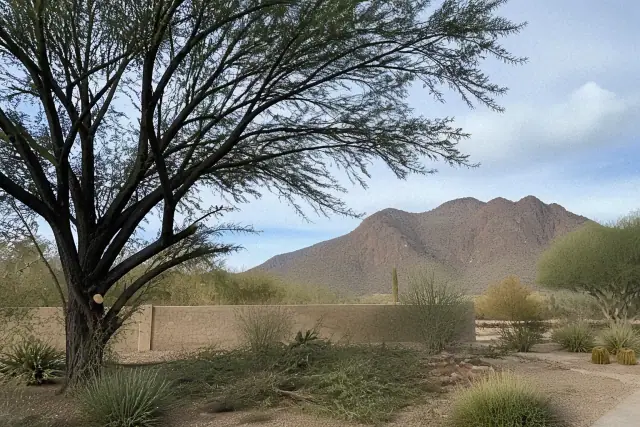
Precision pruning of a dense tree crown in a Sonoran desert landscape in Marana, AZ.

Canopy trimming improves clearance from roofs, power lines, and walkways while reducing wind-catching growth on mesquite, palo verde, and eucalyptus. Cut placement follows ANSI A300 pruning standards, and a two- to three-year trimming cycle is typical for many Marana properties. Explore Service

Explore Service

Tree Pruning

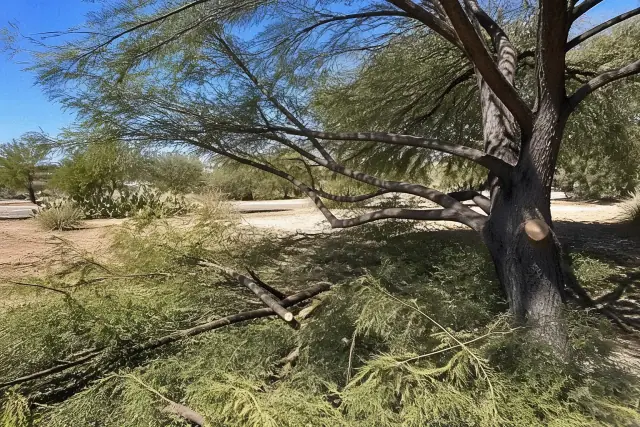
Precision canopy pruning on a dense tree in the Sonoran desert of Marana, AZ.

Pruning targets health and structure rather than shape alone. We remove deadwood, crossing branches, and weak included bark unions, placing cuts outside the branch collar to reduce decay entry points and support better wound closure in Marana's dry heat. Explore Service

Explore Service

Stump Grinding & Removal

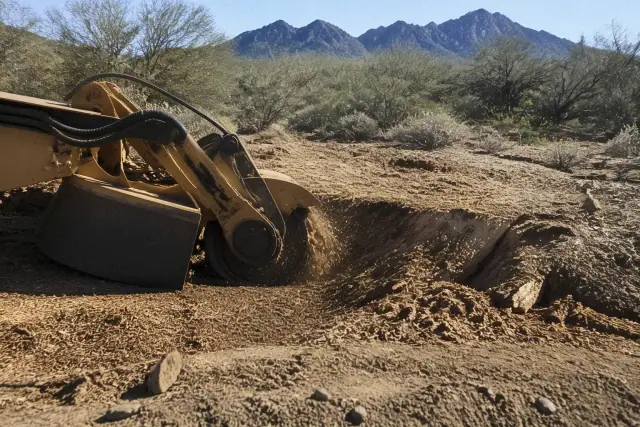
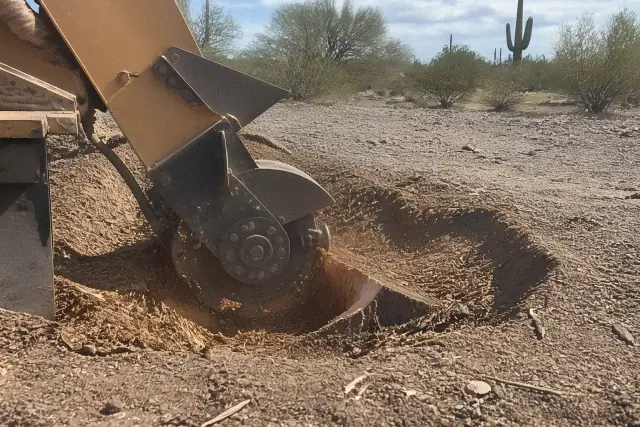
Stump grinder pulverizing a wooden tree stump into mulch at a desert jobsite in Marana, AZ.

Stumps are typically ground 6 to 12 inches below grade, depending on whether the site will receive sod, pavers, or a new planting. Grinding removes trip hazards and helps control thorny mesquite sprouts from cut root systems; Marana stump jobs typically finish the same day.

Emergency Tree Service

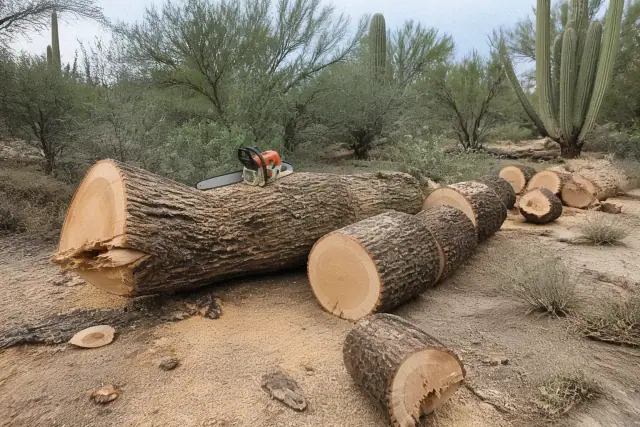
A large tree trunk being cut into logs on a job site in Marana, AZ, surrounded by desert brush and wood chips.

Emergency service addresses leaning trees, trees resting on structures, and trunks or limbs blocking driveways after monsoon damage. prompt tree removal is available for genuine hazards, with priority based on access blockage and danger to structures or vehicles.

Storm Damage Cleanup

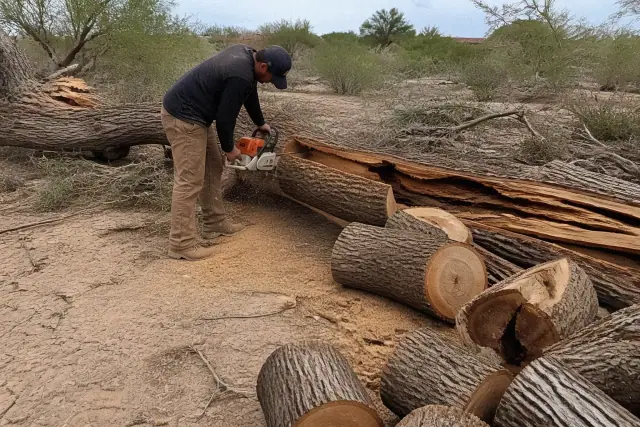
A large tree trunk split by a storm being cut into logs on arid ground in Marana, AZ.

Storm cleanup clears downed wood, split trunks, and scattered limbs from yards, roadways, roofs, and vehicles. Crews also inspect remaining trees for hidden stress fractures before hauling debris off site.

Palm Tree Trimming

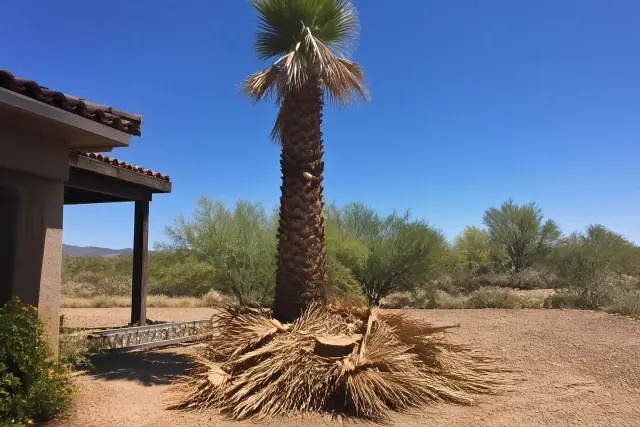
Contractor trimming dead palm fronds at a jobsite in Marana, AZ with discarded branches on the ground.

Annual palm trimming removes dead fronds and seed pods that can become fire fuel or rat habitat. We skirt and shape queen palms, Mexican fan palms, and date palms with climbing and rigging methods that avoid trunk-damaging spikes.

Cactus Removal

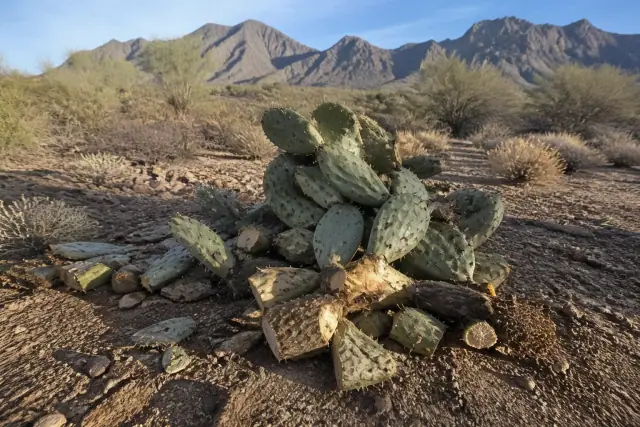
Uprooted prickly pear cactus sections waiting for transport on rocky desert soil in Marana, AZ.

Saguaro, cholla, and prickly pear removal requires careful handling, especially where detached cholla segments could reach people or pets. Saguaros over a protected height require Arizona Department of Agriculture authorization under Arizona Native Plant Law, so the permitting conversation comes before removal or relocation.

Tree Health & Arborist Consultation

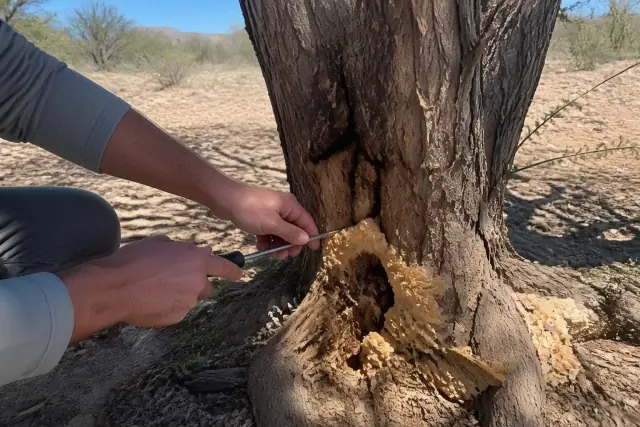
Arborist using a soil probe to inspect fungal decay at the base of a mature mesquite tree in Marana, AZ.

An arborist consultation checks canopy dieback, trunk cavities, root heaving, pest activity, deadwood percentage, and root-plate stability. The assessment helps distinguish a tree that may benefit from treatment or pruning from a confirmed hazard that should be removed before monsoon season.

Tree Planting

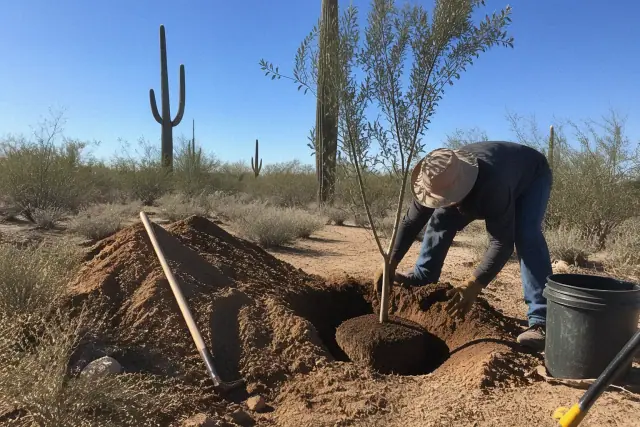
A technician backfilling soil around a newly planted sapling in Marana, AZ, with desert landscape in the background.

We plant desert-adapted mesquite, palo verde, ironwood, and acacia using the proper depth and a wide, shallow hole suited to restrictive caliche. Recommendations cover irrigation basins, placement, and staking through the first one to two growing seasons.

Service Selection

How to Choose the Right Tree Service in Marana

The right scope depends on tree health, structural risk, access, nearby targets, and what you want to do with the site afterward. An on-site assessment can separate routine trimming from corrective pruning, treatment, full removal, or urgent storm response.

On-Site Tree Assessment

Begin with trunk diameter at breast height, lean direction, root-plate condition, canopy defects, nearby structures, and overhead utility lines. Those observations determine whether the tree can be retained and which work method fits the risk.

Pruning or Removal Decision

A healthy tree needing clearance may only require trimming, while deadwood, crossing branches, or weak unions may call for structural pruning. Removal becomes more appropriate when decay, root failure, or an unrecoverable lean creates a property hazard.

Access and Rigging Plan

Open-yard trees may allow directional felling, but trees beside homes, block walls, pools, or narrow gates usually need piece-by-piece dismantling. Oversized mesquite or eucalyptus specimens may also require a crane and a controlled rigging plan.

Stump and Site Finish

Choose the stump depth according to the planned finish-sod, pavers, or replacement planting-and decide whether any sound rounds should remain as firewood. Bundling grinding with removal can avoid a second trip and leaves the area ready for its next use.

Hazard Priority

A tree on a structure, vehicle, or access route receives higher priority than routine maintenance. When calling after a storm, describe what the tree is touching, whether the trunk or root plate is moving, and whether the driveway is blocked so the response can be triaged accurately.

Size and Cost Factors

An open-yard tree under 30 feet may be straightforward, while a 40- to 60-foot tree or one with limited access can require sectional dismantling and more labor. Typical Arizona removal pricing ranges from $200 to $2,000 and averages around $750, with projects near $1,000 often involving a larger tree, dense hardwood, or difficult access.

Marana Tree Issues

Common Tree Problems on Marana Properties

At roughly 2,000 feet elevation, Marana regularly sees summer highs above 100 degrees and annual rain concentrated in two short windows: winter storms and the July-through-September monsoon. Long drought followed by rapid soil saturation can expose root and branch defects that were difficult to see in calm weather.

Request Tree Assessment

Monsoon Limb Failure

Wind-catching canopies, deadwood, and hidden stress fractures can fail when monsoon gusts arrive. Split trunks and falling limbs may damage roofs, driveways, irrigation lines, fences, or vehicles even when the tree appeared stable beforehand.

Caliche and Shallow Roots

Caliche is a hardened calcium-carbonate layer that restricts downward root penetration. Trees may form shallow, wide root systems instead, making the root plate more vulnerable when saturated soil and sustained wind arrive together.

Girdling Roots and Weak Unions

Trees installed in restricted subdivision planting spaces can develop girdling roots or included bark unions. These structural weaknesses may remain hidden from ground level until wind loads open a split or cause the root plate to shift.

Irrigation Stress

Automatic irrigation schedules can overwater or underwater desert species when they are not adjusted to the tree and season. Drought stress may show as early leaf drop or canopy thinning, while excess moisture can compound root problems in poorly draining soil.

Roof, Wall, and Utility Conflicts

Branches rubbing a roof, leaning over a block wall, or entering a power-line clearance zone require a controlled plan rather than indiscriminate topping. Large removals near electrical lines are coordinated with Tucson Electric Power line-clearance protocols.

Pests, Decay, and Canopy Dieback

Mesquite twig girdler damage, palo verde root disease, borer activity, trunk cavities, and canopy dieback can all change a tree's risk profile. An arborist assessment identifies whether treatment or pruning remains practical before removal is considered.

Why Choose Us

Why Choose Tucson Tree Service Co. in Marana?

Desert tree care calls for more than cutting equipment. Our recommendations combine local species knowledge, documented professional practices, job-specific rigging, and a clear plan for debris, stumps, utilities, HOA requirements, and the finished site.

Desert Tree Knowledge

Crews familiar with mesquite, palo verde, ironwood, acacia, palms, and non-native trees can account for species density, drought response, and caliche-restricted roots. Repeat work in Dove Mountain, Continental Ranch, Gladden Farms, and Cortaro also informs access and HOA planning.

Licensed & Insured Service

Tucson Tree Service Co. is licensed and insured. Tree-condition evaluations consider roots, canopy, trunk structure, disease signs, access, and the surrounding property before work is recommended.

Equipment and Cleanup

Bucket trucks, chippers, stump grinders, rigging, and cranes are selected according to tree size, access, and Marana's rock-heavy soil. Brush is chipped when practical, remaining rounds are hauled to a licensed disposal facility, and firewood stays only when requested.

Simple Process

Our Tree Removal Process in Marana

Each project moves from inspection and work planning through controlled cutting, stump treatment, and cleanup. The sequence changes with access and risk, but the property, utility clearances, debris plan, and requested final use stay part of the scope from the beginning.

01.

Inspect the Tree and Site

The on-site assessment records trunk diameter, lean, root-plate condition, visible defects, canopy weight, and nearby targets. It also considers whether pruning or treatment could safely retain the tree.

02.

Check Access and Utilities

Crews identify gates, driveways, pools, roofs, block walls, irrigation lines, and overhead electrical clearances. Work inside a designated line-clearance zone is coordinated with the serving utility rather than approached unsupervised.

03.

Explain the Scope and Quote

The quote reflects tree height, trunk diameter, canopy spread, species density, access, rigging needs, debris hauling, and whether stump grinding is included. The planned removal method and site finish are explained before work begins.

04.

Rig, Cut, and Lower

Open trees are felled directionally in controlled sections, while constrained trees are dismantled piece by piece. Rigging or a crane keeps heavy mesquite and eucalyptus wood controlled near structures and finished surfaces.

05.

Grind the Stump and Chip Brush

After the trunk is removed, the stump is ground to the depth selected for the next use. Brush is chipped on site when practical, reducing the amount of loose material that must be loaded and hauled.

06.

Haul Debris and Review the Site

Remaining rounds and debris are hauled for disposal unless firewood was requested. The final area is reviewed for access, leftover brush, stump condition, and any follow-up planting or tree-health recommendations.

Service Outcomes

Tree-Service Outcomes for Marana Homes & Businesses

Case Study 1: Hazard Reduction: Removing a dead or unstable tree clears the threat from roofs, driveways, fences, vehicles, and irrigation lines while making the remaining site easier to inspect.

Case Study 2: Canopy Clearance: Selective trimming can reduce wind-catching growth and restore space around rooflines, walkways, parking areas, and utility clearances without treating a healthy tree as a removal.

Case Study 3: Usable Ground: Grinding a removed stump below grade eliminates a trip point and prepares the area for sod, pavers, or a desert-adapted replacement tree.

Plan Your Tree Work

Schedule a Marana
Tree-Service
Assessment

Describe the tree, its condition, what it is near, and whether access is blocked. Tucson Tree Service Co. can assess the site and explain the appropriate pruning, removal, cleanup, stump, or planting scope.

Marana Tree-Service Help

FAQs About Tree Service in Marana, AZ

These answers cover common questions about removal costs, trimming, permits, storm hazards, stump grinding, arborist assessments, planting, and service coverage around Marana.

Call Our Tree Team

Seniors may qualify for free or reduced-cost removal when a tree is dead or dying, creates a clear safety hazard, or threatens a sidewalk, street, or utility line. Eligibility depends on the hazard and any income-qualified county or utility program, so an assessment is needed before assuming a program applies.

Typical Arizona tree-removal pricing ranges from $200 to $2,000, with an average job around $750. Height, trunk diameter, canopy spread, access, proximity to structures or power lines, crane needs, debris hauling, and stump grinding all affect the final quote.

Trees in the 40- to 60-foot range commonly approach $1,000 when they require sectional dismantling, additional labor, or full debris hauling. Dense mesquite or ironwood and limited access can raise the cost, while a straightforward 20-foot removal is usually less involved.

A 30-foot tree with reasonable yard access typically costs $300 to $1,100 to remove, depending on species density, root-plate size, and whether stump grinding is included. Dense mesquite, ironwood, or eucalyptus and placement beside a pool or block wall can require more labor than a softer tree in an open yard.

Trees generally belong to the owner of the land where they are rooted, and a neighbor may trim branches back to the property line if doing so does not kill the tree. Protected native plants such as certain saguaros require Arizona Department of Agriculture authorization before removal or relocation, and work near power lines must follow the serving utility's clearance rules.

Trimming and pruning generally cost less because the tree stays rooted and the work does not include trunk hauling or stump grinding. Many trimming jobs run in the low hundreds, while full removal adds felling, sectioning, hauling, and often stump work; an on-site quote can compare both options for a stressed tree.

Most residential removals on private property do not require a town permit, but protected native species such as saguaro cacti require Arizona Department of Agriculture authorization. HOA communities including Dove Mountain and Gladden Farms may also require architectural review for a tree visible from the street, so those requirements should be checked before work begins.

A two- to three-year cycle is typical for many mesquite, palo verde, and eucalyptus canopies, although condition, clearance, and storm damage can change the schedule. The goal is balanced structure and proper cuts rather than topping or over-thinning, which can produce weak epicormic growth.

Stumps are typically ground 6 to 12 inches below grade, with the target depth based on whether the area will receive sod, pavers, or a replacement tree. Marana stump-removal jobs typically finish the same day, and bundling grinding with removal avoids scheduling a separate trip.

Leaning trees, trees on structures or vehicles, and trunks or limbs blocking driveways are treated as genuine hazards. prompt removal may be available for those situations, with the priority based on immediate danger and access rather than routine maintenance needs.

The assessment considers lean, root-plate condition, trunk diameter, structures, access, and overhead lines before the removal method is selected. Trees near homes or walls are dismantled in controlled pieces with rigging or a crane when needed, and work near a designated power-line clearance zone is coordinated with Tucson Electric Power.

Mesquite, palo verde, ironwood, and acacia are desert-adapted choices for Marana's low rainfall and alkaline soil. Proper depth, a wide shallow hole, an irrigation basin, and staking through the first one to two growing seasons help account for restrictive caliche and establishment needs.

Queen palms, Mexican fan palms, and date palms generally need annual trimming to remove dead fronds and seed pods. Proper climbing and rigging avoids spikes that damage the trunk while reducing potential fire fuel and rat habitat.

The assessment checks canopy density and dieback, deadwood, trunk cavities, root heaving, root-plate stability, borer activity, mesquite twig girdler damage, palo verde root disease, and drought-stress symptoms before treatment, pruning, or removal is recommended.

Residential coverage includes Dove Mountain, Continental Ranch, Gladden Farms, Sanders Grove, and older lots near Sandario and Grier Roads. Service also extends to Cortaro, Rillito, Twin Peaks, northern Pinal County, Oro Valley, Catalina, portions of northwest Tucson, and commercial properties along Tangerine Road, Cortaro Farms Road, and the Marana Spectrum corridor.