Proudly serving Tucson, Oro Valley, Marana, Catalina Foothills, Casas Adobes, Sahuarita & surrounding areasCall or Text 24/7: 520-569-2093

Tree Removal & Complete Tree Care Services in Vail, AZ

Tucson Tree Service Co. provides tree removal, tree trimming, tree pruning, and complete tree care for homes and businesses in Vail, Arizona. Our crews also handle stump grinding and removal, emergency tree service, storm damage cleanup, palm tree trimming, cactus removal, arborist consultation, and tree planting. We work with native mesquite, palo verde, ironwood, and saguaro as well as ornamental palms and other landscape trees. Each job is planned around the tree, the property, and the safest way to complete the work.

Caliche-heavy soil and decomposed granite can produce shallow, wide root systems, while drought stress weakens limbs. Monsoon microbursts in July and August add wind load to dense canopies and can split co-dominant mesquite and palo verde branches. A careful tree-condition assessment helps separate trees that may be pruned, treated, cabled, or braced from those that should be removed. We inspect access, structures, utility lines, lean, decay, and root heave before recommending a plan.

Vail is about 24 miles southeast of Tucson and has grown from 2,484 residents in 2000 to over 10,200 today, placing more homes beside native desert vegetation. We serve Vail, Corona de Tucson, Rita Ranch, Civano, Del Webb at Rancho del Lago, Sahuarita, Green Valley, and greater Tucson; call for a written estimate.

★ ★ ★ ★ ★4.9/5 Average Rating - 20+ Years of Experience - Vail Tree Service Company Specialists - Residential & Commercial
Complete Tree Care

Tree Services Available in Vail, AZ

Vail work often involves native desert species, transplanted ornamentals, rocky access, and structures built close to mature vegetation. From the Vail core toward Colossal Cave and the Rincon foothills, the right method depends on species, condition, access, and disposal needs; properties in Tanque Verde, AZ face related desert-tree concerns that benefit from the same site-specific planning.

Tree Removal

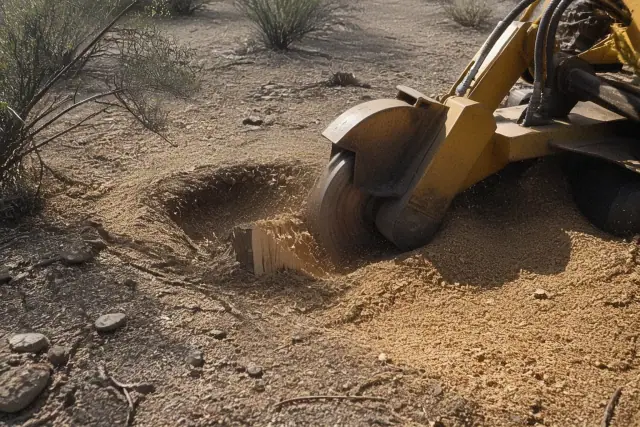
Stump grinder pulverizing a large tree stump into mulch on rocky desert soil in Vail, AZ.

Removal is planned around trunk diameter, height, lean, access, structures, and utility lines. Vail jobs generally range from $200 to $2,000, with many mid-size removals averaging about 14 feet and falling between $482 and $753; larger wood and brush are hauled off-site.

Explore Service

Tree Trimming

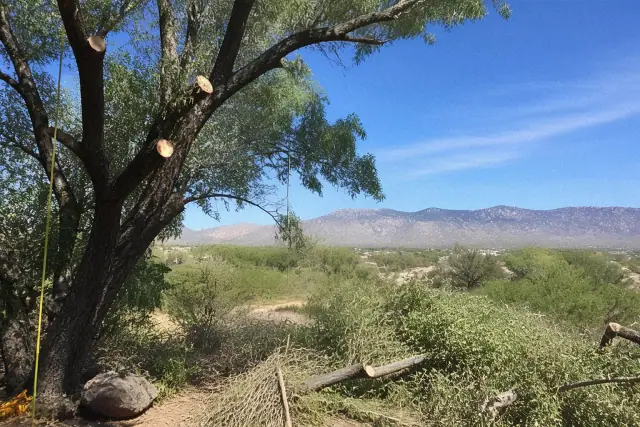
Arborist performing structural canopy pruning on a mature tree in Vail, AZ.

Selective canopy thinning reduces wind resistance without stripping the tree. On mesquite and palo verde, managing weak co-dominant limbs can lower the chance of splitting when monsoon winds roll off the Rincons.

Explore Service

Tree Pruning

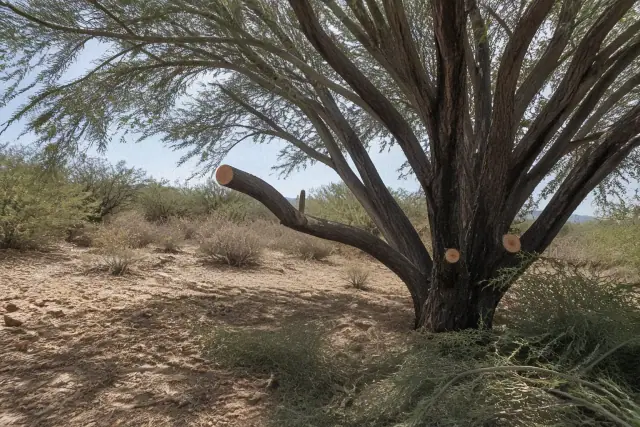
Professional tree pruning on a mature tree in the Sonoran desert landscape of Vail, AZ.

Targeted pruning removes crossing branches, deadwood, and poor prior cuts that can invite decay. Work follows ANSI A300 pruning standards to improve structure while protecting long-term tree health.

Explore Service

Stump Grinding & Removal

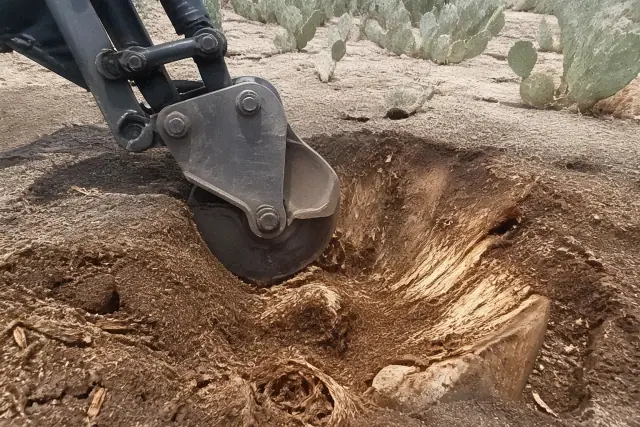
Stump grinder pulverizing a tree stump into mulch in the desert soil of Vail, AZ.

Stumps are typically ground 4 to 6 inches below grade so the area can be covered with grass, decomposed granite, or new landscaping. Grinding generally runs $75 to $400 per stump, while root removal is evaluated separately when roots affect pavers, block walls, or irrigation lines.

Emergency Tree Service

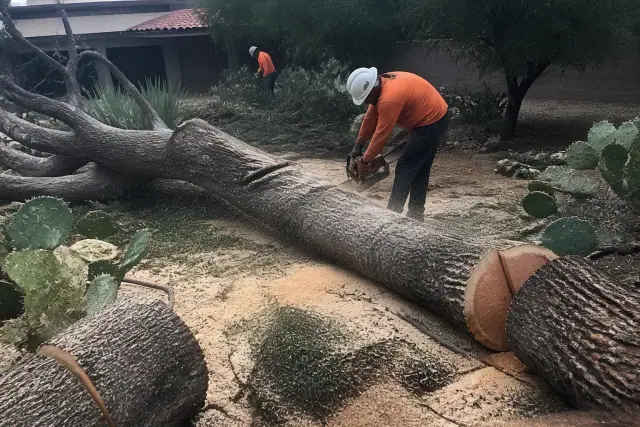
Worker cutting a large fallen tree trunk into logs at a residential property in Vail, AZ.

The emergency service covers fallen trees, storm-cracked limbs, and trees affecting roofs, fences, vehicles, or other structures. Crews assess stability and access before planning a controlled response.

Storm Damage Cleanup

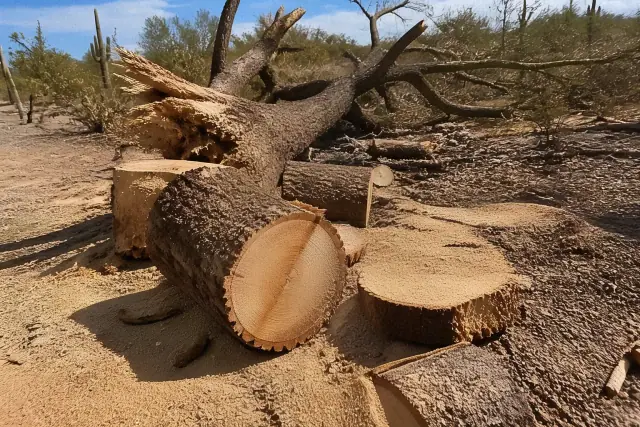
Large split tree trunk being cut into logs amid wood chips and saguaro cacti in Vail, AZ.

Storm cleanup addresses downed limbs, split trunks, and scattered debris after straight-line winds or microbursts. When a claim is involved, the crew can coordinate the documentation needed for the damaged tree and cleanup.

Palm Tree Trimming

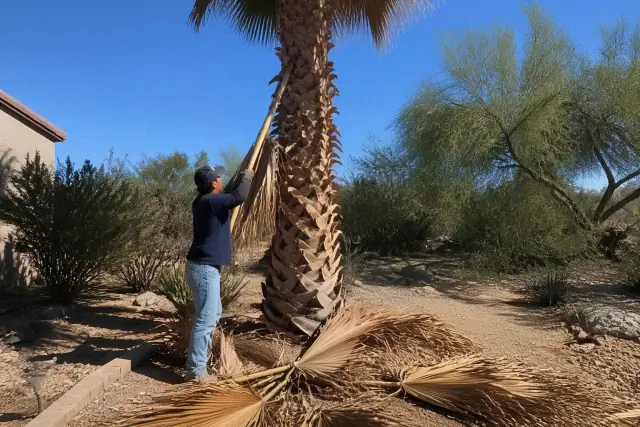
Worker trimming dead palm fronds from a tall tree in a residential yard in Vail, AZ.

Annual palm trimming removes dead fronds and seed pods before they become fire hazards or wind-borne debris. Pole saws and bucket trucks allow tall palms to be cleaned without over-pruning the crown.

Cactus Removal

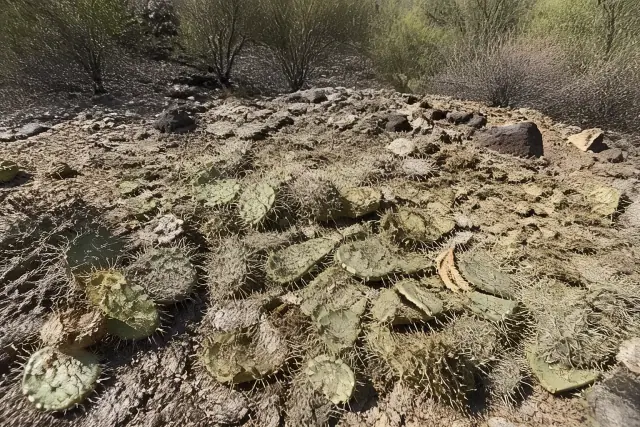
Debris from cactus removal scattered on rocky ground in the Sonoran desert of Vail, AZ.

Saguaro, cholla, and prickly pear work is planned around Arizona Department of Agriculture native-plant protection rules. The team manages salvage permitting when required, relocates healthy saguaros where possible, and trims overgrown prickly pear and barrel cactus.

Tree Health & Arborist Consultation

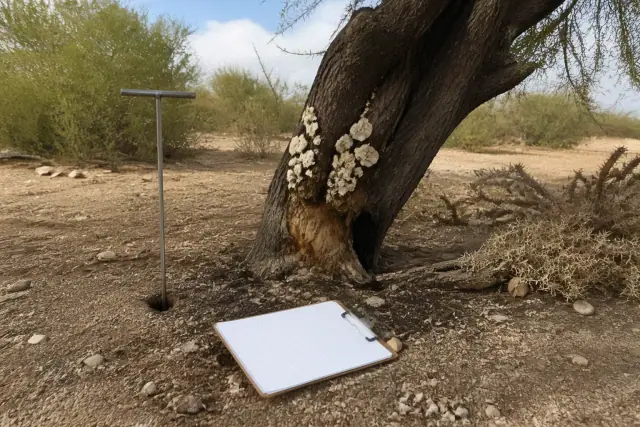
Arborist inspecting tree trunk decay and fungal growth with a soil probe and clipboard in a Vail, AZ desert yard.

A tree-health consultation checks soil compaction, irrigation, pests, disease symptoms, lean, cavities, root heave, and canopy dieback. The result is a documented recommendation for treatment, monitoring, support, pruning, or removal.

Tree Planting

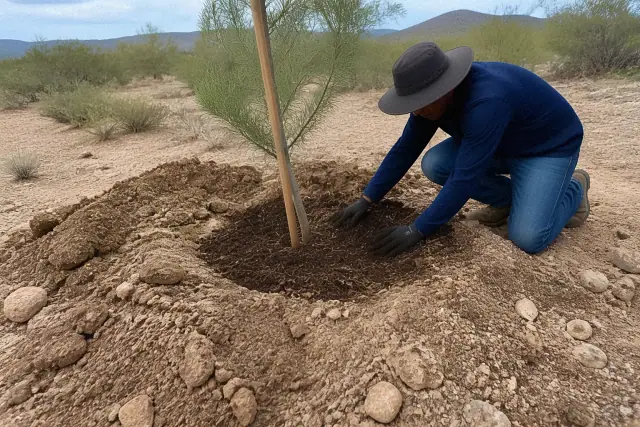
Technician planting a young sapling in desert soil at a job site in Vail, AZ.

Desert willow, palo verde, and mesquite are planting options suited to Vail's caliche-heavy soil and roughly 8 to 12 inches of annual rainfall. Planting includes amended backfill to help roots establish through compacted subsoil.

Service Selection

How to Choose the Right Tree Service in Vail

The right service depends on whether the priority is immediate hazard reduction, structural improvement, plant health, site preparation, or routine maintenance. A site-specific assessment keeps removal from being recommended when pruning, treatment, cabling, bracing, or monitoring is the better fit.

Hazard or Health-Care Need

Dead limbs, sudden lean, cavity decay, root heave, and storm damage point to a safety assessment. Pest entry holes, sap weeping, canopy dieback, or irrigation stress may call for diagnosis and treatment instead.

Tree Size and Site Access

Height, trunk diameter, nearby power lines, and room for equipment affect the method and price. Trees over 60 feet or trees beside a home, pool, wall, or utility may need climbing, rigging, crane assistance, or sectional removal.

Species and Permit Requirements

Native saguaro, ironwood, and mesquite require different decisions than an ornamental palm, ash, or pine. Protected cactus work may require salvage permits and relocation planning before removal can begin.

Soil and Root Conditions

Caliche, decomposed granite, and thin rocky soil influence root stability and equipment placement. An inspection also identifies roots that are lifting pavers, pressing block walls, or interfering with irrigation.

Storm and Canopy Exposure

Dense crowns and weak co-dominant branches catch more wind during monsoon storms. Structural pruning and canopy thinning can reduce sail effect while preserving enough foliage for tree health.

Property Use and Cleanup

Residential work may require protection for pools, patios, fences, and landscaping, while commercial sites need safe access around walkways and parking areas. The plan should also state how brush, logs, chips, and final cleanup will be handled.

Vail Tree Risks

Common Tree Problems on Vail Properties

Heat, drought, compacted caliche, pests, and monsoon wind create recognizable warning signs on Vail properties. Early assessment can clarify whether pruning, treatment, support, cleanup, or removal is appropriate.

Request Tree Assessment

Monsoon-Broken Limbs

Microbursts and straight-line winds can split weak mesquite and palo verde unions or drop heavy limbs onto roofs, fences, sheds, and vehicles.

Shallow or Unstable Roots

Trees searching for limited moisture above hard caliche often form shallow, wide root systems. Saturated monsoon soil and strong gusts can then increase the risk of root heave or toppling.

Pest-Driven Canopy Dieback

Mesquite twig girdler and palo verde borer can leave larval entry holes, sap weeping, and thinning crowns. Catching these symptoms early may allow treatment before decline leads to removal.

Deadwood and Structural Decay

Dead limbs, crossing branches, cavities, and improper old cuts weaken the canopy and can hide decay. A structural inspection identifies what can be pruned and what presents a larger hazard.

Roots Damaging Hardscape

Expanding roots can lift pavers, pressure block walls, and interfere with irrigation lines. Root work must balance property protection with the stability and health of the remaining tree.

Hazardous Palm and Cactus Growth

Dead palm fronds and seed pods can become fire hazards or storm debris, while overgrown cactus can block usable areas. Tall palms need controlled access, and protected cactus may require permits.

Why Choose Us

Why Choose Tucson Tree Service Co. in Vail?

Tree work in Vail benefits from crews familiar with native desert vegetation, rocky foothill lots, caliche soil, and monsoon damage. Tucson Tree Service Co. combines local site knowledge, professional standards, appropriate equipment, and clear written estimates.

Local Terrain Knowledge

Crews understand how conditions near Colossal Cave, the Rincon foothills, newer subdivisions, and rural acreage change root stability, access, and rigging plans.

Tree-Care Planning

Health and hazard decisions begin with the tree's condition, surrounding targets, and the work needed to reduce risk.

Insured Crews and Proper Equipment

Licensed and insured service supports work planned around the equipment, access, tree condition, and surrounding property.

Simple Process

Our Tree Service Process in Vail

Each project moves from site assessment to a written scope, safe execution, and cleanup. The method is adjusted for tree condition, native-plant requirements, access, structures, and the customer's goals.

01.

Walk the Site

The crew checks utility lines, structures, fences, pools, landscaping, equipment access, and open space around the tree.

02.

Evaluate the Tree

Species, height, trunk diameter, lean, cavities, root condition, deadwood, pests, and canopy structure are reviewed.

03.

Provide a Written Estimate

The estimate explains the recommended service, disposal, stump-grinding options, site constraints, and known cost factors before work begins.

04.

Plan Permits and Equipment

Protected native plants, rigging needs, climbing, chippers, bucket trucks, or crane support are accounted for before the crew starts.

05.

Complete Controlled Tree Work

Branches and trunk sections are pruned, lowered, felled, ground, relocated, or removed according to the approved plan.

06.

Haul and Clean Up

Brush is chipped when practical, larger sections are hauled away, and the work area is raked and blown clear of bark and sawdust.

Service Outcomes

Practical Outcomes for Vail Homes & Businesses

Case Study 1: Hazard Reduction: A dead or leaning tree near a roof, pool, fence, or vehicle can be evaluated for controlled sectioning and debris removal that protects the surrounding property.

Case Study 2: Storm Readiness: Selective canopy thinning and structural pruning can reduce wind resistance, remove deadwood, and address weak branch unions before monsoon weather.

Case Study 3: Long-Term Tree Health: Soil, irrigation, pest, and structure findings can guide treatment, monitoring, support, planting, or maintenance instead of an unnecessary removal.

Plan Your Tree Care

Schedule a Vail
Tree Service
Consultation

Request an on-site assessment for removal, pruning, stump grinding, storm cleanup, cactus work, planting, or tree-health concerns. You will receive a written estimate based on the tree, access, disposal needs, and property conditions.

Local Tree Care Help

FAQs About Tree Service in Vail, AZ

These answers cover common questions about Vail tree-removal pricing, pruning, stump grinding, emergency response, protected plants, and service coverage. A site visit is still the best way to evaluate a specific tree and property.

Call Our Tree Experts

Most residential removals in Vail and the surrounding Tucson metro fall between $482 and $753, within a broader range of $200 to $2,000. Smaller trees under 30 feet with easy access tend toward the lower end, while height, trunk diameter, rigging, and nearby structures can raise the price. A typical mid-size example in the source averages about 14 feet, and stump grinding is quoted separately.

The estimate considers trunk diameter, height, species, lean, access, disposal, and proximity to homes, pools, walls, utility lines, or power lines. Trees over 60 feet and jobs requiring climbing, crane assistance, or careful sectional removal generally move toward the higher end of the range. Protected native plants can also add permitting or relocation steps.

A removal around $1,000 often involves a tree in the 40 to 60 foot range, though size is not the only factor. A smaller tree may reach that price when access is difficult or crane assistance and extensive rigging are needed near structures. An in-person inspection is required for a reliable quote.

Some seniors may qualify for free or reduced-cost assistance when a dead or dying tree creates a documented hazard to streets, sidewalks, utilities, or other public areas. These programs are generally offered through county assistance offices or utility companies, not by a private tree service. The team can document the condition during an estimate and point the resident toward an appropriate local resource.

A 30-foot tree with reasonable access typically falls between $385 and $750. Dense wood, a wide trunk, nearby structures, or difficult rigging can change the final amount. If the stump also needs to be ground, that work is added separately.

Arizona property owners generally may trim branches and roots that cross onto their side of the property line, provided the work does not kill or seriously damage the tree. They should not enter the neighbor's property or remove the whole tree without consent. Photos, communication with the neighbor, and a professional assessment are sensible before structural cuts are made.

Stumps are generally ground 4 to 6 inches below grade so grass, decomposed granite, or other landscaping can cover the area. Vail stump grinding usually ranges from $75 to $400 per stump depending on diameter and root spread. Root removal is a separate option when roots affect walls, pavers, or irrigation.

Trimming manages overall canopy density and can reduce wind resistance, especially before monsoon season. Pruning targets structural concerns such as crossing branches, deadwood, weak unions, or poor previous cuts. Pruning work follows ANSI A300 standards to protect tree structure and health.

The emergency service covers fallen trees, storm-cracked limbs, and trees that have compromised roofs, fences, vehicles, or other structures. The crew first evaluates stability, utility hazards, and access, then plans controlled removal and cleanup. Storm documentation can be coordinated when an insurance claim is involved.

Saguaro and other protected native-plant work may require salvage permitting under Arizona Department of Agriculture rules. Healthy saguaros are relocated where possible, while the correct handling plan depends on plant condition and the project. Permit requirements are identified during the site assessment.

The source recommends annual trimming to remove dead fronds and seed pods that can become fire hazards or wind-borne debris. Pole saws may work for lower palms, while taller specimens can require bucket-truck access. Over-pruning is avoided because it weakens the crown and can invite pests.

A tree-health consultation can include soil-compaction assessment, irrigation review, pest inspection, and checks for sap weeping, entry holes, canopy dieback, cavities, root heave, and lean. The findings support a documented plan for treatment, monitoring, support, pruning, or removal. Early evaluation may preserve a tree that would otherwise continue to decline.

Desert willow, palo verde, and mesquite are source-supported options for Vail's caliche-heavy soil and roughly 8 to 12 inches of annual rainfall. Species selection should account for mature size, irrigation, structures, and available rooting space. Amended backfill can help new roots establish through compacted subsoil.

Yes. The source includes recurring trimming and health inspections for commercial properties, property managers, and HOAs, along with coordinated crews and equipment for multi-tree removal or development preparation. Parking lots, walkways, liability exposure, access, and scheduling are considered in the maintenance plan.

Coverage includes Vail, Corona de Tucson, Civano, Rita Ranch, Del Webb at Rancho del Lago, rural acreage toward Colossal Cave Mountain Park, and properties near the Rincon Mountains District of Saguaro National Park. The broader service radius also reaches greater Tucson, Sahuarita, and Green Valley. Customers outside those areas can call to confirm coverage and scheduling.