Proudly serving Tucson, Oro Valley, Marana, Catalina Foothills, Casas Adobes, Sahuarita & surrounding areasCall or Text 24/7: 520-569-2093

Tree Removal & Desert Tree Maintenance in Green Valley, AZ

Tucson Tree Service Co. provides tree removal, tree trimming, tree pruning, and stump grinding for Green Valley homes and businesses. Our crews also handle emergency tree service, storm damage cleanup, palm trimming, cactus removal, tree health consultations, and desert-adapted tree planting. We work on mature mesquite, palo verde, eucalyptus, palms, and other trees found across local yards and commercial properties. Each job is planned around the tree, the property, and the access available.

Caliche soil, summer heat, and monsoon microbursts can turn a stressed tree or overextended limb into a property hazard. Before cutting, our crew evaluates lean, root-plate stability, canopy weight, decay indicators, and proximity to roofs, walls, pools, irrigation, and utility lines. That assessment guides a controlled plan using rigging, cranes, or bucket trucks when access requires them. We provide a written estimate so the scope, debris hauling, and optional stump grinding are clear before work begins.

Service is available throughout Quail Creek, Canoa Hills, Desert Hills, Green Valley Village, Continental, Sahuarita, southern Pima County, and the Tucson metro along the I-19 corridor. Request a on-site estimate for residential or commercial tree work.

★ ★ ★ ★ ★4.9/5 Average Rating - 20+ Years of Experience - Green Valley Tree Service Company Specialists - Residential & Commercial
Complete Tree Care

Complete Tree Services in Green Valley, AZ

Choose the service that fits your tree, site, and immediate concern, from routine pruning to controlled removal and storm cleanup. Property owners comparing desert-tree needs in another community can also review our Vail, AZ service information.

Tree Removal

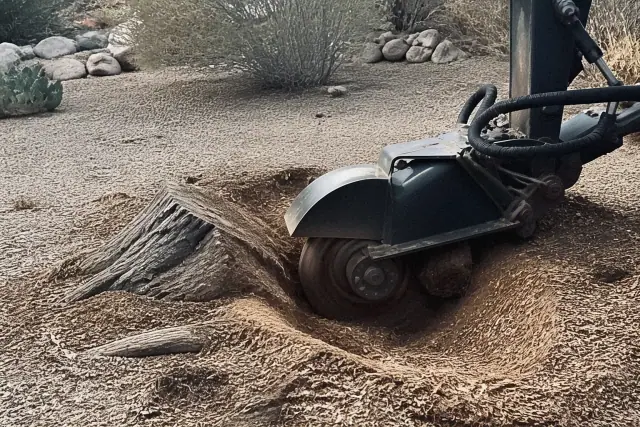
A stump grinder pulverizing a tree stump into mulch in Green Valley, AZ, surrounded by desert scrub and granite ground.

Residential and commercial removals start with an assessment of lean, roots, canopy weight, and nearby structures. We use controlled cutting, rigging, and crane support when needed for dead mesquite, multi-trunk eucalyptus, and other hazardous trees, with debris hauling included unless you prefer to keep cut rounds for firewood.

Explore Service

Tree Trimming

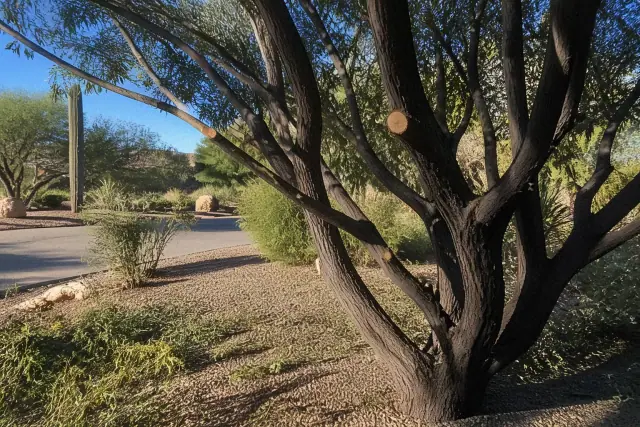
Close-up of precise pruning cuts on a dense tree canopy in Green Valley, AZ, with desert landscaping in the background.

Tree trimming reduces overextended growth, improves clearance, and prepares desert canopies for monsoon wind. We thin for airflow while protecting the shade cover mesquite and palo verde need during Green Valley summers.

Explore Service

Tree Pruning

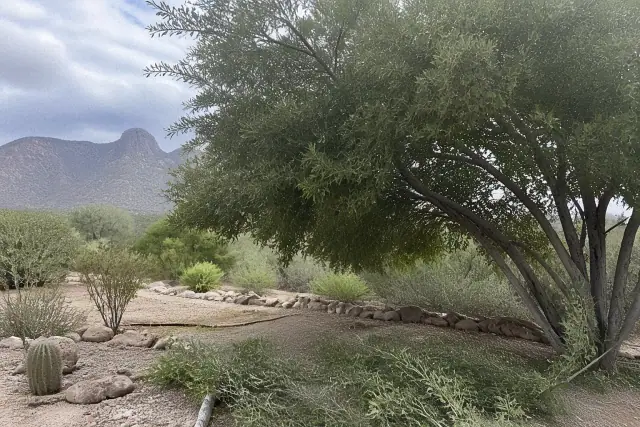
A worker performing canopy pruning on a tree with a mountain view in the background in Green Valley, AZ.

Our pruning follows ANSI A300 standards and addresses co-dominant stems and weak branch unions without topping the tree. For most desert hardwoods, a regular two-to-three-year maintenance cycle can support healthier structure and reduce storm-related callouts.

Explore Service

Stump Grinding & Removal

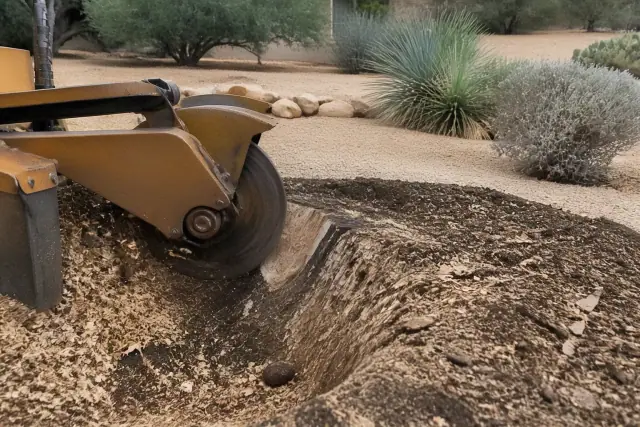
A heavy machine grinding a tree stump into mulch in a desert landscape in Green Valley, AZ.

Stump grinding clears space for decomposed granite, landscaping, or a new planting bed. We typically grind 4 to 6 inches below grade and chip the root crown and major surface roots; pricing depends on stump diameter and root spread, while full excavation is usually the more costly option.

Emergency Tree Service

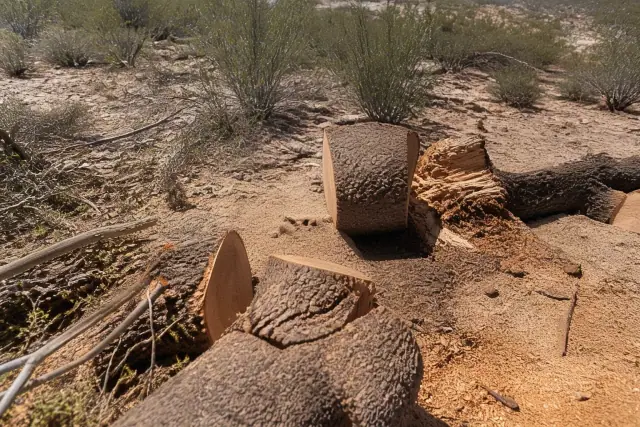
Large tree trunk being cut into logs on stony desert soil in Green Valley, AZ.

When a tree falls on a structure, blocks a driveway, or hangs near a power line, we prioritize immediate hazard mitigation before full removal. Emergency response covers Green Valley and Sahuarita after monsoon microbursts, haboobs, and other high-wind events.

Storm Damage Cleanup

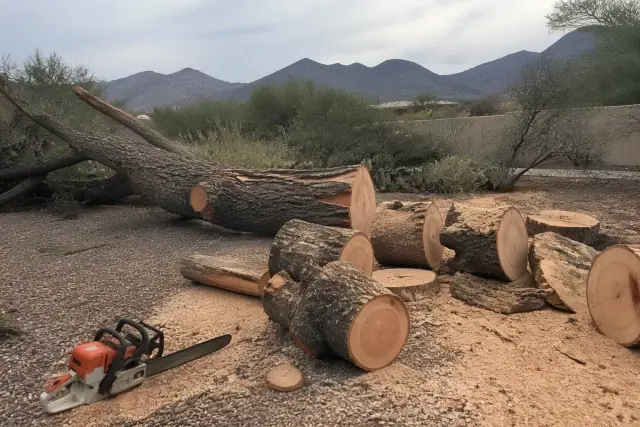
A downed tree trunk being cut into logs during storm damage cleanup in a yard in Green Valley, AZ.

After a monsoon event, we clear fallen limbs, split trunks, and tree debris from yards, roofs, driveways, and pool areas. The crew also checks remaining trees for hidden fractures that could fail in the next storm.

Palm Tree Trimming

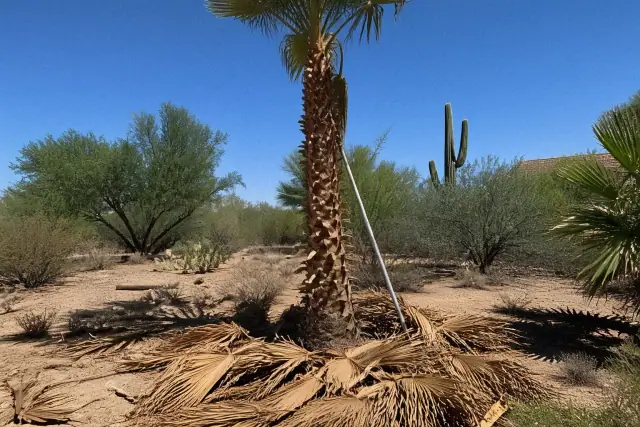
Contractor trimming dead palm fronds from a tall tree in a Sonoran desert landscape in Green Valley, AZ.

We remove dry fronds that can become fire fuel or pest habitat while avoiding excessive trunk exposure. Mexican fan palms and date palms are trimmed to a clean 9-to-3 or 10-to-2 frond pattern that preserves the healthy crown.

Cactus Removal

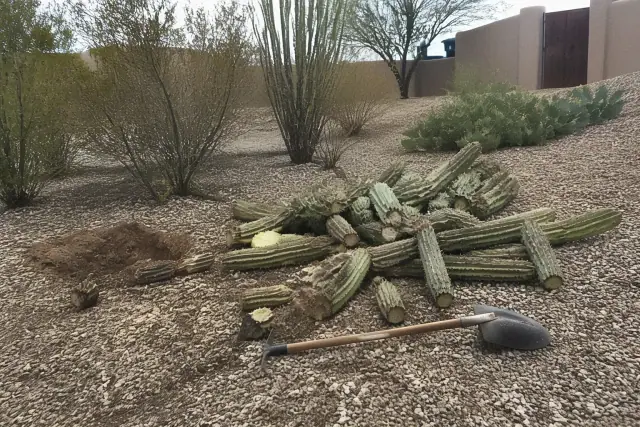
Severed cactus remnants and gardening tools on gravel ground in Green Valley, AZ.

We address unstable or overgrown saguaros, chollas, and prickly pear that crowd walkways or have suffered root damage. Because saguaros are protected under Arizona Revised Statutes Title 3, we handle Arizona Department of Agriculture salvage permitting before removal and relocate healthy specimens when possible.

Tree Health & Arborist Consultation

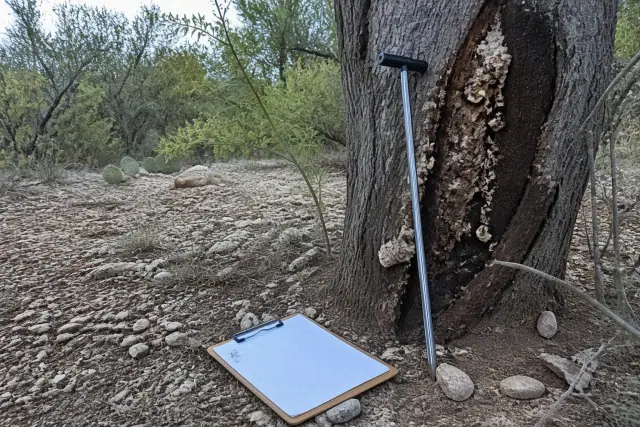
Arborist inspecting tree trunk decay and fungal growth with a soil probe in Green Valley, AZ.

ISA-aligned consultations evaluate structural defects, disease concerns, root-plate stability, canopy density, irrigation placement, soil compaction, and root-crown exposure. Looking at the whole site helps distinguish a treatable water or soil issue from a tree that requires pruning or removal.

Tree Planting

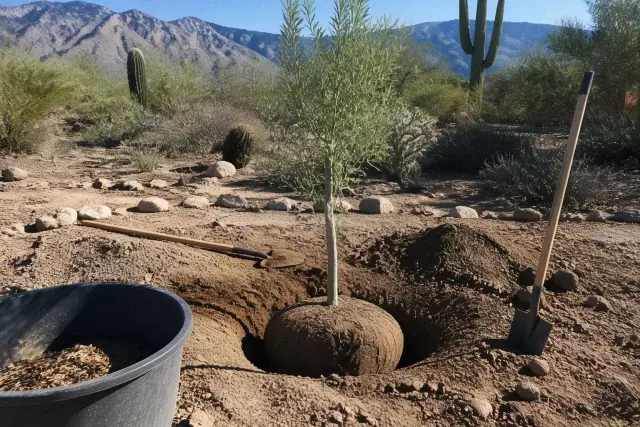
Newly planted sapling with backfilled soil and tools at a job site in Green Valley, AZ, near saguaros and mountains.

We plant desert-adapted species suited to Green Valley elevation and soil, including palo verde, desert willow, and ironwood. Root balls are positioned above grade in amended caliche to reduce the trapped moisture that can lead to root rot in new plantings.

Planning Safe Tree Work

How We Plan Safe Tree Work in Green Valley

The right recommendation depends on more than how a tree looks from the ground. We consider structural condition, desert species behavior, property access, required equipment, quoted scope, and cleanup preferences before choosing removal, pruning, treatment, or monitoring.

Hazard and Structure Assessment

We evaluate species, lean angle, root-plate condition, canopy balance, cavities, fungal conks, and included bark. That evidence determines whether the tree can be pruned or treated safely or whether controlled removal is the responsible option.

Desert Tree Expertise

Mesquite and palo verde need pruning that preserves protective shade, while eucalyptus and Aleppo pine can show different root-failure patterns in caliche. Species-specific evaluation avoids the over-pruning and misdiagnosis common when desert conditions are overlooked.

Site-Specific Rigging Plan

Tight side yards, block walls, pool decks, irrigation lines, structures, and utility clearances shape the cutting plan. Large sections can be lowered by rope instead of dropped whole, protecting the property and controlling where each piece lands.

Clear Written Estimate

Your written estimate explains the recommended work and what the quoted price covers. Removal, debris hauling, leaving firewood rounds, and stump grinding are identified clearly so you can compare the complete scope.

Equipment Matched to Access

The crew selects rigging, cranes, or bucket trucks according to tree size, access, and nearby hazards. Matching the equipment to the site is especially important on compact HOA lots and commercial properties with active driveways or shared areas.

Complete Cleanup Choices

Full site cleanup and debris hauling are part of the removal process, with stump grinding available when requested. If you want usable rounds left for firewood, that preference can be included in the plan before work starts.

Green Valley Tree Concerns

Common Tree Problems on Green Valley Properties

Green Valley's roughly 22,600 residents rely on mature desert trees for shade around homes, golf communities, walking areas, and commercial properties. Temperatures above 100 degrees, shallow caliche, and wind gusts above 40 mph can combine with irrigation mistakes or weak structure to create hazards that are easy to miss from the ground.

Request Tree Assessment

Monsoon Wind and Hidden Fractures

Microbursts and haboobs can break heavy limbs, split trunks, or topple shallow-rooted trees. Even when the fallen debris is obvious, fractures higher in the remaining canopy may not appear until the next high-wind event.

Shallow Roots Above Caliche

A caliche layer often sits a foot or two below Green Valley yards, forcing roots to spread laterally instead of anchoring deeply. Trees can look stable until saturated soil or strong wind exposes a weak root plate.

Heat and Drought Stress

Blazing summer heat and water stress can make branches brittle enough to drop with little warning, even on a calm day. Pruning must reduce risky weight without stripping away the shade cover desert trees use to protect their limbs and trunk.

Overwatering and Root Rot

Irrigation schedules intended for turf can keep ornamental desert trees too wet, contributing to root rot and canopy dieback. An effective consultation examines emitter placement, compaction, and root-crown exposure rather than treating only the visible symptom.

Weak Unions and Heavy Canopies

Unpruned mesquite and palo verde can develop co-dominant stems that split under canopy weight. Non-native eucalyptus and Aleppo pine may also be prone to root failure where their root systems meet Green Valley's hard soil structure.

Protected Plants and Approval Requirements

Protected native plants such as saguaro and ironwood may require agency coordination, while some HOAs require approval for removals visible from common areas or golf-course frontage. Planning these requirements before work helps prevent avoidable delays around protected species and right-of-way trees.

Why Choose Us

Why Choose Tucson Tree Service Co. in Green Valley?

Our approach combines knowledge of Green Valley properties with licensed and insured tree work and documented safety practices. Homeowners, businesses, and HOA communities receive direct recommendations based on structure, soil, access, and the actual condition of each tree.

Green Valley Area Knowledge

We understand the access, canopy, and soil differences among unincorporated desert lots, older yards, gated neighborhoods, and HOA common areas. That includes local requirements found around Quail Creek, Canoa Hills, Desert Hills, and Green Valley Village.

Licensed and Insured Tree Work

Tucson Tree Service Co. provides licensed and insured tree service for residential and commercial properties.

Standards-Based Tree Care and Safety

Pruning follows ANSI A300 standards, tree-health consultations use ISA-aligned assessment practices, and crews follow OSHA safety standards for aerial-lift and chainsaw operation. These practices support consistent decisions from the initial inspection through the final walkthrough.

Six-Step Removal Process

Our Tree Removal Process in Green Valley

Every removal moves from documented assessment to a clear scope, controlled cutting, cleanup, and customer confirmation. The sequence is adjusted for the tree and property, but the six core steps remain consistent.

01.

Site Walkthrough and Hazard Assessment

We inspect species, lean, roots, canopy, decay indicators, surrounding structures, and utility clearance. Photographs document the condition and support the recommendation.

02.

Written Estimate and Scope

The written quote covers removal, debris hauling, and stump grinding when requested. You can see what is included and why before authorizing the job.

03.

Rigging and Cutting Plan

The crew maps the drop zone and selects ropes, cranes, or bucket trucks according to access. This plan accounts for roofs, walls, pools, driveways, irrigation, and utility lines.

04.

Controlled Sectional Removal

Large trees are removed in sequenced sections rather than dropped whole when the site calls for tighter control. Cut pieces are lowered by rope to protect nearby surfaces and structures.

05.

Debris Removal and Stump Work

Branches, trunk sections, and loose tree debris are cleared from the work area. The stump is ground below grade when that service is part of the approved estimate.

06.

Final Walkthrough

We review the completed work and cleanup with you before leaving. This final check confirms that the agreed scope has been completed and the site is ready for its next use.

Practical Service Results

Practical Results for Green Valley Homes & Businesses

Case Study 1: Safer Access: Hazard mitigation first addresses trees blocking driveways, threatening structures, or resting near power lines before the crew moves into full removal and cleanup.

Case Study 2: Usable Outdoor Space: Debris hauling and optional stump grinding can clear the work area for decomposed granite, landscaping, a planting bed, or normal use of the yard.

Case Study 3: Better Tree Decisions: A combined review of structure, irrigation, soil compaction, and root-crown exposure helps property owners understand whether pruning, treatment, monitoring, or removal fits the condition.

Plan Your Tree Work

Schedule Your Free Tree Service Estimate

Request a on-site estimate for tree removal, trimming, pruning, stump grinding, or another supported service in Green Valley. We will assess the tree and access, explain the recommended scope, and provide a written quote before work begins.

Local Tree Service Help

Tree Service FAQs for Green Valley, AZ

Get clear answers about removal cost, pruning, stump grinding, storm response, protected plants, service coverage, and on-site estimates. Call to discuss a specific tree or property condition.

Call Our Tree Experts

Arizona tree removal typically ranges from $200 to $2,000, with a national average around $750 and straightforward Green Valley or Tucson-area residential removals commonly running $450 to $1,450. Smaller ornamental trees under 30 feet often fall between $150 and $500, while large mesquite, eucalyptus, or palm removals with difficult access can exceed $1,500. Palm removal may range from $150 to $1,500 depending on height and fiber density. An on-site assessment is needed to price the specific tree, access, rigging, and cleanup.

Free or reduced-cost removal may be available when a dead or dying tree presents a documented threat to streets, sidewalks, or utility lines, but eligibility depends on county or utility assistance rather than standard tree-service pricing. We can explain what we see during an estimate and point Green Valley residents toward a relevant hazard-based resource when the situation appears to fit. Customers who do not qualify receive a written quote for the recommended work.

A complete removal includes an on-site hazard assessment, utility-clearance review, a cutting or rigging plan, controlled removal, and cleanup. Our estimate specifies debris hauling, whether cut rounds will be left for firewood, and whether stump grinding is included. The crew finishes with a walkthrough so you can confirm the agreed scope.

Yes. We prioritize trees or limbs blocking access, threatening structures, or resting near power lines after monsoon and high-wind events in Green Valley and Sahuarita. Hazard mitigation comes first, followed by full removal and cleanup from affected roofs, yards, driveways, or pool areas.

Most desert hardwoods benefit from a two-to-three-year maintenance cycle, although species, age, structure, and recent storm damage can change the timing. Regular pruning can address co-dominant stems and reduce excess canopy weight before monsoon season. We recommend an interval after inspecting the individual tree.

We generally grind a stump 4 to 6 inches below grade and chip the root crown and major surface roots. This depth helps clear the area for decomposed granite, landscaping, or a new planting bed. Stump grinding is quoted separately according to diameter and root spread and is usually more economical than full excavation.

We remove unstable or overgrown saguaros when the work can proceed under applicable protections. Saguaros are protected under Arizona Revised Statutes Title 3, so we handle salvage permitting through the Arizona Department of Agriculture before removal. Healthy specimens are relocated when possible.

Topping removes too much canopy, weakens structure, and can invite decay instead of creating durable clearance. We follow ANSI A300 pruning standards and selectively thin canopies for airflow while retaining needed shade cover. The goal is better branch structure, not a stripped or imbalanced crown.

A hard caliche layer often lies a foot or two below the yard, encouraging roots to spread sideways rather than grow deep. Overwatering can then contribute to root rot, while monsoon wind loads the broad, shallow root plate. Lean, soil movement, root-crown condition, and canopy weight all need to be considered together.

A tree in the 60-to-80-foot range may land near $1,000, but a mid-size tree can reach the same price when access is tight, the canopy is dense, or structures require time-consuming rigging. Height, trunk diameter, access, and equipment needs matter more than species alone. A written on-site estimate is the reliable way to price the job.

Dry fronds are removed because they can become fire fuel and pest habitat. We use a clean 9-to-3 or 10-to-2 frond pattern for Mexican fan palms and date palms, protecting the trunk and healthy crown without over-pruning. The exact cut depends on the palm's condition.

We regularly work in Quail Creek, Canoa Hills, Desert Hills, Green Valley Village, Continental, Sahuarita, and unincorporated southern Pima County. Service also extends north along the I-19 corridor into the Tucson metro. Scheduled trimming can typically be arranged same-week, with hazard assessments prioritized according to the situation.

The consultation examines structural defects, disease concerns, root-plate stability, canopy density, irrigation placement, soil compaction, and root-crown exposure. We use ISA-aligned assessment practices to connect visible symptoms with likely water, soil, or structural causes. The findings support a recommendation for treatment, pruning, monitoring, or removal.

We plant desert-adapted options suited to local elevation and soil, including palo verde, desert willow, and ironwood. Root balls are positioned above grade in amended caliche to reduce trapped moisture around the crown. Species and placement are considered together before planting.

Yes. We provide on-site estimates for tree removal, trimming, and stump grinding throughout Green Valley. The written quote explains the recommended work, debris hauling, and optional stump service before the job begins, helping you understand the scope without invoice surprises.