Proudly serving Tucson, Oro Valley, Marana, Catalina Foothills, Casas Adobes, Sahuarita & surrounding areasCall or Text 24/7: 520-569-2093

Tree Removal & Full-Service Tree Care in Oro Valley, AZ

Tucson Tree Service Co. serves homeowners, commercial properties, and HOAs throughout Oro Valley, AZ. We provide tree removal, tree trimming, and tree pruning for hazardous, overgrown, or structurally weak trees. Our crews also handle stump grinding and removal, emergency tree service, storm damage cleanup, palm tree trimming, cactus removal, tree health consultations, and tree planting. Each plan accounts for tree species, access, nearby structures, utility lines, and the root conditions beneath the property.

Oro Valley's hardened caliche can force roots to spread laterally, while monsoon microbursts add wind load to shallow-rooted trees. Elevation changes from roughly 2,600 feet near Oracle Road to about 3,500 feet along the Catalina foothills create different tree-health conditions across town. That combination can turn weak attachments, deadwood, pest damage, or poor irrigation into a property hazard. We assess the tree and site before recommending pruning, treatment, or removal so the work fits the actual risk.

Call for a prompt estimate on tree work in Oro Valley, from routine maintenance to storm-related hazards.

★ ★ ★ ★ ★4.9/5 Average Rating - 20+ Years of Experience - Oro Valley Tree Service Company Specialists - Residential & Commercial
Complete Tree Care

Tree Services Across Oro Valley, AZ

As Oro Valley grew from 29,700 residents in 2000 to 47,070 in the 2020 census, established neighborhoods and newer lots developed a broad mix of native and transplanted trees. We tailor each service to the species, caliche-heavy ground, property layout, and seasonal hazards involved. Property owners who also need service west of Oro Valley can review our tree care coverage in Marana, AZ .

Tree Removal

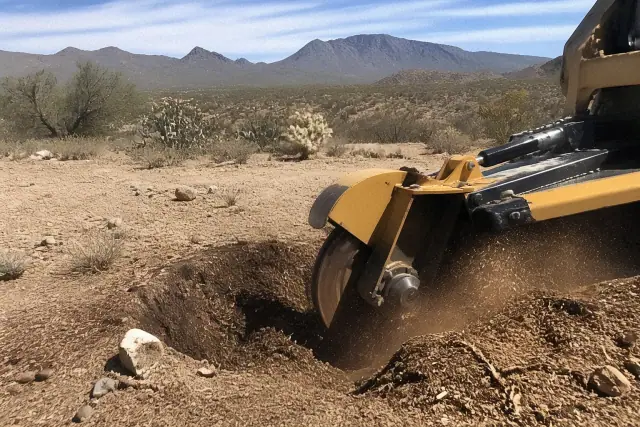
A heavy machinery grinder pulverizing a large wooden stump into mulch at a jobsite in Oro Valley, AZ.

We remove hazardous, dead, and unwanted trees after evaluating root structure, lean, access, nearby structures, and utility lines. Crews use species-appropriate cutting and rigging for mesquite, palo verde, oak, acacia, citrus, eucalyptus, pine, and other trees named in the site plan.

Explore Service

Tree Trimming

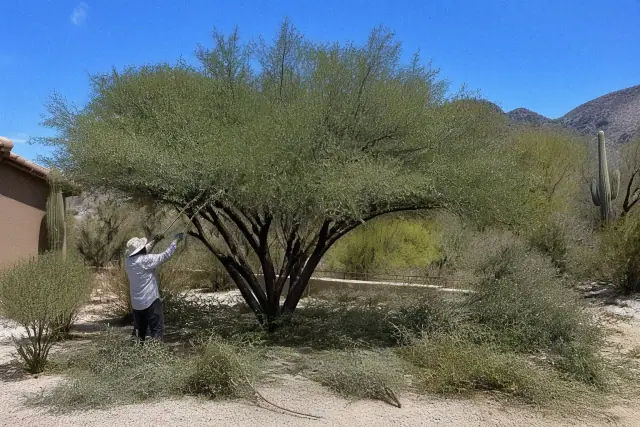
Arborist performing precision tree canopy pruning in the Sonoran Desert foothills of Oro Valley, AZ.

Tree trimming balances canopy weight, improves clearance from rooflines and driveways, and reduces weak growth before monsoon winds arrive. Young-tree shaping also helps establish stronger branch structure as the tree matures.

Explore Service

Tree Pruning

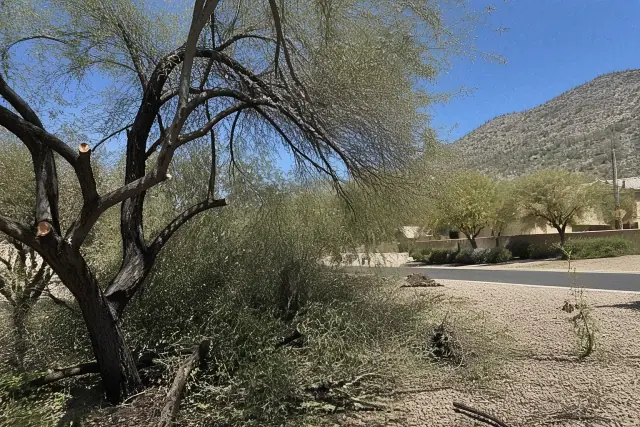
Contractor performing precision tree pruning in the Sonoran Desert foothills of Oro Valley, AZ.

Pruning targets deadwood, crossing branches, and disease-affected limbs to improve structure and long-term health. Our pruning recommendations follow ANSI A300 practices for proper cut placement and load management.

Explore Service

Stump Grinding & Removal

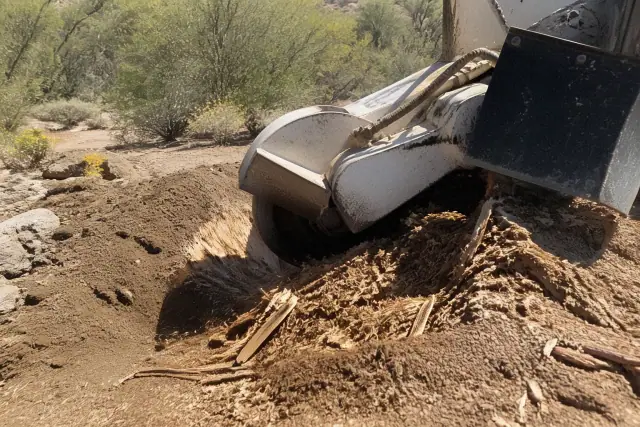
A stump grinder pulverizing a tree stump into mulch in the Sonoran Desert foothills of Oro Valley, AZ.

Stump grinding clears the remaining obstruction for replanting, sod, or concrete work, even where dense caliche resists hand tools. Removing the stump also eliminates decaying wood that can attract termites and bark beetles.

Emergency Tree Service

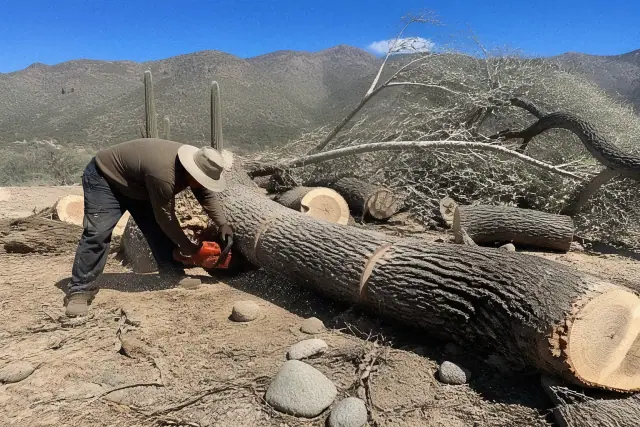
Worker sectioning a fallen tree trunk in the Sonoran Desert foothills of Oro Valley, AZ.

We provide emergency tree service for genuine emergencies involving storm-split trunks, blocked driveways, roof damage, downed trees, or power-line contact. The first priority is stabilizing the immediate hazard before removal and cleanup proceed.

Storm Damage Cleanup

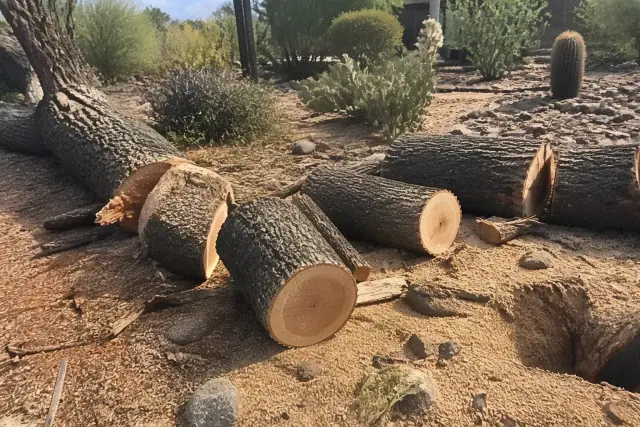
Fallen tree trunk cut into logs at a storm damage cleanup job site in Oro Valley, AZ.

Monsoon microbursts commonly snap limbs and topple shallow-rooted trees during July and August. Storm cleanup covers downed limbs, split trunks, and debris, with insurance-adjuster coordination when damage affects roofs, fences, or vehicles.

Palm Tree Trimming

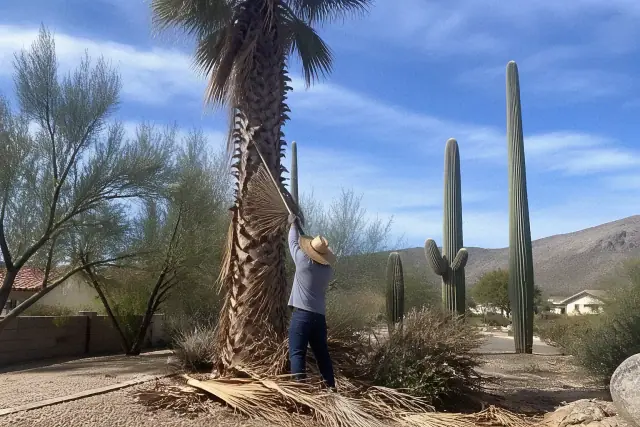
Worker trimming dead fronds from a palm tree with a pile of cuttings on the ground in Oro Valley, AZ.

Palm service removes dead fronds and excess boots without over-skinning the trunk or weakening the crown. Annual trimming is recommended for palms within a defensible-space zone to limit nesting areas and dry fire fuel.

Cactus Removal

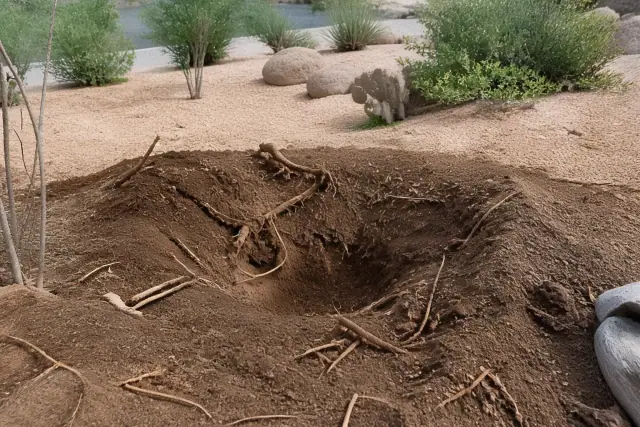
A site in Oro Valley, AZ after cactus removal showing exposed roots and disturbed soil in a desert landscape.

Saguaro, prickly pear, and cholla removal requires careful handling because pads and spines can endanger children, pets, and cleanup crews. We coordinate permits, salvage, or relocation when Arizona native-plant rules require them.

Tree Health & Arborist Consultation

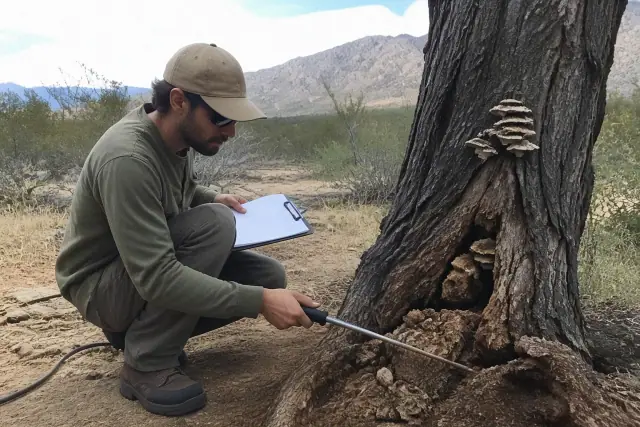
Arborist inspecting tree decay and fungal growth in the Sonoran desert landscape of Oro Valley, AZ.

A tree-health consultation examines structural defects, root damage, irrigation conditions, pests, and disease before recommending removal, corrective pruning, or treatment.

Tree Planting

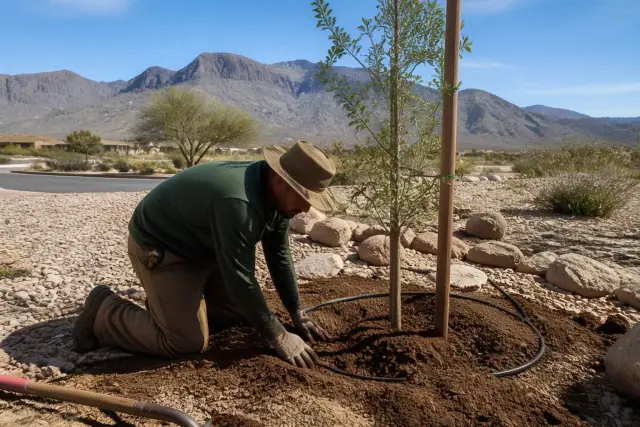
Technician planting a young tree with a mountain backdrop in Oro Valley, AZ.

We plant desert-adapted choices such as palo verde, mesquite, ironwood, and desert willow. Correct planting depth and caliche penetration help prevent the planting hole from trapping monsoon water around new roots.

Planning the Right Work

How to Choose the Right Tree Service in Oro Valley

The right approach depends on the tree's condition, species, access, surrounding property, and what you want the site to support afterward. A clear assessment separates trees that can benefit from pruning or irrigation changes from those that require removal.

Hazard and Site Assessment

Start with trunk condition, root heave, lean direction, branch attachments, and clearance from structures, fences, pools, and power lines. These observations define the actual risk and the safest sequence of work.

Access and Rigging Requirements

Trees beside a home, pool, or wall usually require sectional dismantling so pieces can be lowered with rigging. Open lots may allow directional felling, while confined sites can require a bucket truck, crane, or climbing rig.

Species-Specific Technique

Mesquite, palo verde, acacia, oak, citrus, eucalyptus, and pine differ in wood density, branching, and root behavior. The crew should adjust cutting, load control, and debris handling to the species on the property.

Defensible-Space Priorities

Properties near the Catalina foothills and Coronado National Forest boundary may need dead limbs, dense canopy, brush, and cactus litter reduced within the generally recommended 30 feet around structures. Palm frond and dry-fuel cleanup is especially relevant during the windy conditions common in May and June.

Permits and Utility Coordination

Protected native plants can require permits, salvage, or relocation, while work near overhead service may require utility notification. We account for Oro Valley or Pima County requirements and coordinate with Tucson Electric Power when the tree is near energized infrastructure.

Cleanup and Future Site Use

Decide whether wood should be hauled, chipped, or left as logs before work starts. Stump grinding can be added when the area needs to support replanting, sod, concrete, or a clear walking surface.

Oro Valley Tree Risks

Common Tree Problems for Desert Properties

Many plantings in Sun City Oro Valley and along the Oracle corridor are now 20 to 30 years old and reaching structural stress points. Caliche, heat, wind, pests, irrigation mismatches, and overhead utilities can expose problems that are easy to miss from the ground.

Request Tree Assessment

Shallow Roots Above Caliche

A hardened calcium-carbonate layer can sit close to the surface and redirect roots sideways instead of downward. Mature trees with shallow anchoring are more vulnerable to toppling when high winds load the canopy.

Sudden Limb Drop in Heat

Palo verde and mesquite can shed a large limb during peak heat even when the tree looks healthy and wind is absent. Heavy or poorly attached branches near roofs, walks, and vehicles deserve a closer structural assessment.

Mistletoe in Desert Canopies

Mistletoe clusters can spread through mesquite and palo verde crowns over several years, killing host branches and weakening overall structure. Early pruning may limit the amount of major limb removal needed later.

Citrus Irrigation Stress

Citrus can suffer cold-snap damage during rare winter freezes and root rot when turf-style irrigation keeps the root zone too wet. Pruning and health recommendations should account for the property's irrigation layout.

Bark Beetles in Stressed Pines

Drought-stressed pines near the higher Catalina foothills can show boring dust and pitch tubes when bark beetles move in. Once infestation is established, removal is often the practical option because post-infestation treatment has a low success rate.

Branches Near Overhead Lines

Trees growing into transformers or service drops can increase fire and outage risk in neighborhoods with overhead utilities. Work must maintain safe clearance from energized lines and involve the utility when required.

Why Choose Us

Why Choose Tucson Tree Service Co. in Oro Valley?

Our recommendations connect tree health, structural risk, desert conditions, and the practical constraints of your property. You receive a defined plan before cutting begins, with the crew, equipment, coordination, and cleanup matched to the work.

Tree Health Guidance

Our assessment considers structure, roots, disease signs, and pest activity to help distinguish a tree that may respond to corrective care from one that should be removed.

Licensed and Insured Crews

We provide licensed and insured tree service. That protection matters when rigging and heavy equipment operate near homes, walls, pools, vehicles, or commercial property.

Clear Scope and Documentation

We photograph the site, explain the removal or pruning plan, and provide an upfront written estimate. When relevant, the assessment can also support insurance, HOA, utility, and permit coordination.

Simple Process

Our Tree Removal Process in Oro Valley

Every removal follows a site-specific sequence from assessment through final walk-through. We explain the method, access needs, debris plan, and optional stump work before cutting starts.

01.

Assess the Tree and Site

We evaluate trunk diameter, lean, root heave, health, access, and nearby structures, then photograph the work area and review the hazards with you.

02.

Coordinate Lines and Permits

If the work is near overhead service or involves a protected native plant, we identify the required utility notification, municipal step, permit, salvage, or relocation plan.

03.

Select the Removal Method

Open areas may allow directional felling; trees near homes, pools, walls, or fences are planned for sectional dismantling and controlled lowering.

04.

Set Rigging and Remove Sections

The crew prepares the bucket truck, crane, or climbing rig when needed, then removes limbs and trunk sections in the planned order.

05.

Handle Wood and Stump Work

Debris is hauled, chipped, or placed as logs according to your preference. Stump grinding can be completed as an add-on or scheduled as a standalone service.

06.

Clean Up and Walk Through

We clear the work area, review the finished site with you, and confirm that the agreed wood, debris, and ground-work scope is complete.

Practical Service Outcomes

Tree Care Outcomes for Oro Valley Properties

Case Study 1: Safer Clearance: Removing dead, split, or poorly attached limbs can reduce conflicts with roofs, driveways, fences, vehicles, and utility service.

Case Study 2: Stronger Canopies: Corrective pruning can reduce crossing growth and uneven weight while preserving a mature tree that does not need removal.

Case Study 3: Usable Ground: Debris hauling and stump grinding can leave the work area ready for replanting, sod, concrete, or another planned use.

Plan Your Tree Service

Schedule an Oro Valley
Tree Service
Estimate

Tell us what you are seeing, where the tree sits, and whether structures, access, storm damage, or utility lines affect the job. We will arrange an assessment and explain the recommended scope before work is scheduled.

Local Tree Service Help

Tree Service FAQs for Oro Valley, AZ

These answers cover common questions about local tree removal costs, desert conditions, emergencies, pruning, stump work, and service coverage. A site assessment is still the best way to define the right scope for a particular tree.

Call Our Tree Experts

Most residential tree removals in Oro Valley and greater Tucson typically fall between $400 and $1,800 per tree. Trunk diameter, height, caliche-root complexity, access, and proximity to structures or power lines determine the final price; stump grinding, debris hauling, and protected-species permit coordination may be quoted separately.

Arizona tree removal can range from about $200 for a small tree under 15 feet to $2,500 or more for a mature tree that needs crane access or extensive rigging. Dense mesquite wood and lateral roots in caliche can add labor beyond what height alone suggests.

A tree around 20 feet tall with a moderate trunk diameter, reasonable access, and no major obstacles often lands near $1,000. Larger trunks, nearby structures, power lines, or crane requirements can raise the price, while smaller trees with open access may cost less.

Many Oro Valley residential jobs involve mesquite, palo verde, or citrus trees in the 20- to 40-foot range and typically run from $500 to $1,200. Access, trunk size, rigging, debris handling, and stump-grinding add-ons affect the written estimate.

Mature trees over 40 feet, especially those close to structures or requiring crane work, often range from $1,500 to $3,000 depending on complexity. A site assessment is needed to confirm access, rigging, and cleanup requirements.

We typically grind stumps 6 to 12 inches below grade. The intended next use of the area, the root system, and dense caliche conditions help determine the practical depth and whether additional root work is needed.

We first assess whether a fallen, split, or leaning tree is stable enough for standard removal or must be stabilized before cutting. Hazards involving structures, blocked roads or driveways, and energized lines receive priority, with utility coordination when needed. July through September is the busiest period for storm and emergency calls in Oro Valley.

A credentialed arborist may be appropriate when a legal, insurance, permit, or high-risk decision requires an independently verified qualification. For routine planning, our consultation considers caliche-related root instability, mistletoe, bark beetles, structural defects, and other regional concerns.

Saguaro and other protected native plants may require permits, salvage, or relocation under Arizona native-plant rules and applicable Oro Valley or Pima County requirements. We evaluate the plant and coordinate the required handling before removal.

Caliche is a hardened calcium-carbonate layer that can force roots to grow laterally instead of deeply. That shallow anchoring can increase toppling risk in high winds and can also cause a poorly prepared planting hole to hold water around new roots.

We recommend annual palm trimming for properties within a defensible-space zone. Removing dead fronds reduces dry fuel and also limits the sheltered material where rats and scorpions may nest, while avoiding over-skinning that can weaken the crown.

Early pruning can remove affected branches and slow the spread of mistletoe through mesquite and palo verde canopies. Once clusters have spread widely and host branches have died, the tree may need more extensive structural work.

Boring dust and pitch tubes can signal bark beetle activity in drought-stressed pines, particularly near the higher Catalina foothills. Once beetles have established an infestation, removal is often recommended because insecticide treatment after infestation has a low success rate.

Free or reduced-cost removal is usually limited to qualifying safety cases handled through county or municipal assistance programs, not a standard private-company benefit. Pima County community-assistance resources can explain current eligibility, and we can provide a documented hazard assessment to support an application.

We serve Rancho Vistoso, Naranja Park, Catalina Shadows, Sun City Oro Valley, Stone Canyon, the Oracle Road and Tangerine Road corridors, and properties near First Avenue and Naranja Wash. Surrounding coverage includes Catalina, Marana, north Tucson, and Casas Adobes. Oro Valley is about 6 miles north of Tucson and roughly 110 miles southeast of Phoenix, and larger commercial or storm-cleanup requests outside standard coverage can be discussed by phone.