Proudly serving Tucson, Oro Valley, Marana, Catalina Foothills, Casas Adobes, Sahuarita & surrounding areasCall or Text 24/7: 520-569-2093

Cactus Removal & Desert Plant Extraction Services in Tucson, AZ

Tucson Tree Service Co. provides professional cactus removal in Tucson, Arizona, for saguaros, prickly pear, barrel cactus, cholla, and other desert plants covered by the project scope. Our crew also handles tree removal, tree trimming, tree pruning, stump grinding, emergency tree service, storm damage cleanup, palm tree trimming, and tree health arborist consultations. We plan cactus and tree work together when root systems and access overlap in caliche soil. Every job begins with a estimate and written upfront pricing.

Large, hydrated cacti can carry unpredictable weight, while cholla spines and prickly pear glochids create puncture and skin-irritation hazards. Protected plants may also require permits and tags under Arizona's Native Plant Law. We inspect species, root spread, access, irrigation, utilities, walls, pavers, and neighboring plants before cutting. Licensed and insured crews plan controlled handling to reduce risk to people and property.

Our team verifies protected status, handles required Arizona Department of Agriculture paperwork, and documents the work with a written scope and before-and-after photos.

Tucson Tree Service Co. provides cactus removal across Tucson, Oro Valley, Marana, Sahuarita, and the greater Pima County metro area.

★ ★ ★ ★ ★4.9/5 Average Rating · 20+ Years of Experience · Thousands of Customers Helped · Licensed & Insured · Residential & Commercial

Cactus Removal Options & Benefits

What Does Professional Cactus Removal Include?

Professional removal begins with species identification, a condition assessment, and a check for protection under Arizona's Native Plant Law. The plan accounts for whether the plant will be destroyed, relocated, or harvested for salvage.

Crews stabilize the cactus, map shallow roots and nearby utilities, and use padded tongs, canvas root wraps, cactus forks, skid steers, or controlled rigging as the size and access require. Sectioning large plants in a planned sequence keeps the load away from fences, pool equipment, roofs, and neighboring landscaping.

After removal, the crew hauls spines, pads, and root material, then backfills and levels disturbed soil. Healthy salvage candidates can be coordinated for rescue and rehoming, while hazardous or diseased material follows approved disposal channels.

Benefits of Professional Cactus Removal

A planned removal protects people, structures, utilities, and surrounding desert landscaping while addressing permit requirements before work begins.

  • Species and protected status verified before cutting
  • Permit and tag paperwork included in the project plan
  • Controlled rigging for heavy or unstable cactus sections
  • Root, irrigation, utility, and hardscape checks
  • Spine-resistant PPE and cactus-specific handling tools
  • Debris hauling unless the customer requests otherwise
  • Backfilled, level soil ready for planting or hardscape
  • Written scope and before-and-after documentation
Tucson Cactus Services

Professional Cactus Removal Services

Removal plans are matched to cactus species, size, health, protected status, access, property type, and the condition of the surrounding landscape.

Saguaro Permit and Removal

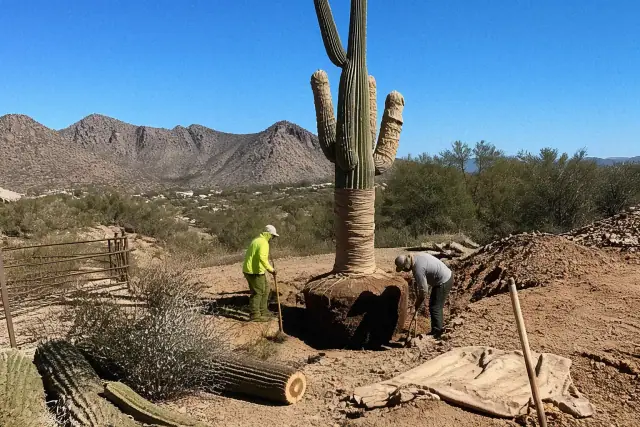
A saguaro cactus being stabilized for removal with burlap wrappings in the foothills of Tucson, AZ.

The crew verifies land ownership and protected status, submits required Arizona Department of Agriculture paperwork, and builds permit timing into the removal schedule. The written estimate includes applicable permit and tag costs before the work is scheduled.

Request Estimate

Emergency Hazard Removal

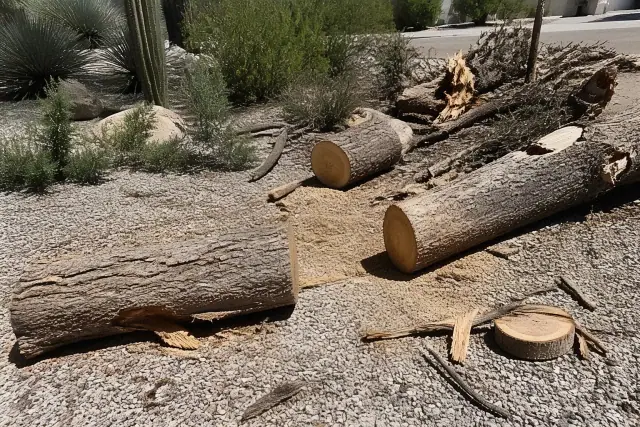
A fallen tree trunk being cut into logs at a job site in Tucson, AZ, surrounded by desert landscaping and bright sun.

Monsoon season, typically June through September, can combine wind and saturated soil to destabilize cactus roots. For an active threat over a driveway, roofline, power line, vehicle, or occupied area, the team prioritizes the call and works toward prompt response whenever conditions allow.

Request Estimate

Large Cactus Removal

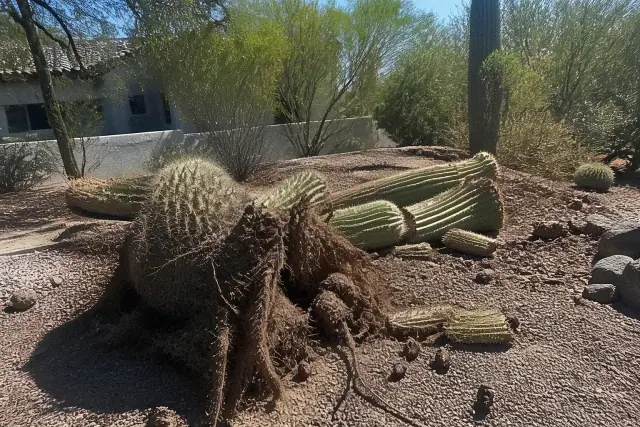
Large cactus removal project with exposed roots and spiny debris in a desert landscape in Tucson, AZ.

A saguaro over 10 feet tall can weigh several hundred to over a thousand pounds when fully hydrated. Skid steers, boom trucks, load-rated rigging, and controlled sectioning keep each segment supported until it is lowered into a planned landing area.

Request Estimate

Residential and Commercial Removal

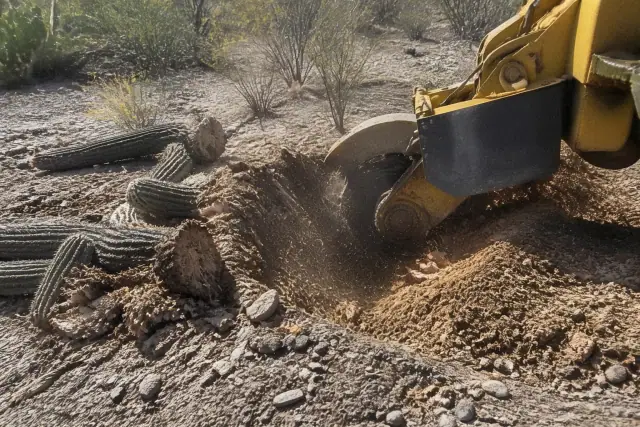
Stump grinder pulverizing a cactus stump into mulch on rocky desert soil in Tucson, AZ.

Service can cover one overgrown prickly pear in a backyard or cactus clearing across a commercial or construction property. Each plant is identified and sequenced around access, utility lines, permit needs, build schedules, drip irrigation, decorative rock, and surrounding native landscaping.

Request Estimate

Cactus Removal and Hauling

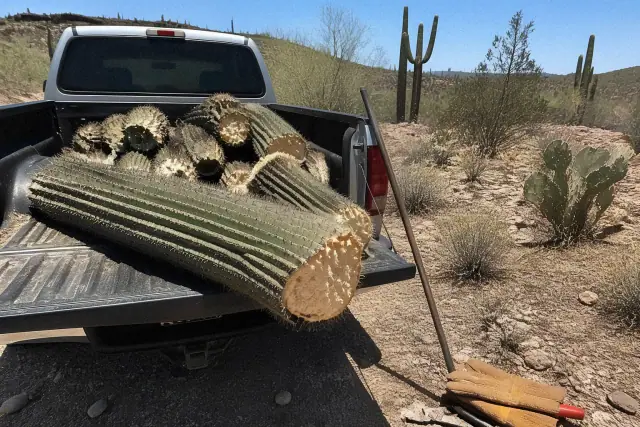
Worker loading a sectioned cactus into a truck bed during a cactus removal job in Tucson, AZ.

Spines, pads, sections, and root material are loaded out the same day unless the customer asks to keep debris. Material that cannot be salvaged goes through approved Pima County waste channels, while healthy relocation candidates can be coordinated with regional cactus salvage efforts.

Request Estimate

Root Crown Grinding and Site Restoration

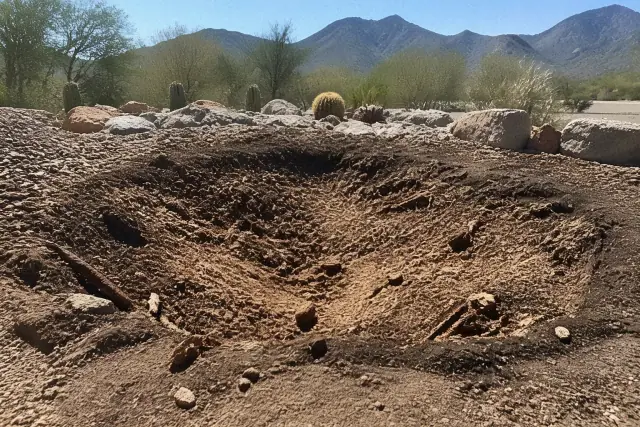
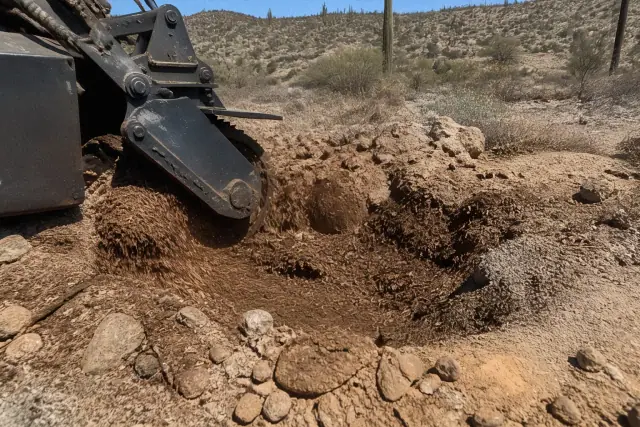
Exposed soil and root debris from stump grinding in Tucson, AZ, with mountain silhouettes in the background.

Large columnar species can leave a root crown that may resprout or rot if it remains in place. Grinding clears the base to surrounding grade, after which the excavation is backfilled and leveled for replacement planting or hardscape.

Request Estimate
Cactus Removal Options

Types of Cactus Removal Projects

Species, height, hydration, condition, legal status, and site access determine whether a cactus is sectioned, extracted with equipment, relocated, or removed with its root crown.

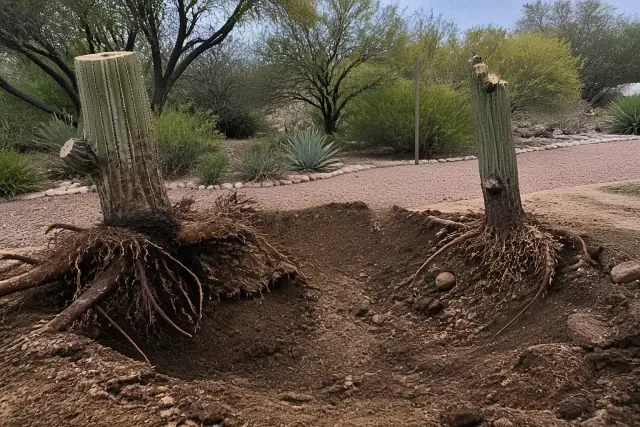
Saguaro and columnar cacti with exposed roots and cleared soil at a job site in Tucson, AZ.

Saguaro and Columnar Cacti

Saguaro, organ pipe, and other protected columnar cacti require identification and permit review before removal, relocation, or salvage. Mature plants are supported and sectioned in controlled cuts rather than allowed to fall.

  • Protected status checked before scheduling
  • Destroy, relocate, or salvage pathway confirmed
  • Rigging supports every planned segment
  • Skid steer or boom-truck access evaluated
  • Fences, pools, roofs, and nearby plants protected
Request Estimate
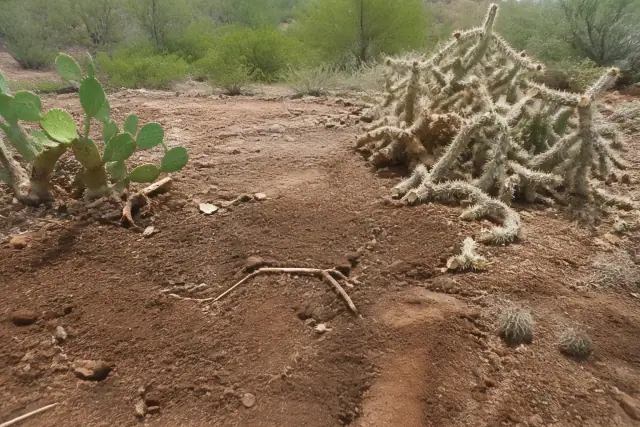
Prickly pear, cholla, and small cacti being cleared from a desert landscape in Tucson, AZ.

Prickly Pear, Cholla, and Small Cacti

Smaller plants demand careful handling even when heavy equipment is unnecessary. Jumping cholla segments detach on contact, prickly pear glochids can irritate skin for days, and loose pads or spines must be contained during hauling.

  • Padded cactus tongs limit direct handling
  • Canvas wraps contain detached sections
  • Spine-puncture-resistant PPE protects the crew
  • Species and size determine permit needs
  • Pads, spines, and root material leave with the crew
Request Estimate
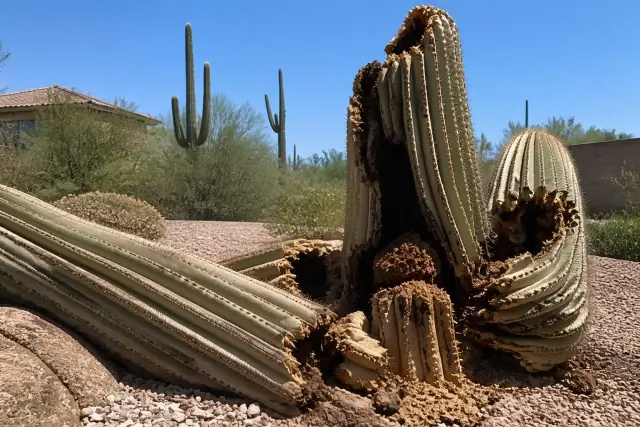
Decaying saguaro cactus with visible trunk rot in a Sonoran desert gravel landscape in Tucson, AZ.

Diseased, Rotting, or Leaning Cacti

Disease, rot, structural failure, and a compromised root system can rule out relocation and turn a cactus into a fall hazard. The first priority is stabilizing the plant before partial or full extraction.

  • Lean direction and target area assessed
  • Root stability checked after saturated soil
  • Disease and rot inform salvage decisions
  • Roofs, walls, vehicles, and power lines considered
  • Hazardous material removed from occupied areas
Request Estimate
Heavy machinery grinding a large wooden stump into mulch on a rocky, arid construction site in Tucson, AZ.

Construction and Lot Clearing

Development and commercial projects start with a cactus inventory before permit applications and build scheduling. The removal sequence is planned around equipment access, utilities, protected plants, HOA requirements, grading, and the intended use of the cleared space.

  • Each cactus identified and flagged
  • Protected plants separated from routine removals
  • Permit timing aligned with the build schedule
  • Gate, setback, and equipment access reviewed
  • Disturbed soil restored to planned grade
Request Estimate
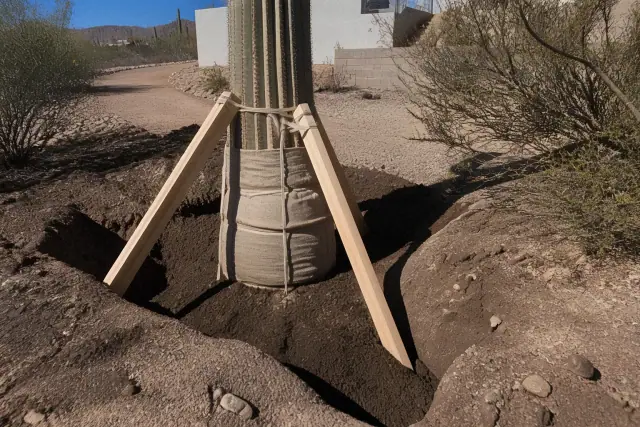
A saguaro cactus base secured with burlap and wooden bracing in a freshly dug pit at a residential site in Tucson, AZ.

Relocation and Salvage

Healthy, structurally sound native plants may qualify for rescue or rehoming instead of disposal. Cooler months, roughly October through April, are generally easier for crews and plants than summer heat above 100 degrees, although condition and protected status still control the plan.

  • Health and structural stability evaluated
  • Relocation permit requirements confirmed
  • Root ball protected with canvas wraps
  • Regional salvage coordination considered
  • Diseased or hazardous plants directed to disposal
Request Estimate
Finding Your Right Fit

Choosing the Right Cactus Removal Approach

The safest method depends on species, size, hydration, condition, legal status, root spread, access, utilities, nearby structures, and whether salvage is practical. An in-person assessment turns those factors into a written scope and upfront estimate.

Protected-Plant Permit Handling

The team verifies whether a native plant is protected and secures required Arizona Department of Agriculture permits and tags before removal. That protects the property owner from guessing about the rules.

Specialized Cactus Equipment

Padded tongs, canvas root wraps, cactus forks, skid steers, boom trucks, load-rated rigging, and PPE rated for spine puncture resistance match the hazards of spiny plant handling. Crews follow OSHA-based safety protocols adapted for cactus work.

Licensed & Insured

Licensed and insured service applies to cactus and tree work. Evaluations consider cactus condition as well as the root structure of nearby mesquite, palo verde, and other landscape plants.

Desert-Specific Experience

Why Choose Us for Cactus Removal?

Tucson Tree Service Co. combines cactus-specific handling, arborist knowledge, protected-plant paperwork, utility and root mapping, written scopes, and before-and-after documentation. One crew can coordinate cactus removal with related tree work when both affect the same landscape.

Request an Estimate

Spines and Glochid Exposure

Jumping cholla segments can detach on contact, while prickly pear glochids may irritate skin for days. Some cactus spines reach several inches long, making puncture-resistant protection and contained handling essential.

Heavy or Leaning Saguaros

Even an eight-foot saguaro is not a safe DIY chainsaw project, and the draft notes that a mature, fully hydrated plant can weigh over a ton per foot of height. A controlled plan accounts for lean, hydration, root stability, and the intended landing area.

Protected-Plant Permit Gaps

Removing, relocating, or destroying a protected native plant without the correct permit and tag creates legal exposure for the property owner. Saguaro, organ pipe, other columnar cacti, ocotillo, and certain native trees may require review.

Hidden Irrigation and Hardscape Damage

Cactus roots often spread farther and shallower than expected in caliche-heavy soil. Cutting or extracting without mapping can puncture water or irrigation lines and crack patio pavers, fencing, or block walls.

Tight Equipment Access

A cactus in an open front yard is simpler to reach than one beside a block wall, through a narrow gate, near pool equipment, or growing through chain-link fencing. Access planning determines which equipment can enter without disturbing the rest of the landscape.

Hazardous Debris and Root Crowns

Loose spines, pads, and root material remain a handling hazard after the main plant is down. A leftover root crown may also resprout or rot, so hauling and grinding are considered part of the complete site plan.

How it works

Our Cactus Removal Process

Each project moves from an in-person assessment through legal review, site planning, controlled removal, debris handling, and final restoration.

01.

Property Walkthrough and estimate

The crew inspects the cactus in person, identifies species and condition, and records access, surrounding structures, and the requested outcome. The customer receives a written scope and upfront price before work begins.

02.

Protected-Status and Permit Check

After verifying land ownership, the team determines whether removal, relocation, or salvage requires Arizona Department of Agriculture paperwork. Processing typically takes a matter of days to a couple of weeks depending on season and permit volume.

03.

Access, Utility, and Root Mapping

The removal plan maps gates, irrigation and water lines, root spread, fences, walls, pavers, pool equipment, neighboring plants, and equipment routes. This step determines the safest cutting sequence and landing area.

04.

Controlled Stabilization and Removal

The crew stabilizes the hazard and selects padded tongs, canvas wraps, cactus forks, a skid steer, boom truck, or rigging for the load. Large sections stay supported through each controlled cut.

05.

Hauling and Responsible Disposal

Spines, pads, cut sections, and root material are contained and hauled unless the customer requests otherwise. Healthy salvage candidates are separated from diseased or hazardous debris headed to approved Pima County waste channels.

06.

Backfill, Grading, and Documentation

The excavation is backfilled and disturbed soil is leveled for replacement planting or hardscape. Before-and-after photos and the written scope document what was removed and how the site was restored.

Plan a Safer Removal

Schedule a Cactus Removal
Estimate

Request an in-person cactus assessment for species identification, permit review, access planning, and written upfront pricing. The estimate explains the removal method, hauling, and site restoration before the crew starts.

Cactus Removal Help

Cactus Removal FAQs

Find practical answers about Tucson cactus removal pricing, permits, protected species, project timing, emergency hazards, equipment, cleanup, and site restoration.

Call Our Experts

Standard Tucson cactus removal typically runs $300 to $800, while the broader market range is $150 to $2,500 depending on species, height, and access. Industry-wide averages place a typical removal around $750, and a mature saguaro needing permits, tags, and heavy-equipment access can cost above $1,000. For comparison, a 15-foot saguaro costs significantly more to remove than a 4-foot barrel cactus.

Property owners can remove cacti from their own land, but protected native species such as saguaro may require a permit under Arizona's Native Plant Law before removal, relocation, or destruction. Removing a protected plant without the required permit can expose the property owner to legal penalties. Tucson Tree Service Co. verifies protected status and handles required paperwork before cutting.

The Arizona Department of Agriculture base permit fee is $7, with tag fees of $8 per saguaro, $6 for other protected native plants and trees, $6 per cord of wood, and $0.50 for small native plants under 8 inches. Applicable permit and tag costs are included in the written estimate.

Saguaro is the protected species homeowners most often encounter, but Arizona's Native Plant Law also covers organ pipe, other columnar cacti, ocotillo, and certain native trees depending on size and location. Permit needs also depend on whether the plant will be destroyed, relocated, or salvaged. Species and status are checked during the property assessment.

Some Tucson organizations and community groups may rescue and rehome healthy, salvageable native plants at no charge. Tucson Tree Service Co. provides professional removal, hauling, and disposal as a paid service, but can help coordinate salvage for a suitable plant. Diseased, damaged, or hazardous cacti generally require standard paid removal.

Cooler months, roughly October through April, are generally easier for crews and for plants being relocated because summer heat above 100 degrees adds risk. Hazardous or storm-damaged cacti still need attention regardless of season. Non-urgent removal or relocation is often planned for fall or spring.

Permit needs depend on species and size, not simply whether the plant looks small. Protected native plants under 8 inches, such as pincushion cacti, carry the reduced $0.50 tag fee, while many non-native or non-protected ornamental cacti generally do not require a permit. The crew checks both species and size before scheduling.

After land ownership is verified and the application is submitted, processing typically takes a matter of days to a couple of weeks. Season and permit volume can affect the exact timing. The permit window is built into the project schedule.

Yes. Tucson's monsoon season typically runs from June through September, when wind and saturated soil can destabilize cactus roots. Active hazards over homes, vehicles, driveways, or power lines are prioritized, with prompt response pursued whenever conditions allow.

A saguaro over 10 feet tall can weigh several hundred to over a thousand pounds when fully hydrated, so it requires load-rated equipment and a controlled cutting sequence. Rigging supports each segment before it separates. Access for skid steers or boom trucks is planned around gates, irrigation, walls, and nearby landscaping.

Every removal includes debris hauling unless the customer requests otherwise. Spines, pads, cut sections, and root material are loaded out the same day, and the excavation is backfilled and leveled. Healthy salvage candidates can be separated for regional rescue efforts.

Yes. Large columnar cacti can leave root crowns that may resprout or rot if left in place. Grinding clears the base to the surrounding grade so the area can be prepared for new planting or hardscape.

The free in-person estimate covers species, height, condition, protected status, root spread, permit needs, equipment access, utilities, hardscape, surrounding plants, hauling, and site restoration. Those details become a written scope with upfront pricing before the crew cuts anything.