Proudly serving Tucson, Oro Valley, Marana, Catalina Foothills, Casas Adobes, Sahuarita & surrounding areasCall or Text 24/7: 520-569-2093

Tree Health Consultations & Tree Inspections in Tucson, AZ

Tucson Tree Service Co. provides tree health consultations for homes and businesses in Tucson and across Pima County. Our team evaluates tree stability, disease symptoms, canopy decline, and root concerns, then connects those findings to appropriate tree care. Related services include tree trimming and pruning, tree removal, stump grinding, emergency tree service, storm cleanup, palm trimming, cactus removal, and tree planting. Each recommendation reflects the tree, site conditions, and the owner's goals.

Tucson's 100-plus days of triple-digit heat each year, alkaline caliche soils, reflected heat, and monsoon winds can conceal decline until a limb drops or a trunk splits. Mature mesquites, palo verdes, and other desert trees may develop shallow roots where caliche restricts penetration a few feet below grade. We inspect the crown, trunk, root flare, surrounding soil, and prior pruning wounds to separate correctable stress from structural risk. Clients receive clear findings for maintenance decisions, insurance documentation, HOA needs, boundary concerns, or construction planning.

Every consultation includes a written assessment of canopy health, branch structure, and root stability, with recommendations ranked by urgency. Request a estimate when the visit is tied to trimming, pruning, or removal work, or schedule a paid diagnostic consultation for a documented tree stability assessment.

Tucson Tree Service Co. provides tree health arborist consultations throughout Tucson, Oro Valley, Marana, Sahuarita, Vail, the Catalina Foothills, El Encanto, and greater Pima County.

★ ★ ★ ★ ★4.9/5 Average Rating · 20+ Years of Experience · Thousands of Customers Helped · Licensed & Insured · Residential & Commercial

Tree Health Consultation Options & Benefits

What Is a Tree Health Consultation?

A tree health consultation is a structured, on-site inspection by a certified tree expert to determine whether a tree is stable, declining, or hazardous. The evaluation considers both visible symptoms and conditions around the tree.

We assess the crown, trunk, bark, root flare, root system, and surrounding soil, then compare the findings with known decline patterns for the species. Branch structure, canopy density, decay indicators, irrigation, and past pruning wounds help explain what is happening.

The result is a practical record for deciding among monitoring, treatment, selective pruning, removal, or long-term care. Documentation can also support insurance, HOA, property-boundary, and construction decisions.

Benefits of a Tree Health Consultation

A consultation turns symptoms and hidden site conditions into an action plan. Finding decline early can preserve more care options before a tree drops major limbs or requires removal.

  • Identify root rot, borer activity, decay, and structural concerns earlier
  • Separate heat or irrigation stress from disease and pest damage
  • Receive recommendations ranked by urgency rather than a verbal guess
  • Document canopy health, branch structure, and root stability
  • Plan pruning that follows ANSI A300 branch-collar practices
  • Adjust irrigation and soil care for caliche and monsoon conditions
  • Evaluate limbs near roofs, driveways, patios, and power lines
  • Support long-term preservation of mature desert trees
Tree Care Services

Tree Health & Arborist Services

Our arborist services connect diagnosis with the next practical step, from monitoring and preventive care to pruning, removal, or planting. Each recommendation is based on the tree species, symptoms, site access, and risk around the property.

Tree Health Evaluations

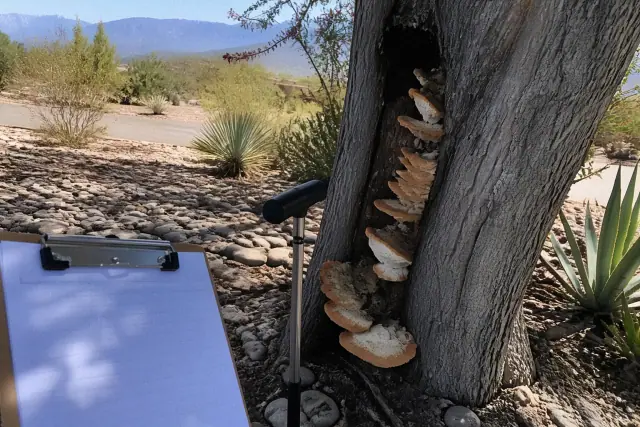
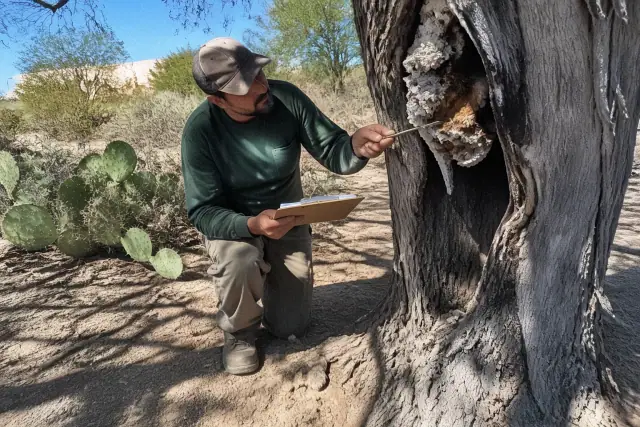
Arborist inspecting tree trunk decay and fungal growth in a Tucson, AZ xeriscaped landscape.

We inspect crown density, branch structure, bark, trunk condition, root flare, soil, and irrigation context for signs of decline. A canopy health check every 12 to 24 months can reveal root-system issues and environmental stress while corrective options remain available.

Request Estimate

Tree Disease & Pest Diagnosis

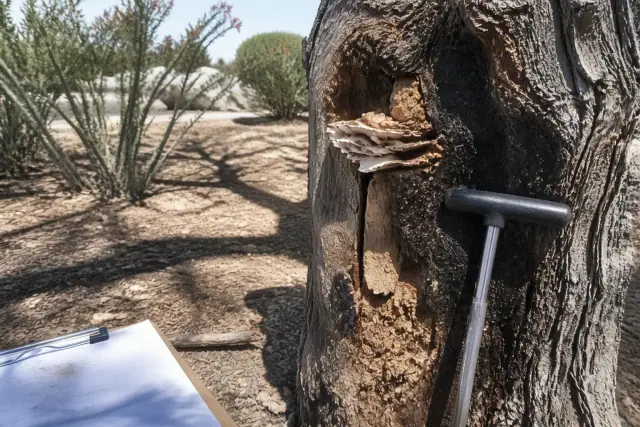
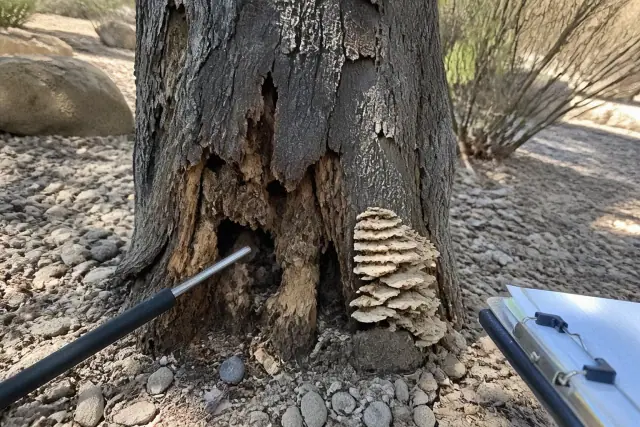
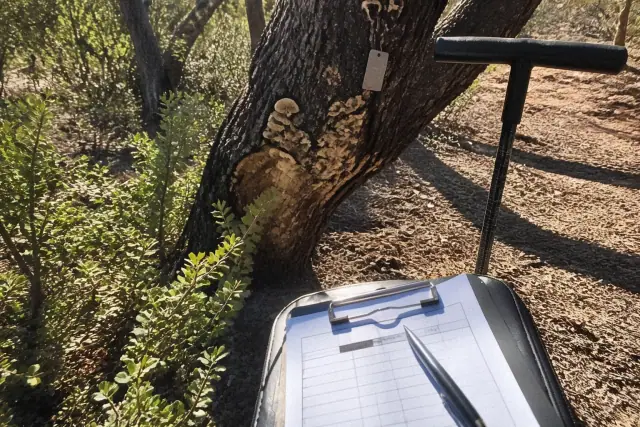
Tree bark with fungal rot and beetle holes next to a soil probe during an arborist inspection in Tucson, AZ.

Diagnosis looks at whether dieback is uniform or one-sided and checks for staining, oozing, fungal fruiting bodies, hollow wood, and damaged roots. Tucson concerns include bacterial wetwood, slime flux, Texas root rot, palo verde borers, agave weevils, and cactus rot organisms.

Request Estimate

Tree Risk & Stability Assessments

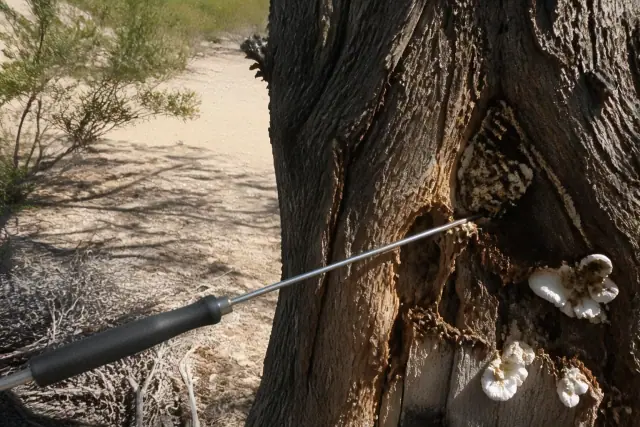
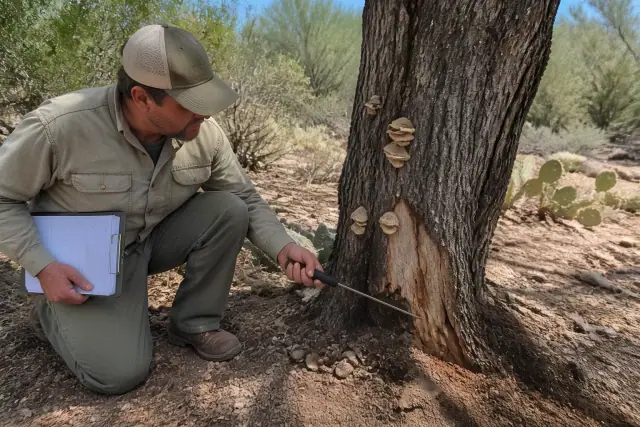
Close-up of tree trunk decay and fungal growth being inspected with a probe in a Tucson, AZ desert landscape.

A stability assessment focuses on branch attachments, trunk cracks, root anchorage, lean, and nearby targets such as roofs, vehicles, patios, and power lines. Written findings can help with insurance claims, HOA compliance, boundary disputes, and decisions about hazardous limbs.

Request Estimate

Pruning & Maintenance Planning

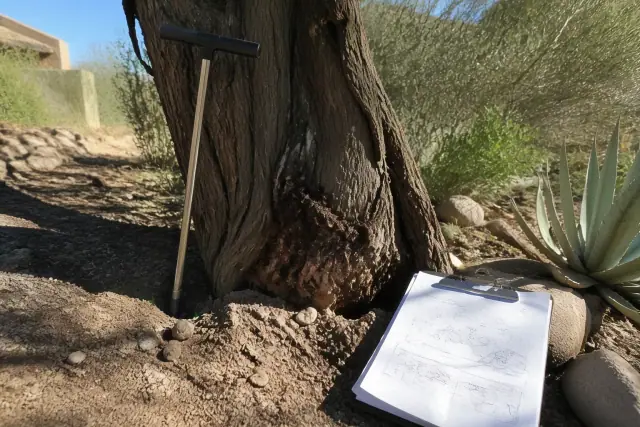
Arborist inspecting a mature mesquite tree with a soil probe and clipboard in Tucson, AZ.

Pruning plans follow ANSI A300 methods, including clean cuts at the branch collar and no topping or flush cuts. Young trees benefit from structural training, while mature trees need deadwood removal and selective canopy thinning that reduces storm exposure without sacrificing essential shade.

Request Estimate

Emergency & Storm Damage Assessments

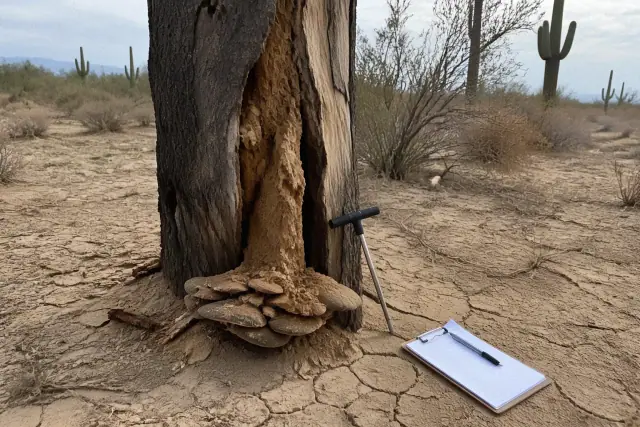
Arborist inspecting tree trunk decay and fungal growth in a desert landscape with Saguaro cacti in Tucson, AZ.

Tucson's monsoon season, roughly mid-June through September, brings microburst winds that can fracture roots and create hairline trunk cracks. A tree on a structure, blocking a driveway, or threatening power lines needs emergency assessment rather than waiting three weeks for a routine appointment.

Request Estimate

Tree Planting, Removal & Stump Care

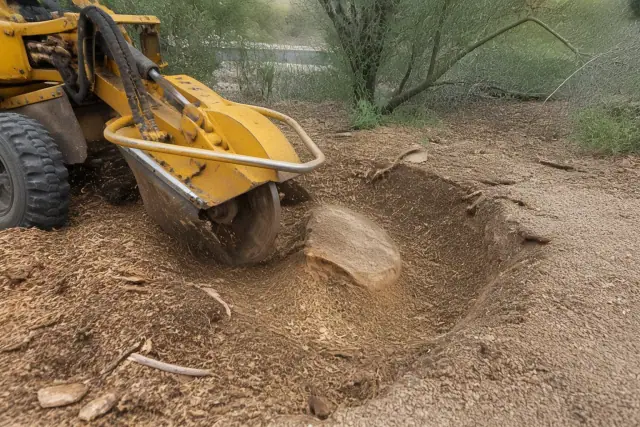
A stump grinder pulverizing a large tree stump into mulch at a jobsite in Tucson, AZ.

We plant desert-adapted mesquite, palo verde, desert willow, and ironwood when the soil and sun exposure fit. When a hazardous tree must come out, removal can be followed by stump grinding typically 4 to 6 inches below grade to clear space for replanting or hardscape.

Request Estimate
Assessment and Care Options

Tree Health Diagnostic & Care Options

The right scope depends on the decision you need to make. Options range from a visual condition check to a comprehensive written report, specialized diagnostics, preventive care planning, and species-specific desert tree or cactus guidance.

Close-up of tree trunk decay and fungal growth in a rocky, xeriscaped landscape in Tucson, AZ.

Basic Visual Tree Assessment

A ground-based visual assessment establishes the tree's current condition and flags concerns that may require closer testing. It is useful for a single-tree health question or as the assessment built into a trimming, pruning, or removal estimate.

  • Crown density, dieback pattern, and branch attachment review
  • Trunk, bark, crack, canker, and pruning-wound inspection
  • Root flare, visible roots, lean, and surrounding grade check
  • Soil, irrigation, reflected heat, and access observations
  • Initial findings matched to species-specific decline patterns
Request Estimate
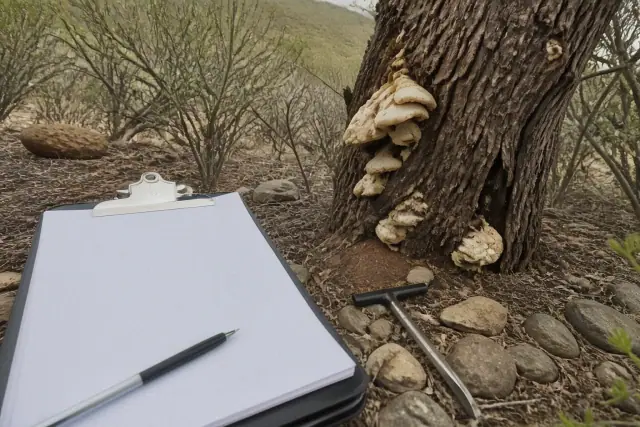
Arborist report on a clipboard near a tree trunk with fungal decay and Sonoran desert vegetation in Tucson, AZ.

Comprehensive Written Arborist Report

A comprehensive report provides formal documentation when a verbal finding is not enough. It is designed for insurance, legal, HOA, property-boundary, construction, and high-risk tree decisions.

  • Photographs of canopy, trunk, root, and site conditions
  • Trunk diameter at breast height and other relevant measurements
  • Written findings on canopy health, branch structure, and root stability
  • Recommendations organized by urgency and practical next step
  • A durable record for property and claim documentation
Request Estimate
Arborist inspecting tree decay and fungal growth in a Tucson, AZ desert landscape.

Specialized Tree Diagnostics

When visual evidence does not explain the decline, specialized diagnostics can examine internal wood, roots, and soil. Testing is selected only when it can clarify the likely cause or change the recommendation.

  • Mallet sounding or increment-borer checks for hollow wood
  • Resistograph testing when internal decay is suspected
  • Soil sampling or laboratory analysis for root and nutrient concerns
  • Pattern review for staining, oozing, conks, and one-sided dieback
  • Cactus checks for rib discoloration, soft spots, odor, and necrosis
Request Estimate
Arborist inspecting trunk decay and soil health for a tree care plan in Tucson, AZ.

Preventative Tree Care Plan

A preventive plan aligns monitoring, irrigation, soil care, and pruning with the property's actual tree inventory. This supports long-term preservation instead of waiting for visible failure.

  • Tree health checks scheduled around species and condition
  • Seasonal fertilization tailored to caliche soil deficiencies
  • Water-management adjustments as monsoon conditions change
  • Structural pruning while young-tree corrections remain minor
  • Deadwood removal and careful canopy thinning for mature trees
Request Estimate
Arborist examining trunk decay and fungal growth on a tree in the Sonoran desert of Tucson, AZ.

Desert Tree, Palm & Cactus Care

Desert plants require different inspection, pruning, and removal decisions than broadleaf shade trees. We account for native-plant rules, species-specific stress, and Tucson's soil and water conditions.

  • Mesquite, palo verde, desert willow, and ironwood care
  • Palm frond-skirt removal to reduce fire risk and rat harborage
  • Cactus inspection for wounds, overwatering, rot, and bacterial necrosis
  • Permitting guidance for saguaros and other protected native plants
  • Arizona Department of Agriculture guidance where protected species are involved
Request Estimate
Choose the Right Scope

Choosing the Right Tree Health Approach

A visual visit may be enough for an initial condition check or service quote, while insurance, legal, HOA, or construction questions usually benefit from photographs, measurements, and formal recommendations. Disease symptoms may call for wood probing, soil sampling, resistograph testing, or laboratory analysis. We explain which level fits the tree count, access, risk, and intended use before proceeding.

Desert-Climate Tree Expertise

Our evaluations account for caliche, reflected heat, mineral-heavy municipal water, irrigation history, and monsoon exposure. We apply that context to native mesquites and palo verdes, mature neighborhood trees, young construction plantings, palms, and cactus.

Written, Prioritized Findings

We photograph relevant conditions, record measurements, and explain what each symptom means. The written summary ranks recommendations by urgency so you can separate immediate hazards from monitoring and long-term care.

Structured Tree Evaluation

Evaluations consider crown, trunk, root, irrigation, pest, and site conditions. When a property owner needs a credentialed opinion for a legal, insurance, or permitting purpose, they should confirm the evaluator's required qualifications before scheduling.

What Sets Our Assessments Apart

Why Choose Us for Tree Health Consultations?

We combine on-site diagnostics with full-service tree care, so a consultation can lead to monitoring, pruning, treatment timing, removal, stump grinding, or planting when appropriate. We explain when a tree can be monitored or treated and when removal is the safer recommendation based on its condition and Tucson site factors.

Request a Consultation

Canopy Dieback & Leaf Stress

Early leaf drop, sparse or discolored foliage, scorched margins, and premature seed or pod production can indicate heat, drought, irrigation, root, or disease stress. The pattern across the canopy helps narrow the cause.

Trunk Cracks, Cankers & Decay

Vertical cracks, included bark, cankers, sap or gum oozing, fungal conks, and pruning wounds that have not closed may signal structural weakness or infection. We inspect and probe suspect wood rather than judging the trunk by appearance alone.

Shallow or Compromised Roots

Caliche layers a few feet below grade can restrict root penetration and leave a broad canopy supported by shallow roots. Root rot, girdling roots, grading damage, or a 60 mph monsoon gust can then compromise stability even when the crown still looks normal.

Tree Disease in Desert Soils

Bacterial wetwood and slime flux affect cottonwoods and willows near the Rillito and Santa Cruz riverbeds, while Texas root rot can kill mulberries, fruit trees, and some ash species after years without symptoms. Once Texas root rot is advanced, there is no reliable cure, and susceptible species should not be replanted in that soil for several years.

Borers, Weevils & Cactus Rot

Palo verde borers can hollow mature root crowns, while agave weevils and rot organisms attack wounded or overwatered cactus. Rib discoloration, soft spots, and odor can reveal bacterial necrosis, and preventive borer treatments are timed around spring emergence.

Monsoon & Storm Damage

Microburst wind, lightning, and saturated or shifting soil can fracture roots and create hairline trunk cracks during monsoon season. Damage may fail days later, so standing trees are checked for hidden instability before debris cleanup and hazardous-limb removal begin.

How It Works

Our Tree Health Consultation Process

Each consultation follows a repeatable crown, trunk, root, and site review. The scope expands to specialized diagnostics only when the initial evidence points to internal decay, root disease, nutrient deficiency, or cactus infection.

01.

Crown Assessment

We begin from the ground by reviewing canopy density, branch structure, deadwood, leaf color, and whether dieback is uniform or concentrated on one side.

02.

Trunk & Bark Inspection

We check the trunk and bark for cracks, cankers, included bark, oozing, conks, decay, and pruning wounds that have not closed correctly.

03.

Root Flare & Soil Review

The root flare and surrounding grade are examined for decay, girdling roots, shallow anchorage, drainage problems, caliche restrictions, and irrigation stress. Suspect areas may receive a limited excavation check.

04.

Specialized Diagnostics

When needed, we sound or probe wood, use an increment borer or resistograph for internal concerns, and collect soil samples when root disease or nutrient deficiency is suspected.

05.

Photographs & Measurements

We photograph significant findings, measure trunk diameter at breast height, and record site conditions, prior pruning, access, and nearby targets that affect risk.

06.

Written Recommendations

You receive a written summary that explains the condition and ranks monitoring, treatment, pruning, removal, or planting recommendations by urgency.

Protect Tucson Trees

Schedule a Tree Health
Arborist
Consultation

Get a clear picture of your tree's health, stability, and next care step. Call to discuss the symptoms and choose between a estimate tied to trimming or removal work and a paid diagnostic consultation with documented findings.

Arborist Answers

Tree Health Consultation FAQs

These answers cover Tucson tree evaluation costs, warning signs, inspection timing, reports, disease, pruning, storms, and desert species care.

Call a Tree Expert

A basic single-tree consultation typically costs $100 to $250, while arborist hourly rates generally range from $75 to $250 depending on scope and travel. A comprehensive report with photographs and formal recommendations typically costs $150 to $450 per tree; an assessment tied directly to a trimming, pruning, or removal quote has no separate charge. Tree size, access, specialized diagnostics, and tree count affect pricing-for example, one open-yard mesquite takes less work to assess than six mature eucalyptus trees along a tight property line. A $150 stability assessment can also cost far less than an emergency removal that runs into the thousands after structural or vehicle damage.

Arizona generally allows a property owner to trim branches back to the property line, but not to enter the neighbor's property or cut beyond that boundary without permission. If the tree appears diseased or unstable, a certified tree expert can document its condition before work begins. That record can be useful if responsibility or damage later becomes disputed.

Schedule a consultation when large limbs hang over a roof, driveway, patio, or power line; when leaves drop suddenly or one side of the canopy declines; or when cracks, decay, oozing, conks, or dead branches appear. An assessment is also useful after a severe monsoon storm or before construction and grading near mature roots.

A canopy health and stability check every 12 to 24 months can catch root problems, borer activity, and environmental stress before obvious failure. Trees with known defects, recent storm exposure, construction disturbance, or rapid symptoms may need a different monitoring schedule based on the arborist's findings.

The evaluation reviews the crown, branch structure, trunk, bark, root flare, surrounding soil, irrigation context, and prior pruning wounds. We photograph relevant findings, measure trunk diameter at breast height, and provide a written summary with recommendations ranked by urgency. Specialized testing is added only when the symptoms justify it.

Many problems are manageable when found in the first year or two of decline, while treatment or selective pruning is still practical. The answer depends on the diagnosis: heavily infected Texas root rot has no reliable cure, and management may require removing infected material and avoiding susceptible replacement species in that soil for several years.

Pattern recognition comes first, including the location of dieback, staining, oozing, conks, and changes at the root flare. Suspect wood may be checked with a mallet, increment borer, or resistograph, while soil samples or laboratory analysis can investigate root disease and nutrient concerns.

Yes, especially if the tree took strong wind or lightning, changed lean, shed a major limb, or stands near a structure. Monsoon season runs roughly mid-June through September, and fractured roots or hairline trunk cracks can remain hidden before failing days later.

A estimate is tied directly to pricing for trimming, pruning, or removal work, with the assessment included in that quote. A paid diagnostic consultation is appropriate when you need a documented stability assessment or a report for insurance, legal, HOA, boundary, or planning purposes.

ANSI A300 pruning methods use clean cuts at the branch collar and avoid flush cuts and topping. Topping triggers weak epicormic regrowth and shortens structural life. Young trees usually need training cuts, while mature trees need deadwood removal and careful thinning.

Native mesquite, palo verde, desert willow, and ironwood tolerate Tucson rainfall patterns and caliche soils and need far less supplemental water than non-native shade trees once established. Selection should still account for the property's soil, sun exposure, irrigation, and available mature-tree space.

Yes. Palm frond-skirt removal uses different timing and technique than broadleaf pruning and can reduce fire risk and rat harborage. Large saguaro work may require permits under Arizona native-plant rules, so the inspection should include both plant condition and the permitting conversation.

Emergency work can include hazardous-limb removal, debris hauling, and stability checks on other trees affected by wind or lightning. After removal, stump grinding typically clears the root crown 4 to 6 inches below grade so the area can be prepared for replanting or hardscape.