Proudly serving Tucson, Oro Valley, Marana, Catalina Foothills, Casas Adobes, Sahuarita & surrounding areasCall or Text 24/7: 520-569-2093

Tree Removal & Landscape Maintenance in Tanque Verde, AZ

Tucson Tree Service Co. provides tree removal, tree trimming, tree pruning, and stump grinding throughout Tanque Verde, Arizona. We also handle emergency tree service, storm cleanup, palm trimming, cactus removal, arborist consultations, and tree planting. Our crews work on residential lots, horse properties, acreage, and commercial sites across the community. Each recommendation is shaped by the tree, the surrounding structures, and the access available for equipment.

Monsoon microbursts, shallow roots above caliche, and weak branch unions can turn mature mesquite and palo verde trees into property hazards. Long gravel driveways, septic fields, well lines, horse fencing, roofs, and block walls also affect how a tree can be trimmed or removed. We begin with an on-site assessment of trunk lean, root condition, clearance, and equipment access. A careful assessment and insured crews help property owners make a practical decision before work begins.

We serve the full Tanque Verde CDP, a Pima County community of roughly 16,000 residents, and provide a written estimate after inspecting the site. Call to discuss a leaning, declining, storm-damaged, or unwanted tree.

★ ★ ★ ★ ★4.9/5 Average Rating - 20+ Years of Experience - Tanque Verde Tree Service Company Specialists - Residential & Commercial
Tree Care Services

Complete Tree Care in Tanque Verde, AZ

Select the service that fits the condition of your tree and the way you plan to use the property. We assess removal hazards, canopy structure, stumps, storm damage, palms, cacti, tree health, and planting needs before recommending a scope. Property owners outside the immediate community can also review our service coverage in Flowing Wells, AZ .

Tree Removal

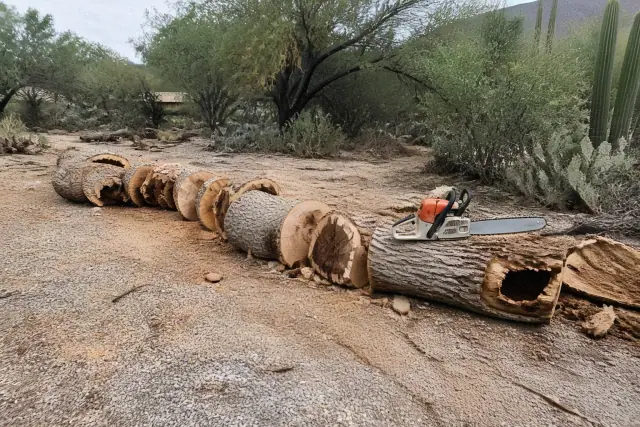
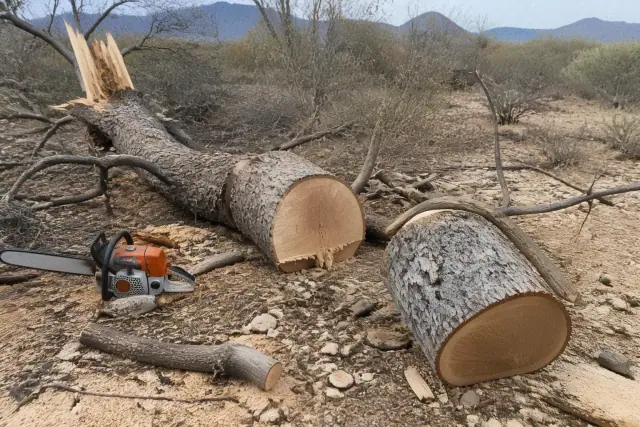
A large downed tree trunk being cut into logs on arid desert terrain in Tanque Verde, AZ.

Residential and commercial removals begin with an assessment of trunk lean, root-plate stability, structures, septic fields, well lines, fencing, and safe drop zones. We use directional felling or sectional rigging as conditions require, then chip and haul debris unless you want usable wood left on-site. Explore Tree Removal.

Explore Service

Tree Trimming

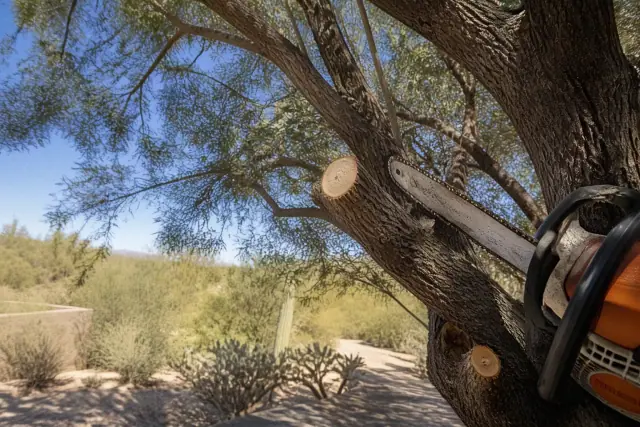
Precision canopy pruning on a tree with a pole saw in a Sonoran desert landscape in Tanque Verde, AZ.

Canopy thinning and crown reduction lower wind resistance while removing deadwood before it becomes a falling hazard. We also clear limbs from roofs, power lines, driveways, and block walls without stripping the canopy. Explore Tree Trimming.

Explore Service

Tree Pruning

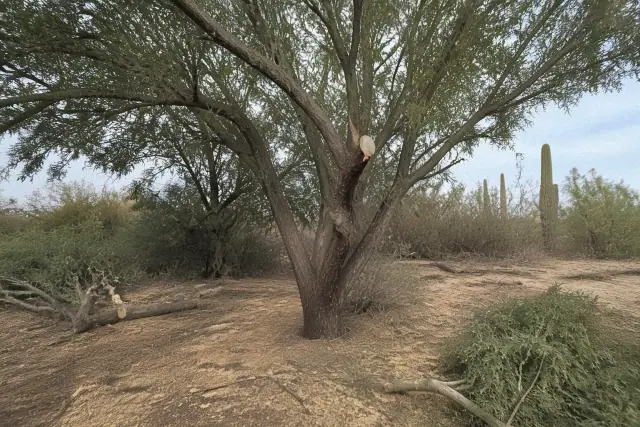
Precision canopy pruning on a tree in a Sonoran desert landscape in Tanque Verde, AZ.

Structural pruning addresses co-dominant stems and included bark that commonly fail on mesquite and palo verde trees. Cuts are selected to preserve a balanced canopy and avoid exposing palo verde bark to damaging sunscald. Explore Tree Pruning.

Explore Service

Stump Grinding & Removal

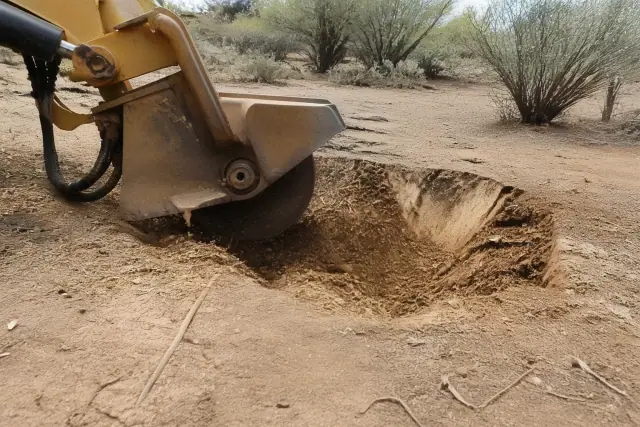
Heavy machinery grinder head pulverizing a wooden stump into mulch in the soil in Tanque Verde, AZ.

Stump grinding clears the remaining trunk and surface roots for a paver patio, new landscaping, or a flatter yard. We pay particular attention to mesquite roots that can resprout, then remove the grindings or leave them as mulch according to your preference.

Emergency Tree Service

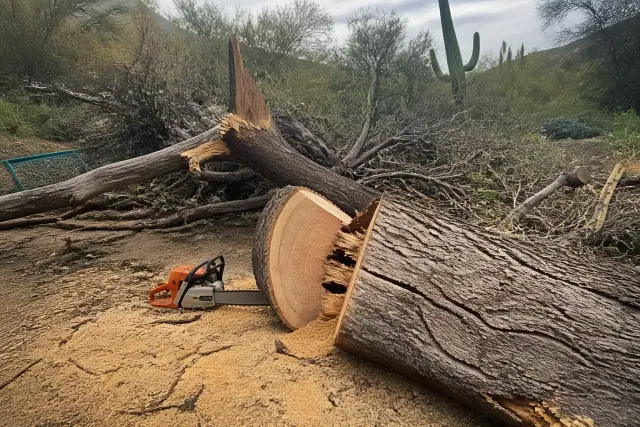
A large tree trunk cut into sections with a chainsaw on the desert ground in Tanque Verde, AZ.

Trees down across a driveway, leaning toward a roof, or threatening vehicles and access roads receive priority. When the job allows it, we provide prompt tree removal after checking whether the trunk or limbs remain under load-bearing stress; microburst winds exceeding 60 mph can make those cuts especially unpredictable.

Storm Damage Cleanup

Large tree trunk being cut into logs during storm damage cleanup in Tanque Verde, AZ.

Storm cleanup includes clearing trunks and limbs, chipping brush, reopening access, and inspecting standing trees for damage that may fail later. Gusts of 50-60 mph can snap weakly anchored mesquite and palo verde limbs or topple trees with compromised root plates.

Palm Tree Trimming

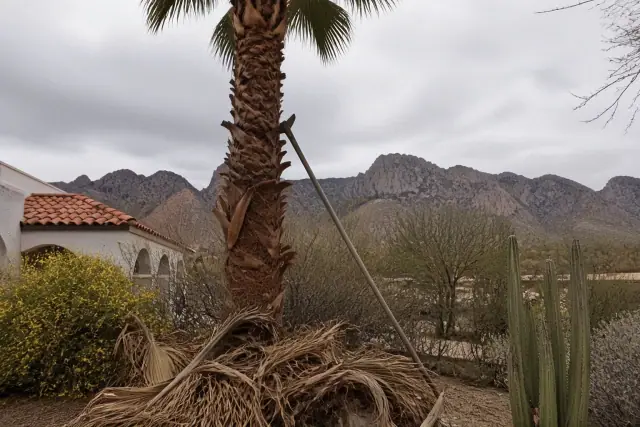
A tall palm tree being trimmed of dead fronds with debris at the base in Tanque Verde, AZ.

We trim California and Mexican fan palms by removing dead fronds and shaping the skirt without cutting into the trunk's growth area. Clearing heavy thatch also reduces wind-borne debris, fire fuel, and shelter for pests or rodents near open washes.

Cactus Removal

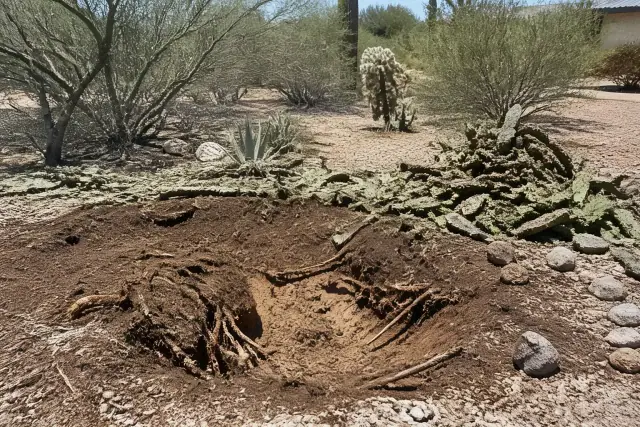
Cactus removal site with excavated roots and debris on crushed granite landscaping in Tanque Verde, AZ.

Cactus work starts with identifying the plant, its condition, and whether relocation is practical. Saguaros may require an Arizona Department of Agriculture permit before relocation or removal, while barrel cactus, cholla, and prickly pear still require careful equipment and handling.

Tree Health & Arborist Consultation

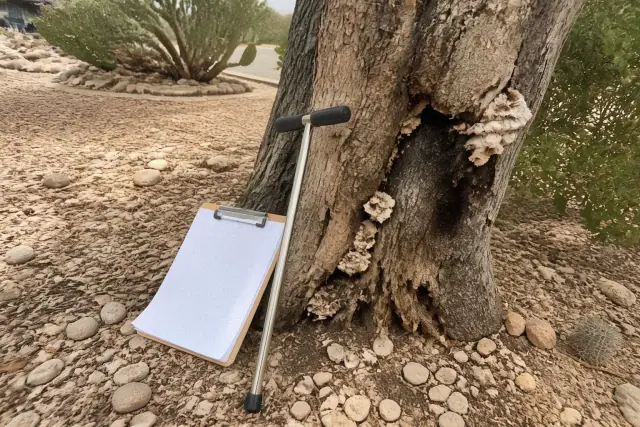
Arborist tools and clipboard resting against a tree showing trunk decay and fungal growth in Tanque Verde, AZ.

Tree-health consultations evaluate canopy thinning, discoloration, cavities, root rot, borer activity, and drought stress. The goal is to determine whether treatment and corrective care can preserve a legacy mesquite or palo verde, or whether removal is the safer choice.

Tree Planting

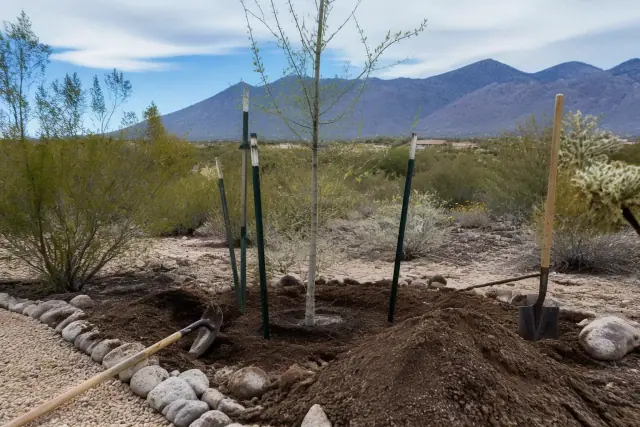
Newly planted young tree with irrigation stakes in a Tanque Verde, AZ landscape with the Santa Catalina Mountains behind.

We plant desert willow, ironwood, velvet mesquite, and other desert-adapted trees with attention to root flare, caliche, drainage, irrigation, and mature clearance from structures. Careful placement matters because a tree set too close to a foundation can become a $2,000 removal problem in fifteen years.

Planning Tree Work

Choosing the Right Tree Service Approach

The right scope depends on more than tree height. Condition, access, nearby improvements, future plans for the ground, native-plant requirements, and seasonal timing all affect whether pruning, treatment, removal, grinding, or planting is appropriate.

Tree Condition and Failure Risk

A 30-foot mesquite with a compromised root plate can weigh several tons, so visible lean is only one part of the risk. We also look for trunk cavities, included bark, canopy dieback, cracked unions, and soil movement before choosing treatment, pruning, or removal.

Equipment Access and Drop Zones

Long gravel drives, wash crossings, HOA requirements, septic fields, well lines, and horse fencing can limit where equipment and debris can move. The site plan must account for bucket-truck and chipper access as well as a safe route for the crew.

Structures, Utilities, and Rigging

Trees near roofs, power lines, vehicles, or block walls often require sectional dismantling instead of a single felling cut. Rigging lowers manageable pieces into a controlled zone and reduces exposure around the property.

Stump Plans and Future Use

Grinding depth and root work should match what comes next, whether that is paving, landscaping, replanting, or simply leveling the yard. Mesquite resprouting and wide, shallow desert roots may require more attention than the visible stump suggests.

Native Cactus Requirements

A saguaro should be assessed for disease, rot, structural instability, and transplant potential before work is scheduled. State requirements for protected native plants differ from the rules for ordinary tree removal, so permitting is handled when relevant.

Season and Scheduling

December and January are favorable windows for major removal and planting because trees are dormant, heat stress is lower, and scheduling is often more flexible. Active hazards should be addressed when discovered rather than waiting for a preferred season.

Local Tree Risks

Common Tree Problems on Tanque Verde Properties

Tanque Verde trees face a distinctive mix of wind, shallow desert soils, heat, pests, irrigation issues, and exposure along washes and foothill properties. Recognizing the symptom and its cause helps determine whether selective pruning, treatment, stabilization, cleanup, or removal is the responsible next step.

Request a Tree Assessment

Split Limbs and Included Bark

Fast-growing mesquite and palo verde trees often form weak co-dominant unions with included bark. A limb may look healthy yet split under monsoon wind load or the added weight that follows a wet winter.

Shallow Roots Above Caliche

Decomposed granite over caliche can force roots to spread wide and shallow instead of anchoring deeply. Overwatering may compound the problem by concentrating roots near the surface, leaving the tree more vulnerable when saturated soil and wind arrive together.

Borers, Root Rot, and Drought Stress

Canopy thinning, leaf discoloration, dieback, cavities, and weakened roots can signal a health problem rather than a simple trimming need. Early evaluation may leave room for treatment, while advanced decline can make removal the safer option.

Palm Thatch and Dead Fronds

A heavy skirt of dead fronds can become fire fuel and break loose during wind. The accumulated thatch can also shelter rodents and pests, especially on properties bordering open desert washes.

Unstable or Diseased Cacti

Rot, disease, poor anchoring, or a developing lean can make a large cactus unsafe near a home, driveway, or animal area. The response may be relocation or removal, depending on the species, condition, and applicable state requirements.

Storm-Damaged Trees Under Tension

Partially fallen trunks and caught limbs can store force and shift unexpectedly when cut. Crews identify load paths before clearing a driveway, roofline, fence, vehicle area, or access road.

Why Choose Us

Why Choose Tucson Tree Service Co. in Tanque Verde

Tree work in this transition zone calls for desert-species knowledge, careful hazard planning, and equipment suited to both open acreage and constrained areas. Tucson Tree Service Co. combines on-site estimates, practical tree-health guidance, licensed and insured service, and thorough cleanup for residential and commercial properties.

On-Site Assessments and Written Estimates

We inspect the tree rather than relying on a phone quote, checking utilities, trunk diameter, lean angle, root condition, structures, and equipment access. The written estimate identifies removal, cleanup, and optional stump grinding before work starts.

Arborist Standards and Safe Work Practices

Our planning considers tree structure, health, access, rigging, and aerial-work conditions before pruning or removal begins.

Equipment, Cleanup, and Communication

Bucket trucks, rigging, chippers, and stump grinders let the crew adapt the method to the tree and site. Brush and logs are handled as agreed, and work pauses for a conversation if a hidden cavity, utility conflict, or other unexpected condition appears.

Our Process

Our Tree Removal Process in Tanque Verde

A defined process keeps the scope clear from the first inspection through the final walk-through. The method changes with tree size, condition, access, and proximity to structures, but the planning and communication steps remain consistent.

01.

Inspect the Tree and Site

We walk the property, locate visible utility conflicts, measure trunk diameter and lean, evaluate the root plate, and confirm access for a bucket truck, chipper, or stump grinder.

02.

Choose the Removal Method

Open-area trees may allow directional felling, while large trees near structures usually require sectional removal and rigging. The crew identifies the drop zone and debris route before cutting.

03.

Provide a Written Estimate

The estimate covers the planned removal, cleanup, hauling, and stump grinding when requested. You can review what will be removed, what will remain, and how the site will be left.

04.

Set the Safety Perimeter

On service day, the crew establishes a work perimeter, protects access points, checks the drop zone, and positions equipment for controlled movement around the property.

05.

Remove the Tree in Controlled Sections

The canopy and trunk are cut using the planned felling or rigging method. Pieces near roofs, walls, fences, or other improvements are lowered in manageable sections.

06.

Clean Up and Walk Through

Brush is chipped and debris is hauled unless firewood or mulch is being left by request. When stump grinding is included, the hole is backfilled before the final walk-through.

Practical Outcomes

Tree Service Outcomes for Homes and Businesses

Case Study 1: Safer access: Removing a fallen or unstable tree can reopen a driveway, reduce exposure near a roofline, and make the property passable after a storm.

Case Study 2: Lower wind exposure: Structural pruning and deadwood removal can reduce canopy resistance while preserving healthy growth on mature desert trees.

Case Study 3: Ready-to-use ground: Grinding, root work, and cleanup can prepare a former tree location for landscaping, paving, replanting, or a flatter yard.

Plan Your Tree Work

Request a Tree
Service
Estimate

Schedule an on-site visit for tree removal, pruning, grinding, storm cleanup, cactus work, planting, or an arborist consultation in Tanque Verde. We will inspect the property and provide a written estimate based on the tree, access, hazards, cleanup, and requested finish.

Tree Service Answers

FAQs About Tree Service in Tanque Verde, AZ

These answers cover common questions about local tree removal, costs, emergency work, maintenance, permits, and service coverage. For property-specific guidance, request an on-site assessment.

Call Our Tree Service

Look for licensed and insured service, appropriate qualifications for the requested work, and familiarity with desert species such as mesquite, palo verde, palms, and saguaros. Ask for an on-site assessment and written estimate because access, tree condition, and nearby structures cannot be judged accurately from a phone description alone.

Tree removal may range from $200 for a small tree to $2,500 or more for a very large removal requiring a crane or extensive rigging. A typical mid-size residential tree averages around $400 to $500, with costs increasing for trunks over 24 inches, limited access, nearby structures, power lines, or bundled stump grinding.

We prioritize trees on structures, blocked access roads, and dangerous post-storm leans, then respond as quickly as scheduling allows. Response time varies with current workload and hazard severity, especially during the July through September monsoon season, so call as soon as damage is discovered.

Yes. Service covers the Tanque Verde CDP, including properties along Tanque Verde Road, Catalina Highway, Redington Road, Melpomene Way, Speedway Boulevard, Houghton Road, the Rincon foothills, and near Agua Caliente Park, as well as supported nearby areas such as Tucson, Vail, and Catalina Foothills.

A 20-foot tree generally falls in the small-to-medium range and may cost between $200 and $500, depending on species, trunk diameter, site access, and nearby hazards. Mesquite and palo verde removals in open areas usually require less rigging than trees beside structures or power lines.

Trees in the 50- to 60-foot range, or trunks exceeding 24 inches in diameter, commonly fall within an $800-to-$1,500 range depending on complexity. A price near $1,000 may reflect crane help, sectional dismantling near structures, substantial cleanup, or stump grinding in the scope.

December through February tends to offer the most competitive pricing and better scheduling availability after monsoon cleanup demand subsides. If the tree poses an active hazard, it is safer to address it promptly rather than wait for winter.

Private tree services do not automatically provide free removal based on age. Some county-assistance or utility programs may help when a dead or dying tree threatens public access or utility infrastructure, so eligibility should be confirmed with the administering organization.

Stumps are generally ground 6 to 12 inches below grade, depending on whether the area will become a paver patio, new landscaping, a planting site, or a flat yard. Mesquite may also require attention to surviving roots that can send up suckers.

Saguaros are protected under Arizona law, and relocation or removal may require an Arizona Department of Agriculture permit. We assess the cactus, its condition, and whether transplanting elsewhere on the property is practical before proceeding.

Pre-monsoon work is commonly planned for May through June to thin canopies and reduce wind-sail effect. After storms, August through September is useful for assessing split limbs and root plates that may have shifted in saturated soil.

We inspect utility conflicts, trunk diameter, lean angle, root-plate condition, surrounding structures, drop zones, and equipment access. The written estimate then identifies removal, cleanup, hauling, and stump grinding when requested.

Yes, cleanup can include chipping brush and hauling logs and debris. If you want usable wood left for firewood or grindings retained as mulch, that preference can be included in the scope.

Palms generally need annual trimming to remove dead fronds that can become wind-borne debris and fire fuel. California and Mexican fan palms should be trimmed without damaging the trunk's growth area.

Request a consultation when you notice thinning foliage, discoloration, cavities, borer activity, root rot, drought stress, a developing lean, or cracked unions. Early assessment can clarify whether treatment or corrective pruning may preserve the tree, or whether removal is the safer choice.