Proudly serving Tucson, Oro Valley, Marana, Catalina Foothills, Casas Adobes, Sahuarita & surrounding areasCall or Text 24/7: 520-569-2093

Palm Tree Trimming & Dead Frond Removal in Tucson, AZ

Tucson Tree Service Co. provides palm tree trimming, tree pruning, and tree removal for homeowners and businesses in Tucson, Arizona. Our crews also handle stump grinding removal, emergency tree service, and storm damage cleanup. Cactus removal, tree health consultation, and tree planting round out our tree-care services. We focus on healthy, safe, and well-maintained desert landscapes.

Tucson palms endure monsoon microbursts, dry winter freezes, and long periods of triple-digit heat. Heavy dead fronds and summer storm gusts can create property hazards. We evaluate trunk, crown, access, and structural concerns before climbing or bucket work. Request an estimate before another monsoon season turns loose fronds into a larger problem.

We match hand saws, pole pruners, spike-free climbing gear, and bucket trucks to each palm's height and access. Crews remove dead or dying fronds, seed stalks, and pest-infested material while preserving the healthy green canopy.

Tucson Tree Service Co. provides palm tree trimming in Tucson and nearby Oro Valley, Marana, Sahuarita, Vail, and the greater Pima County area.

★ ★ ★ ★ ★4.9/5 Average Rating · 20+ Years of Experience · Thousands of Customers Helped · Licensed & Insured · Residential & Commercial

Palm Tree Trimming Options & Benefits

What Is Professional Palm Trimming?

Professional palm trimming removes dead and dying fronds, heavy seed stalks, and pest-infested material after the trunk and crown are assessed. Because palms do not heal cuts like broadleaf trees, every removed frond leaves a permanent boot or scar.

Our crews generally preserve green fronds within a 9 and 3 o'clock canopy, or sometimes 8 and 4. We avoid the aggressive 10 and 2 hurricane cut, which strips away needed foliage and leaves the palm structurally weak.

Precision pruning keeps enough canopy for photosynthesis and helps shade the trunk from Tucson's intense UV exposure. It is a different method from trimming mesquite, palo verde, or pine trees, even when those species share the same property.

Benefits of Timely Palm Tree Trimming

A properly timed trim protects people and property without sacrificing the green canopy a palm needs. It also gives an arborist a clear view of the crown, trunk, and developing health concerns.

  • Removes loose fronds before monsoon winds carry them toward roofs, vehicles, or neighboring yards
  • Reduces dry fire fuel and the dead-frond skirt that can carry flame into the crown
  • Clears nesting and shelter areas used by rats, scorpions, and roosting pigeons
  • Stops drooping fronds from rubbing rooflines or hanging over pools and walkways
  • Removes seed stalks that add crown weight and attract bees
  • Preserves healthy green fronds for photosynthesis and trunk shade
  • Makes palm weevils, yellowing fronds, and early fungal symptoms easier to spot
  • Includes chipping or hauling and a final cleanup pass instead of leaving a frond pile
Complete Palm Care

Palm Tree Care Services

Palm care can range from a routine frond trim to full removal after storm or disease damage. We match the work to the palm's condition, access, height, and relationship to nearby structures rather than applying one cut to every tree.

Palm Tree Trimming

A worker removing dead fronds from a tall palm tree at a residence in Tucson, AZ with debris on the ground.

Routine trimming clears brown or drooping fronds below the horizontal while retaining the green canopy. Mature Tucson palms commonly need this work once a year, with fast-growing Mexican fan palms sometimes needing attention twice a year.

Request Estimate

Palm Frond and Seed-Stalk Pruning

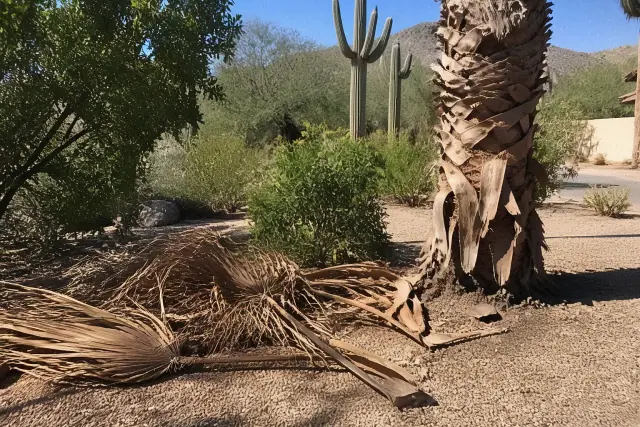
Palm tree trunk with pruned fronds and piles of debris in a Tucson, AZ desert landscape with saguaro cacti.

Selective palm frond pruning removes dead growth, fruit stalks, and loaded seed pods before they drop or draw bees. The crew works systematically around the crown and avoids stripping live fronds simply to create a tighter silhouette.

Request Estimate

Palm Tree Removal

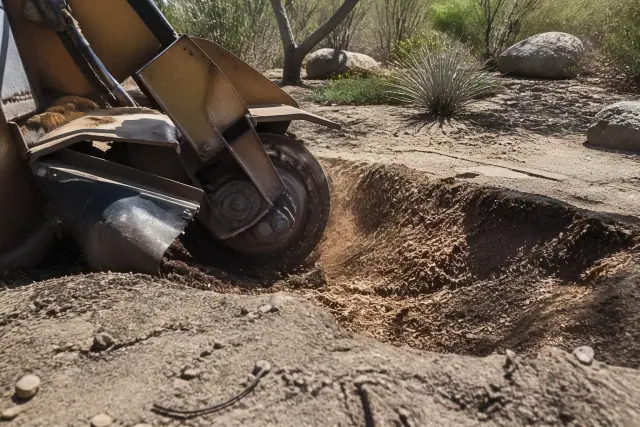
A stump grinder removing a palm tree at a job site in the Sonoran desert in Tucson, AZ.

Removal becomes the responsible choice when a palm is split at the crown, hollowed by pink rot, leaning after monsoon winds, or showing advanced fusarium wilt or bacterial trunk rot. Trees near structures, pools, or power lines can be sectioned instead of straight-felled.

Request Estimate

Stump Grinding After Removal

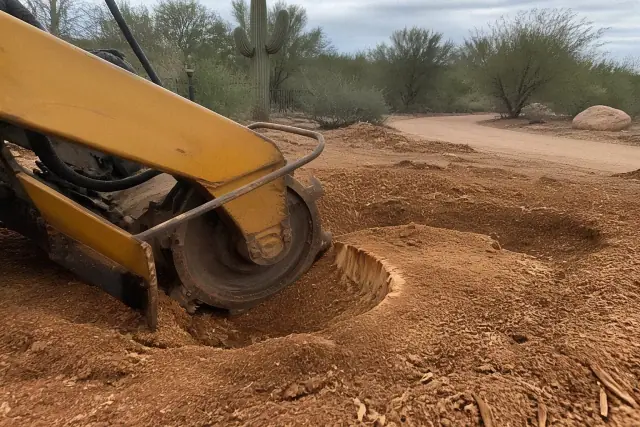
Stump grinder pulverizing a wooden tree stump into mulch in a Tucson, AZ desert landscape with saguaro cacti.

After removal, stump grinding can clear the root ball below grade, typically 4-6 inches under soil level. That creates room to replant or landscape without leaving a stump obstruction, and crews call Arizona 811 before work involving excavation.

Request Estimate

Emergency Storm Damage Service

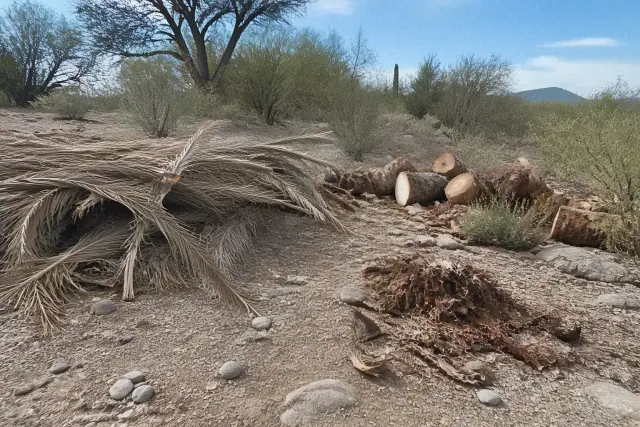
Stacked palm fronds and debris from a fallen tree in a Tucson, AZ desert landscape.

Emergency calls are triaged immediately, with hazards such as downed lines, leaning trunks, and trees resting on structures handled first. The emergency tree service covers split, uprooted, and wind-thrown trees as well as chipping, limb hauling, and property cleanup.

Request Estimate

Tree Health Arborist Consultation

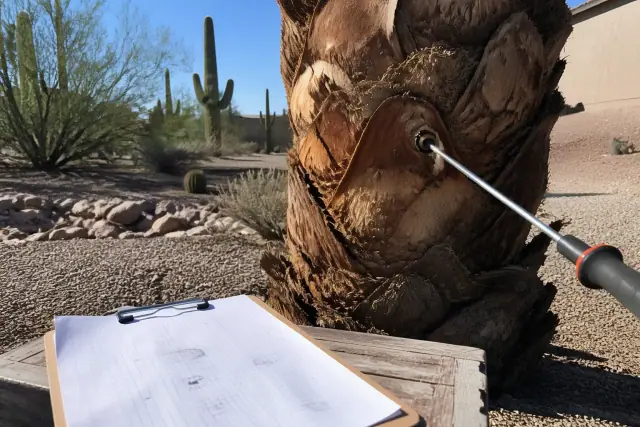
Arborist inspecting a desert palm tree with a soil probe and clipboard in Tucson, AZ.

An arborist consultation checks yellowing fronds for nutrient deficiencies, looks for palm weevils, and identifies early fungal disease before it spreads. The visit can also address mulching, seasonal trimming, and planting placement near foundations or pools.

Request Estimate
Palm Service Options

Types of Palm Tree Trimming Work

The right approach depends on season, palm height, species, trunk count, accessibility, and the amount of dead material. These service categories show how those factors shape a safe, useful scope of work.

Arborist trimming dead palm fronds at a residential property in Tucson, AZ.

Seasonal Maintenance Trimming

Late winter through early spring, roughly February through April, is the preferred Arizona trimming window. It comes before the spring seed-stalk flush and the main summer storm season.

  • March is generally the Southern Arizona sweet spot
  • Most mature palms need one trim each year
  • Fast-growing species may need a second light trim in early fall
  • Pre-monsoon work prepares palms for the typical mid-June through September storm season
  • Timing before nesting season helps protect birds such as Cooper's hawks under the Migratory Bird Treaty Act
Request Estimate
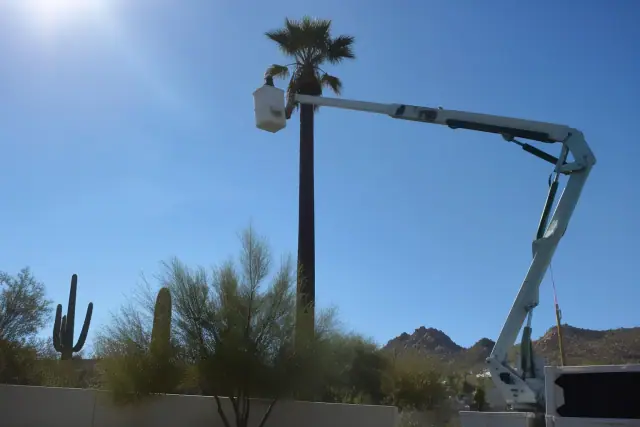
Articulated boom lift reaching high palm tree branches in a Tucson, AZ desert landscape with saguaro cacti.

Height and Access Options

Access methods change as palms get taller or sit closer to walls and structures. Crews choose hand tools, pole saws, spike-free climbing gear, or a bucket truck after assessing the site.

  • Short palms under 15 feet often allow simpler ground-based access
  • Medium palms from 15 to 30 feet may require pole tools or climbing equipment
  • Tall palms in the 30-60 foot range commonly require a bucket truck or climbing rig
  • A 15-foot queen palm and a 60-foot Mexican fan palm require different work plans
  • Living palms are never climbed with trunk spikes
Request Estimate
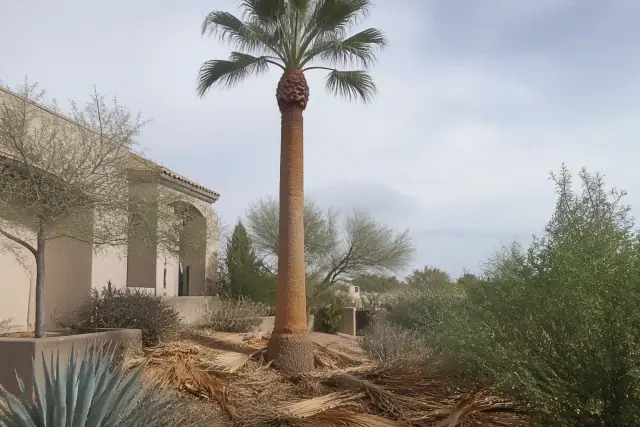
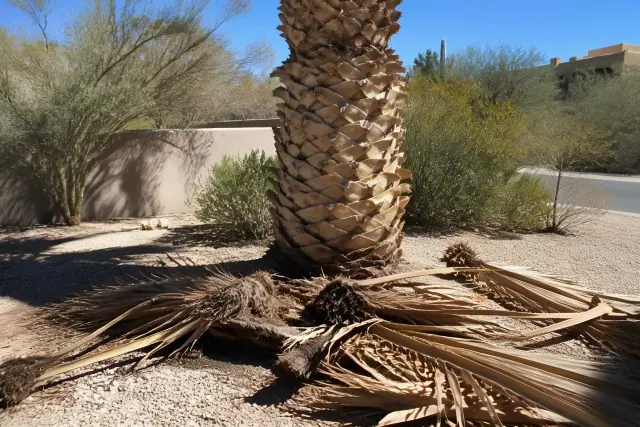
A tall palm tree with trimmed fronds and debris on the ground in a Tucson, AZ residential yard.

Residential Palm Care

Residential trimming addresses the way palms interact with homes, yards, and outdoor living areas. Tight access or sensitive surfaces can require extra rigging and controlled debris handling.

  • Controlled work around rooflines and parked vehicles
  • Extra rigging for palms over pools or against block walls
  • Frond and seed-pod clearing above walkways
  • Pest-shelter removal in neighborhoods such as Sam Hughes and Barrio Viejo
  • Tree planting guidance for space near foundations and pools
Request Estimate
Freshly trimmed palm tree with a pile of brown fronds on the ground at a property in Tucson, AZ.

Commercial and Mixed-Tree Care

Commercial properties often combine tall palms with native and shade trees, so the work plan must account for several pruning methods and busy areas. Crews provide palm care alongside supported tree services for mixed Tucson landscapes.

  • Palm trimming for business and managed properties
  • Mesquite and palo verde pruning for desert landscapes
  • Pine tree trimming where properties mix native and non-native species
  • OSHA fall-protection and electrical-clearance practices
  • Tucson Electric Power clearance requirements considered around overhead lines
Request Estimate
A tall palm tree with hanging dead fronds being cleared in the Sonoran desert of Tucson, AZ.

Hazardous and Storm-Damaged Palms

A tree risk assessment determines whether a storm-damaged or diseased palm can be trimmed or should be removed. The plan prioritizes immediate hazards and controls trunk sections around structures.

  • Leaning trunks after monsoon winds
  • Storm-split or hollow crowns
  • Wind-thrown trees blocking driveways and fences
  • Trees resting on structures or near downed lines
  • Debris cleanup for safer property and insurance documentation
Request Estimate
Finding Your Right Fit

Choosing the Right Palm Care Approach

A sound recommendation starts with the palm's health and structural risk, then accounts for species, height, trunk count, access, nearby power lines, and the amount of dead material. That assessment separates routine maintenance from work that needs specialized rigging or full removal.

Standards-Based Pruning

We evaluate each palm before work begins, with the goal of removing hazards while retaining the healthy fronds the palm needs.

Spike-Free Access Methods

Hand saws, pole pruners, bucket trucks, and spike-free climbing gear are matched to the site. Avoiding spikes on living palms prevents permanent punctures that can become disease entry points and shorten a tree's life.

Clear Estimates and Cleanup

written estimate are itemized by tree so height, access, trunk count, and rigging needs are clear before work starts. Chipping or hauling and a final cleanup pass are included in the trimming process described in the quote.

What Sets Us Apart

Why Choose Tucson Tree Service Co. for Palm Care?

Our licensed and insured company pairs careful work planning with conservative palm pruning, clear estimates, and debris handling for residential and commercial properties.

Request an Estimate

Dead Fronds and Wind Risk

Brown fronds hanging below the horizontal can break loose in July and August storm cells and land on roofs, vehicles, fences, or neighboring yards. Trimming before they become wind-borne hazards is direct property protection.

Fire Fuel and Pest Shelter

A skirt of dead fronds traps heat and moisture against the trunk and can act as a fire ladder into the crown. The same material gives rats, scorpions, and pigeons protected places to nest or roost.

Over-Pruning Damage

Hurricane cuts strip the canopy to a bare knob, stress the palm, and expose more trunk to sunscald. Improper chainsaw work from a ladder also creates serious fall and cutting risks while leaving wounds vulnerable to pink rot and other fungal disease.

Heat and Freeze Stress

Trimming during active heat waves above 105 degrees adds stress and can slow wound response. Fresh cuts are also more vulnerable during freeze events below 32 degrees, including Tucson's occasional December-January frosts.

Palm Pests and Disease

Palm weevils, nutrient deficiencies, pink rot, fusarium wilt, and bacterial trunk rot can change a routine trim into a health or removal decision. If more than a third of the canopy is discolored, the palm needs assessment rather than aggressive cutting.

Roofline and Utility Conflicts

Fronds rubbing roofs or hanging near power lines signal a clearance problem, while palms over pools or wedged against block walls need controlled rigging. Professional planning protects structures and respects required electrical clearances.

How it works

Our Palm Tree Trimming Process

Each job moves from visual risk assessment through controlled cutting and cleanup. The six steps keep the scope tied to the palm's condition, the property's access, and the hazards around the work zone.

01.

Assess the Trunk and Crown

A visual evaluation considers the trunk, crown, lean, discoloration, pest activity, and structural risk. This helps determine whether trimming is appropriate or removal should be considered.

02.

Plan and Clear the Work Zone

The crew clears the drop zone, accounts for roofs, pools, walls, vehicles, and foot traffic, and plans required rigging. Work near overhead lines follows OSHA electrical-clearance practices and Tucson Electric Power requirements.

03.

Select Safe Access Equipment

Hand saws, pole saws, a bucket truck, or spike-free climbing gear are selected for the palm's height and location. Technicians use hard hats, eye protection, cut-resistant gear, and rated fall protection.

04.

Prune the Canopy Precisely

Crews work around the canopy to remove dead fronds, seed stalks, and pest-infested material. Healthy green fronds remain in place to support photosynthesis, trunk shade, and structural strength.

05.

Chip or Haul the Debris

Cut fronds, stalks, and other debris are lowered and collected without leaving a hazardous pile. Material is chipped or hauled from the site according to the job plan.

06.

Complete the Final Cleanup

A final cleanup pass clears the yard, roof, or work area of loose material. The crew can also explain visible health concerns and whether the palm needs annual maintenance, a second seasonal trim, or further assessment.

Plan Your Palm Care

Request a Palm Tree Trimming
Estimate

Get a free, itemized estimate based on palm height, species, trunk count, access, nearby hazards, and debris volume. A clear scope helps you compare the right pruning method and prepare your property before Tucson's next storm season.

Palm Trimming Help

Palm Tree Trimming FAQs

These answers cover Tucson palm-trimming prices, seasonal timing, maintenance frequency, pruning methods, and removal decisions. A site-specific estimate is still the best way to account for height, trunk count, access, and nearby structures.

Call Our Arborist Team

Across the Tucson market, palm trimming generally runs $75 to $400 per tree. Short palms under 15 feet are often $75-$150, palms from 15-30 feet are commonly $150-$300, and tall palms in the 30-60 foot range may be $250-$400 or more when climbing or bucket equipment is required.

Late winter through early spring, roughly February through April, is the preferred window. This timing avoids the hottest weather, comes before the spring seed-stalk flush, and prepares the canopy for monsoon season.

March is generally the sweet spot in Southern Arizona because hard-frost risk is lower and summer heat has not arrived. Some fast-growing palms may benefit from a second light trim in early fall.

Most mature Tucson palms need trimming once a year. Mexican fan palms and trees near pools, walkways, or power lines may need more frequent attention when seed stalks and dead fronds accumulate quickly.

Municipal rules may address dead-frond fire hazards, sidewalk or intersection visibility, public rights-of-way, and work near power lines. Tucson Electric Power also maintains clearance requirements around overhead lines, so site conditions should be reviewed before trimming begins.

A 20-foot palm generally falls in the medium-height range and may cost $150 to $300. Species, trunk count, access, proximity to structures, and the amount of debris determine the site-specific quote, while a standard single-trunk Tucson palm often falls in the $150-$250 range.

Watch for brown or drooping fronds below the horizontal, loaded seed pods, and fronds rubbing roofs or approaching power lines. If more than a third of the canopy is discolored, schedule a health assessment rather than assuming the tree only needs a heavier trim.

A hurricane cut is aggressive over-pruning that leaves only a narrow tuft at the top, often described as a 10 and 2 canopy. It removes healthy foliage, increases UV exposure, and weakens the palm instead of making it safer.

The typical scope removes dead and dying fronds, seed stalks, and pest-infested material while preserving healthy green fronds. Debris is then chipped or hauled, followed by a cleanup pass around the work area.

No. Living palms are accessed with pole tools, bucket trucks, or spike-free climbing gear because spike punctures do not heal and can create entry points for disease.

Removal may be appropriate when the crown is split, the trunk is hollowed by pink rot, the tree leans dangerously after wind, or advanced fusarium wilt or bacterial trunk rot threatens nearby trees. A tree risk assessment should guide that decision.

Stump grinding typically clears the root ball 4-6 inches below soil level. That depth removes the obstruction so the area can be replanted or landscaped, subject to site conditions.

Palm tree trimming and full tree service are available in Tucson, Oro Valley, Marana, Sahuarita, Vail, and the greater Pima County area. Residential and commercial properties can request a free, itemized estimate.