Trim to the Property Line
Arizona's self-help rule generally allows trimming encroaching branches and roots only as far as your side of the boundary.
Tucson Tree Service Co. hears this question every week from homeowners around Tucson: Arizona's self-help rule generally lets you trim encroaching branches and roots back to the property line at your own expense, but you may not cross the boundary or seriously damage the tree. The limit matters when mesquite, palo verde, or palm growth blocks sunlight, drops litter, or scrapes a roofline.
Arizona's self-help rule generally allows trimming encroaching branches and roots only as far as your side of the boundary.
Avoid removing more than roughly 25 percent of the live canopy in a single season, and make cuts just outside the branch collar.
Photograph the encroachment, confirm the boundary, and keep records of neighbor communications and any arborist findings.
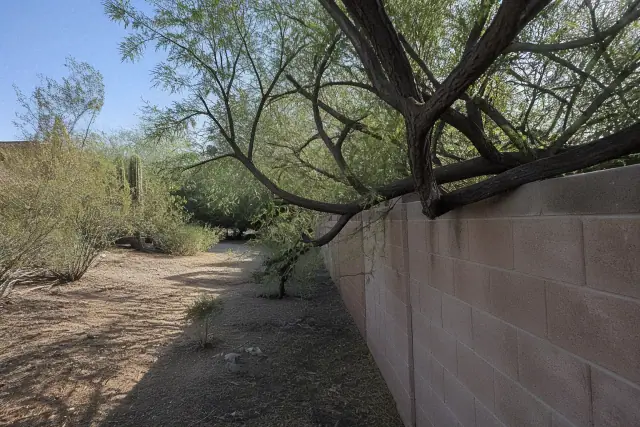
The visible boundary and the exact branch portions extending into your yard. This image helps make clear that cuts stop at the line.
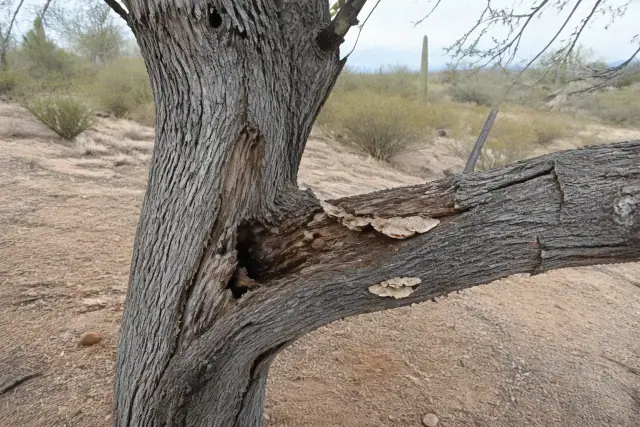
Compare healthy growth with visible decay, dead wood, or structural failure. Tree condition can affect both the trimming plan and a later damage claim.
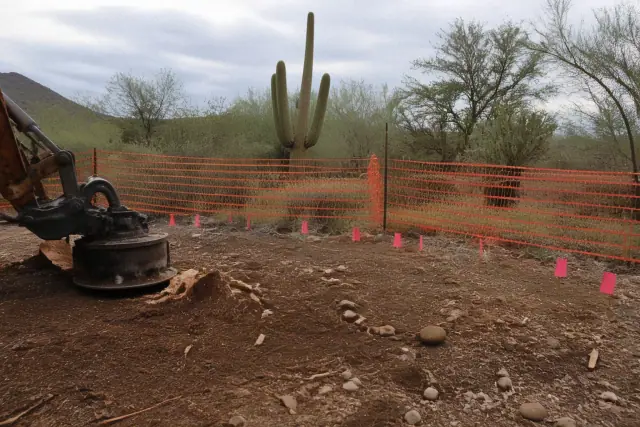
A saguaro arm or barrel cactus extending toward a fence line. Native plant protections can make this a permit and professional-assessment issue rather than a routine trim.
Identify the actual boundary before cutting; a fence or shared block wall may not establish where ownership changes.
If the work requires entering the neighbor's yard, reaching the trunk from their side, or cutting beyond the boundary, obtain permission first.
Limbs more than 10 to 15 feet up, growth near power lines, and signs of structural failure warrant professional equipment and evaluation.
Do not cut into the branch collar, strip the canopy unevenly, or damage the trunk's growth point when removing palm fronds and seed pods.
| Situation | Can You Act Without Consent? | Practical Action |
|---|---|---|
| Branches or roots cross into your yard | Yes, but only up to the property line and at your expense | Confirm the boundary and use tree-safe cuts |
| Access requires entering the neighbor's yard | No | Get permission before entering or cutting beyond the line |
| A healthy limb falls during a documented storm | Trimming rights do not decide the damage claim | Document the event and contact your homeowner's insurer |
| A dead or visibly diseased tree creates a known hazard | Liability may shift after notice of the hazard | Save communications and obtain an arborist assessment |
| A saguaro or other protected native plant encroaches | Not without checking permit requirements | Arrange a professional assessment before disturbing it |
Arizona's common-law self-help doctrine generally puts the trimming choice and cost on the property owner affected by the overhang. You can work from your side up to the boundary, but entering the neighboring property or removing the whole tree requires consent. In HOA-governed communities in Marana and Oro Valley, CC&Rs may add rules for trees near shared property lines, so review those documents before cutting.
A healthy tree that fails during a documented monsoon event between June and September is generally treated differently from a dead or visibly diseased tree the owner knew was hazardous. Homeowner's insurance usually handles damage from a healthy storm-felled limb, while notice of a known hazard can affect liability. The International Society of Arboriculture and ANSI A300 pruning practices support measured cuts that protect the branch collar and avoid canopy stress; brittle mesquite and palo verde limbs, heavy palm growth, and work requiring a bucket truck or climbing gear raise the safety stakes.
Who pays for an overhang trim? Generally, the owner who wants the encroaching growth cut pays for work on that side of the line. Can you climb the tree? Yes, if you remain entirely on your property; otherwise, get the neighbor's permission. What if a protected saguaro or barrel cactus crosses the boundary? The Arizona Native Plant Law may require an Arizona Department of Agriculture permit, so seek a professional cactus assessment first. If communication and arborist documentation do not resolve a dispute about damage, a dead tree, or repeated encroachment, Pima County residents typically turn to Justice Court small claims because Tucson code compliance generally does not settle private tree disputes.
For high limbs, power-line conflicts, suspected disease, or a disputed boundary, request an assessment before cutting. A licensed and insured crew can plan access and debris handling, while an ISA Certified Arborist can document tree health, root encroachment, and safe trim limits for both property owners.