Licensing and Insurance Check
Request the contractor license number and a current certificate showing general liability and workers' compensation coverage before signing a contract.
Before any chainsaw touches a tree on your Tucson property, ask Tucson Tree Service Co. for clear answers about licensing, insurance, equipment, and the removal plan. The right questions help you compare written estimates, protect nearby walls and irrigation, and avoid surprises after the tree comes down.
Request the contractor license number and a current certificate showing general liability and workers' compensation coverage before signing a contract.
Ask whether the crew will climb and rig sections, use a bucket truck or crane, or fell the tree in one piece, and how they will protect walls, pools, pavers, and irrigation.
Compare the same scope on every estimate: tree height and diameter, removal method, hauling, cleanup, permit responsibility, and whether stump grinding is included or separate.
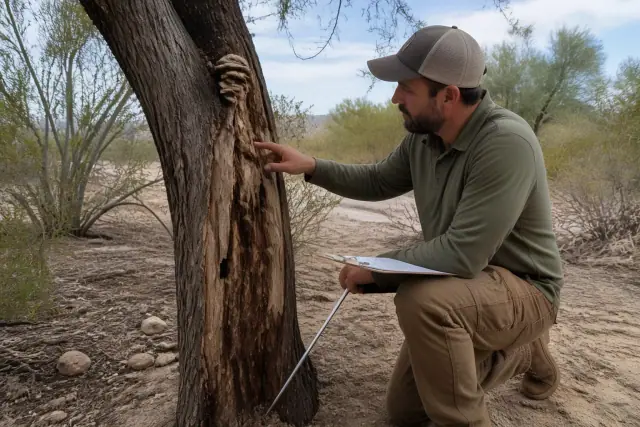
An ISA Certified Arborist can look for root rot, structural cracks, disease, and internal decay that may change the removal plan.
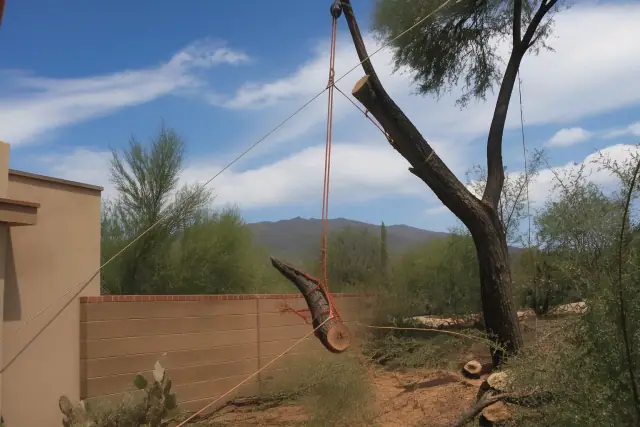
Tight urban access may require a piece-by-piece rigged removal instead of a crane. The work plan should explain how limbs will be lowered without damaging nearby hardscape.
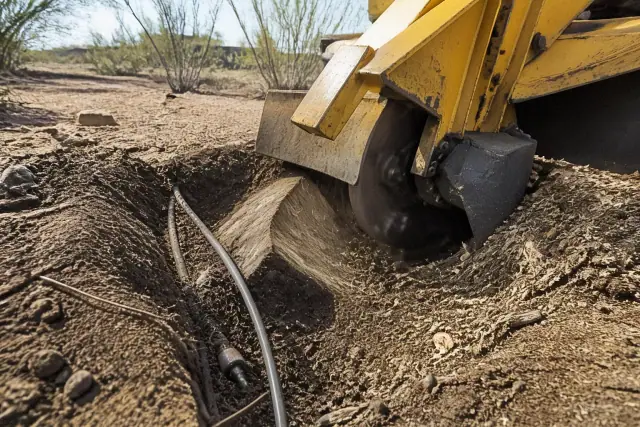
Ask whether the grinder will cut 6 inches or deeper and whether buried irrigation has been marked. Also confirm the grinding radius, root-flare work, mulch handling, and backfilling.
Verify the active contractor license, insurance certificate, workers' compensation coverage, and whether an ISA Certified Arborist will evaluate the tree.
Tree height, trunk diameter, condition, access, nearby structures, hauling, stump grinding, and crane needs can all change the scope and price.
A single medium tree typically takes 2 to 4 hours with cleanup, while a tree over 60 feet or close to structures can take a full day. Ask about scheduling and same-day debris hauling separately from any storm-response window.
Do not accept a vague phone quote, missing insurance documents, an unexplained price far below the other bids, or a plan that leaves hauling, cleanup, and stump work undefined.
| Tree or Service | Typical Price in the Draft | Question to Ask |
|---|---|---|
| National tree removal average | About $850; typically $400 to $2,000 | What makes this tree higher or lower than the typical range? |
| Tree under 30 feet | $200 to $500 | Are hauling and cleanup included? |
| Tree 30 to 60 feet | $500 to $1,200 | Will the crew climb, use a bucket truck, or use a crane? |
| Tree 60 to 80 feet | $1,000 to $2,200 | How do nearby structures change the plan? |
| Tree taller than 80 feet | $1,800 to $3,500 | Is crane work included in writing? |
| Stump grinding | $100 to $400 per stump | What depth and grinding radius are included? |
| Larger bulk removals in Tucson | $850 to $6,000 | How do tree count and access affect the total? |
Use an eight-question checklist covering license status, insurance, an arborist assessment, recent references, an itemized estimate, the removal method and equipment, the timeline and debris plan, and stump grinding. Ask for two or three references from work completed in the last six months, ideally on similar Tucson properties, then ask those customers whether cleanup, punctuality, and the final price matched the quote. You can also ask whether the company follows ANSI A300 pruning standards, ANSI Z133 safety requirements, or belongs to the Tree Care Industry Association.
Mature mesquites, palo verdes, and eucalyptus growing near block walls, pools, power lines, or older Tucson homes require different access and drop-zone planning. Wind exposure near the Santa Catalina foothills, root damage in caliche soil, or signs of internal decay can make an arborist assessment especially useful before removal. For saguaros and other protected native cacti, ask whether Arizona's Native Plant Law applies and whether the company or property owner will handle the Arizona Department of Agriculture permit.
Should the estimate be free? Ask for a free written estimate that itemizes tree height, diameter, hauling, and stump grinding. Is stump grinding included? It is often separate, typically $100 to $400 per stump, so confirm the depth, radius, mulch removal, and backfill. What equipment might arrive? Standard tools include chainsaws, a chipper, stump grinder, and rigging gear, while large or constrained trees may need a bucket truck or crane. Is tipping required? No; it is optional, though some customers offer $20 to $50 per crew member after an especially difficult job.
Share the tree's approximate height and trunk diameter, access limits, and nearby walls, pools, irrigation, or power lines. Request a written estimate that explains the removal method, equipment, hauling, cleanup, and stump options before you approve the work.