Best Trimming Window
Late spring through early summer, generally May through July, is the best window for a full palm trim in Southern Arizona.
Tucson Tree Service Co. recommends scheduling a full palm trim from May through July for most Tucson properties, while removing dead or hazardous fronds whenever they appear. Timing matters because late-spring pruning gives cuts time to seal and new growth time to develop before peak heat and monsoon winds.
Late spring through early summer, generally May through July, is the best window for a full palm trim in Southern Arizona.
Date palms often start in late May, while fan palms start around mid-June; exposure to summer heat and monsoon winds can shift the exact day.
Look for brown or yellow fronds, loose material, trunk boots, and old flower or fruit stalks, then address safety hazards without waiting for the ideal month.
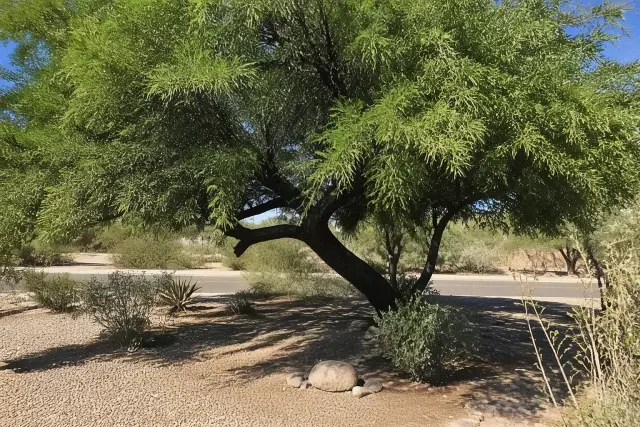
A full, rounded canopy with roughly a 360-degree spread so readers can distinguish healthy green fronds from material that should be removed.
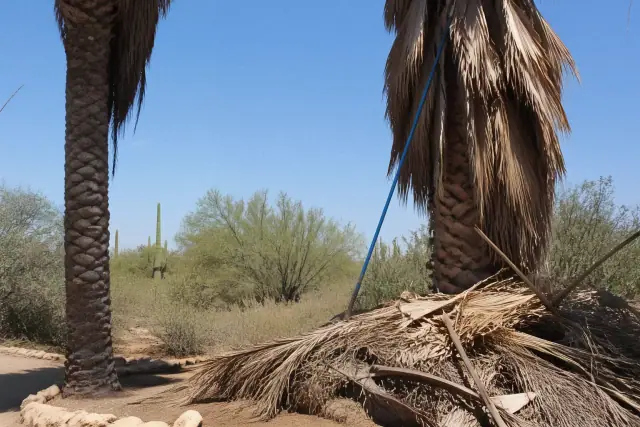
Dry fronds hanging from 30 feet or higher and material within 10 feet of a roofline, walkway, fence, or wall to make the fall and clearance risks visible.
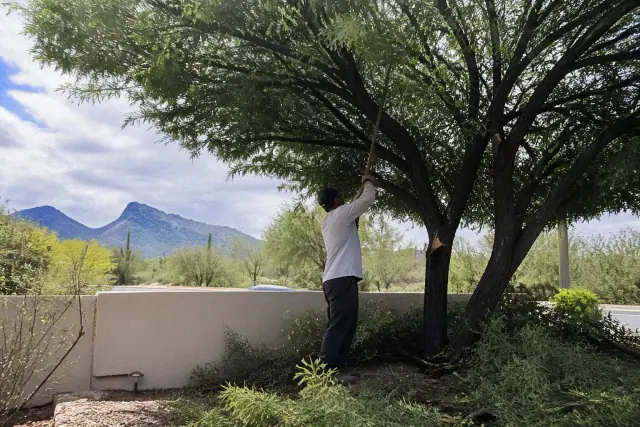
Old fronds, flower stalks, and fruit clusters being removed while the healthy crown stays intact before June and July storm winds arrive.
May is generally the strongest month for a full Southern Arizona trim, within the broader May-through-July window.
Start date palms after fruit stalks form in late May and give fan palms until about mid-June for their broader fronds to mature.
Remove dead fronds and inspect storm damage in any season when loose material threatens roofs, vehicles, walkways, or people below.
Avoid removing healthy green fronds from December through February, and never top a palm or cut into its live growth point.
| Timing | Best Use | What to Watch |
|---|---|---|
| Late spring (April through May) | Remove old fronds, flower stalks, and fruit clusters. | Keep healthy green fronds and protect live trunk tissue. |
| Primary window (May through July) | Complete the main seasonal trim before peak summer weather. | Adjust for species, exposure, and existing hazards. |
| Monsoon period (mid-June through September) | Perform safety checks and remove loose or storm-damaged fronds. | Favor hazard work over heavy canopy shaping. |
| Winter (December through February) | Remove dead material only when safety requires it. | Avoid heavy pruning while palms are growing more slowly. |
A well-timed trim removes dead fronds, flower stalks, and fruit clusters without stripping the palm's healthy green canopy. Fronds should be cut close to the trunk at the petiole base without slicing into live tissue, leaving a full rounded crown instead of a narrow pineapple shape. That balance reduces fire load, falling debris, pest shelter, and trapped moisture while preserving the fronds the palm needs for photosynthesis.
Species, height, frond density, access, and exposure all affect when and how much to trim. A palm beside a pool or driveway may need attention twice a year, while one in an open yard may need only annual pruning. Once temperatures climb past 100 degrees, limit work to light safety trimming rather than major canopy reduction. Typical Tucson trimming costs range from $100 to $500 per tree, with palms over 60 feet often costing more because of equipment and access needs.
How often should palms be trimmed? Most Tucson palms need a full trim once or twice a year, based on frond condition rather than a fixed legal schedule. Can they be trimmed in summer? Yes, but after extreme heat arrives, keep the work light and focused on loose, dead, or storm-damaged fronds. What if dead material appears in winter? Remove a genuine fall, fire, or clearance hazard rather than waiting for late spring, but avoid heavy shaping of healthy growth.
Share the palm species, approximate height, access conditions, and any dead or hanging fronds. A local arborist can help separate seasonal maintenance from immediate hazard work and plan the appropriate scope.